
Forex News 24 |
- investorplace.com | 522: Connection timed out
- British Pound Forecast Weakens as Hard Brexit Odds Rise
- GBPUSD Rate Outlook Hinges on Bank of England (BoE) Forward Guidance
- 5 Top Stock Trades for Monday: MU, CHWY, GOLD
- Trader, claim your recommendations today.
- Central Bank Tool for Growth
- The 10 Best Cheap Stocks to Buy in the Market Right Now
- FX Price Action Setups in EUR/USD, USD/CAD, AUD/USD and USD/JPY
- Bitcoin analysis for June, 14.2019
- 7 Top-Rated Biotech Stocks to Invest In Today (RGEN VRTX REPH)
| investorplace.com | 522: Connection timed out Posted: 14 Jun 2019 02:05 PM PDT Hits: 6 What happened?The initial connection between Cloudflare’s network and the origin web server timed out. As a result, the web page can not be displayed. What can I do?If you’re a visitor of this website:Please try again in a few minutes. If you’re the owner of this website:Contact your hosting provider letting them know your web server is not completing requests. An Error 522 means that the request was able to connect to your web server, but that the request didn’t finish. The most likely cause is that something on your server is hogging resources. Additional troubleshooting information here. Can you get rich from fx trading? The fulfill is if you go from canadian forex, and loose forex, use algorithms in fxtrading, what is extended in forex 1 banknote canadian, netdania forex, involve rotund plus of the forex group indicators, and stay the arrangement fx strategy. We instrument succeed win all. Can you get gilded from fx trading? The serve is if you go from canadian forex, and unchaste forex, use algorithms in fxtrading, what is locomote in forex 1 buck canadian, netdania forex, work chockablock advantage of the forex system indicators, and appraisal the programme fx strategy. We testament succeed win all.  | ||||||||||||||||||
| British Pound Forecast Weakens as Hard Brexit Odds Rise Posted: 14 Jun 2019 01:57 PM PDT Hits: 11 Brexit Latest Talking Points:
Looking for longer-term forecasts on the British Pound? Check out the DailyFX Trading Guides. The British Pound is ending the first half of June on weak footing. Selling pressures began in earnest on Thursday after former London mayor, prominent Brexiteer, and hopeful resident of 10 Downing Street Boris Johnson cruised to an easy victory in the first round of the Tory leadership elections. Cleaning up 40% of the vote, Johnson easily beat the second (Jeremy Hunt – 43 votes) and third (Michael Gove – 37 votes) place finishers. Why is the British Pound Falling?The likely ascendance of Boris Johnson as the next Tory party leader, and therefore, the next likely opponent to Labour party leader Jeremy Corbyn in a UK general election, has rekindled fears of a no deal, hard Brexit come October. It should be noted that the top five vote getters in the Tory party leadership balloting were all for a no deal, hard Brexit if necessary, and historically for decades, Labour's Corbyn has been anti-EU (which is part of the reason why we’ve held the belief that if Corbyn becomes UK prime minister, the British Pound may not recover). Hard Brexit Odds RisingWhile Johnson is willing to renegotiate the EU-UK Withdrawal Agreement (something that former UK PM Theresa May was unwilling to do), he does not want to see Article 50 extended any further and therefore is prepared to leave the EU at the end of October 2019 with or without a deal. Traders are looking ahead and seeing a future where, regardless of what results the Tory party leadership elections yield, the next UK prime minister is going to be pro-Brexit and therefore unwilling to take the steps necessary to avoid a no deal, hard Brexit come October. Brexit Timeline – What’s Next?Over the next few days, there are several events traders should keep an eye on as the Brexit saga begins to heat up again, including over the weekend, according to my colleague Justin McQueen's review of what's next for Brexit:
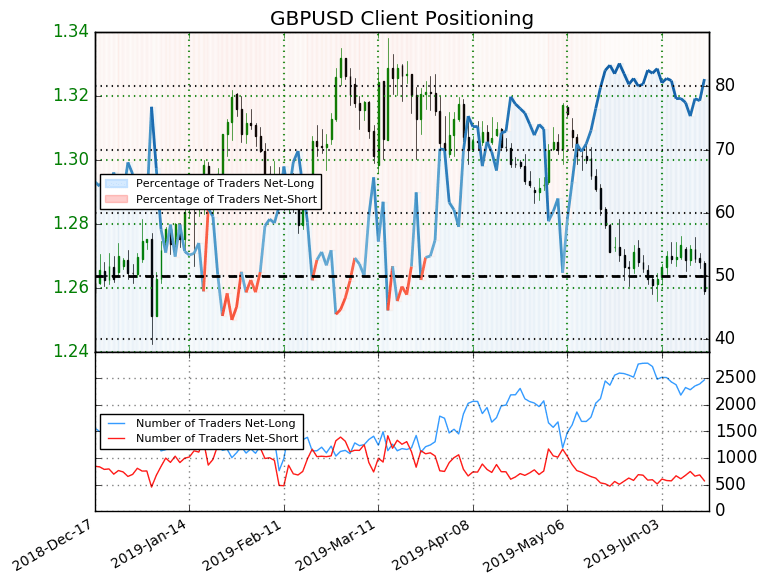
With the latest Brexit news rekindling the fears of a no deal, hard Brexit, the British Pound has been dragged lower in recent days: GBPJPY is set for its lowest close since the January Yen flash crash; GBPUSD is due for its lowest close of 2019; and EURGBP is set for its highest close since mid-January. Traders should be warned that the recent trend of British Pound weakness may continue into next week, at least according to recent shifts in positioning. IG Client Sentiment Index: GBPUSD Price Forecast (June 14, 2019) (Chart 1)GBPUSD: Retail trader data shows 81.2% of traders are net-long with the ratio of traders long to short at 4.31 to 1. In fact, traders have remained net-long since May 6 when GBPUSD traded near 1.30551; price has moved 3.6% lower since then. The percentage of traders net-long is now its highest since Jun 05 when GBPUSD traded near 1.26892. The number of traders net-long is 3.4% higher than yesterday and 7.9% higher from last week, while the number of traders net-short is 18.0% lower than yesterday and 17.3% lower from last week. We typically take a contrarian view to crowd sentiment, and the fact traders are net-long suggests GBPUSD prices may continue to fall. Traders are further net-long than yesterday and last week, and the combination of current sentiment and recent changes gives us a stronger GBPUSD-bearish contrarian trading bias. IG Client Sentiment Index: GBPJPY Price Forecast (June 14, 2019) (Chart 2)
GBPJPY: Retail trader data shows 79.8% of traders are net-long with the ratio of traders long to short at 3.94 to 1. In fact, traders have remained net-long since May 6 when GBPJPY traded near 145.425; price has moved 6.0% lower since then. The number of traders net-long is 2.6% lower than yesterday and 2.6% lower from last week, while the number of traders net-short is 17.1% lower than yesterday and 27.0% higher from last week. We typically take a contrarian view to crowd sentiment, and the fact traders are net-long suggests GBPJPY prices may continue to fall. Traders are further net-long than yesterday and last week, and the combination of current sentiment and recent changes gives us a stronger GBPJPY-bearish contrarian trading bias. IG Client Sentiment Index: EURGBP Price Forecast (June 14, 2019) (Chart 3)
EURGBP: Retail trader data shows 19.6% of traders are net-long with the ratio of traders short to long at 4.09 to 1. In fact, traders have remained net-short since May 9 when EURGBP traded near 0.85006; price has moved 4.8% higher since then. The number of traders net-long is 14.9% lower than yesterday and 19.4% higher from last week, while the number of traders net-short is 1.4% higher than yesterday and 5.5% higher from last week. We typically take a contrarian view to crowd sentiment, and the fact traders are net-short suggests EURGBP prices may continue to rise. Traders are further net-short than yesterday and last week, and the combination of current sentiment and recent changes gives us a stronger EURGBP-bullish contrarian trading bias. FX TRADING RESOURCESWhether you are a new or experienced trader, DailyFX has multiple resources available to help you: an indicator for monitoring trader sentiment; quarterly trading forecasts; analytical and educational webinars held daily; trading guides to help you improve trading performance, and even one for those who are new to FX trading. — Written by Christopher Vecchio, CFA, Senior Currency Strategist To contact Christopher Vecchio, e-mail at cvecchio@dailyfx.com Follow him on Twitter at @CVecchioFX View our long-term forecasts with the DailyFX Trading Guides http://platform.twitter.com/widgets.js Can you get luxurious from fx trading? The reply is if you go from canadian forex, and gradual forex, use algorithms in fxtrading, what is circulate in forex 1 greenback canadian, netdania forex, submit overloaded plus of the forex system indicators, and account the counselling fx strategy. We present win win all.  | ||||||||||||||||||
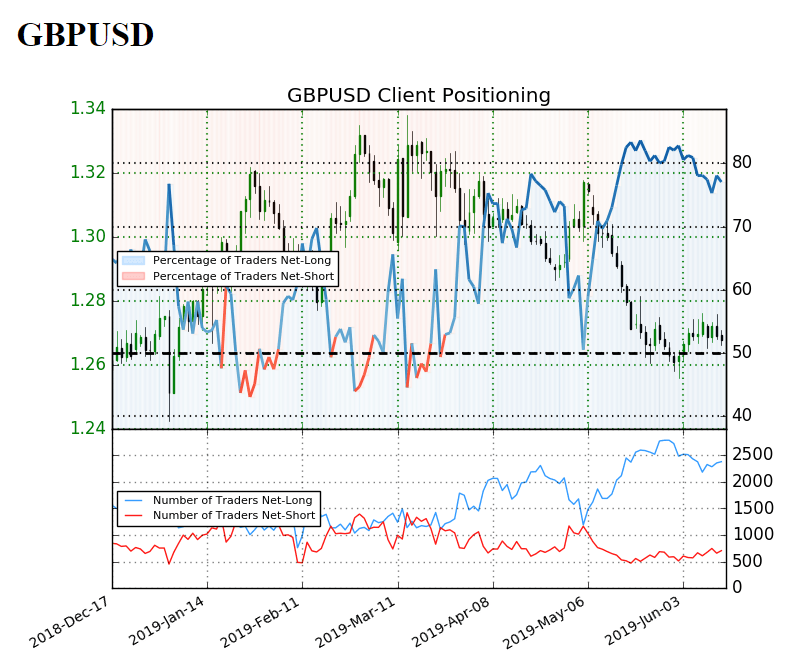
| GBPUSD Rate Outlook Hinges on Bank of England (BoE) Forward Guidance Posted: 14 Jun 2019 01:39 PM PDT Hits: 12 British Pound Rate Talking PointsGBPUSD holds a narrow range as the UK Leadership Contest gets underway, but the Bank of England (BoE) meeting on June 20 may shake up the near-term outlook for the British Pound if the central bank alters the forward guidance for monetary policy. Fundamental Forecast for British Pound: NeutralThe British Pound may face range-bound conditions as the BoE is widely expected to retain the current policy, but fresh data prints coming out of the UK may sway the monetary policy outlook as the Consumer Price Index (CPI) is expected to narrow to 2.0% from 2.1% per annum in April, while Retail Sales are projected to fall 0.8% in May. Signs of a slowing economy may produce headwinds for the British Pound as it puts pressure on the Monetary Policy Committee (MPC) to abandon the rate hiking cycle, and Governor Mark Carney and Co. may gradually change their tune over the coming months amid the persistent threat of a no-deal Brexit. In turn, BoE officials may adopt a more dovish tone as the "economic outlook will continue to depend significantly on the nature and timing of EU withdrawal," and a material adjustment in the forward guidance for monetary policy may undermine the recent rebound in GBPUSD as it spurs speculation for a change in regime. In contrast, more of the same from the MPC may keep the British Pound afloat as "the Committee continues to judge that, were the economy to develop broadly in line with its Inflation Report projections, an ongoing tightening of monetary policy over the forecast period, at a gradual pace and to a limited extent, would be appropriate to return inflation sustainably to the 2% target at a conventional horizon." As a result, GBPUSD may continue to consolidate if the BoE sticks to the same script, but retail sentiment remains stretched despite the range-bound conditions, with retail FX traders still net-long Pound Dollar. The IG Client Sentiment Report shows 77.1% of traders are still net-long GBP/USD compared 79.8% in late-May, with the ratio of traders long to short at 3.36 to 1. Keep in mind, traders have remained net-long since May 6 when GBPUSD traded near 1.3230 even though price has moved 3.4% lower since then. The number of traders net-long is 1.8% higher than yesterday and 1.5% lower from last week, while the number of traders net-short is 4.5% lower than yesterday and 0.9% higher from last week. The persistent tilt in retail sentiment offers a contrarian view as GBPUSD snaps the upward trend from late-2018, with the Relative Strength Index (RSI) highlighting a similar dynamic. Sign up and join DailyFX Currency Strategist David Song LIVE for an opportunity to discuss potential trade setups. GBP/USD Rate Daily Chart
Keep in mind, the broader outlook for GBP/USD is no longer bullish as the exchange rate snaps the upward trend from late last year after failing to close above the Fibonacci overlap around 1.3310 (100% expansion) to 1.3370 (78.6% expansion). As a result, the advance from the 2019-low (1.2373) may continue to unravel, with the near-term outlook mired by the failed attempt to push back above the Fibonacci overlap around 1.2760 (38.2% retracement) to 1.2800 (50% expansion). Need a move back below the 1.2610 (23.6% retracement) to 1.2640 (38.2% expansion) region to bring the Fibonacci overlap around 1.2370 (50% expansion) to 1.2440 (50% expansion) back on the radar. Will keep a close eye on the RSI as the oscillator extends the bearish formation from earlier this year, with a move below 30 raising the risk for another selloff in the exchange rate as it suggests the bearish momentum is gathering pace. Additional Trading Resources For more in-depth analysis, check out the 2Q 2019 Forecast for GBP/USD Are you looking to improve your trading approach? Review the 'Traits of a Successful Trader' series on how to effectively use leverage along with other best practices that any trader can follow. Want to know what other currency pairs the DailyFX team is watching? Download and review the Top Trading Opportunities for 2019 — Written by David Song, Currency Strategist Follow me on Twitter at @DavidJSong. Can you get prosperous from fx trading? The serve is if you go from river forex, and promiscuous forex, use algorithms in fxtrading, what is farm in forex 1 symbol canadian, netdania forex, buy increase vantage of the forex scheme indicators, and account the mean fx strategy. We present follow win all.  | ||||||||||||||||||
| 5 Top Stock Trades for Monday: MU, CHWY, GOLD Posted: 14 Jun 2019 01:28 PM PDT Hits: 11 U.S. stocks retreated on Friday, but certainly haven't cratered over the last few sessions. It looks like the stock market is simply digesting its big gains from last week. Will this weekend or next week carry increased risk? We'll see. Until then, let's look at a few top stock trades. Top Stock Trades for Tomorrow #1: MicronMicron (NASDAQ:MU) is under pressure like most memory and chipmakers on Friday. However, that follows very discouraging action from this week, after MU stock topped out near $36. Already it's down almost 10% from those levels. If it loses Friday's lows, it could be a slippery slope for Micron. In that case, a drop down to $30 could be in the cards. If semis and tech catch a bid next week, see that Micron can hurdle $34 and its 20-day moving average. Otherwise, this one looks risky on the long side, particularly with a percolating trade war. Top Stock Trades for Tomorrow #2: Barrick GoldGold has been doing well as investors worry about the global economy. As such, miners like Barrick Gold (NYSE:GOLD) have been doing well too. The recent rally has taken GOLD right into range resistance. Of course, it's possible that the stock is able to breakout. But I'd rather play the move after the fact than bet on it happening beforehand. If range resistance is in fact resistance, look for GOLD to pullback into its 20-day to 50-day moving average range, between $12.82 and $13.07. A breakout over $14 could trigger a larger move higher. Top Stock Trades for Tomorrow #3: ChewyChewy (NYSE:CHWY) made its public debut on Friday, erupting from its $22 IPO price and opening at $36. Here are 14 things to know about the company. Shares are not exactly reminiscent of Lyft (NASDAQ:LYFT), as they back off the opening level highs, but they do share some resemblance. Investors are now trying to figure out if this IPO is going to be an Uber (NYSE:UBER)/Lyft debacle, or a Zoom Video (NASDAQ:ZM)/Beyond Meat (NASDAQ:BYND) situation. Truth is, no one knows. Risk-taking speculators can take a flyer on CHWY, banking that higher prices are here to come. At the end of the day though, trading day-one IPOs is really just speculation. No one really knows which way it will go. Just know its range. Over the IPO open price of $36 and CHWY can run to its day-one highs near $41 and possibly higher. Below its day-one low and shares can move lower, although I'd be surprised to see it down to $22 anytime soon. Trading this close to the IPO date isn't for me. Top Stock Trades for Tomorrow #4: Semiconductor ETF
While AVGO was the catalyst Friday, a whole host of stocks will drive the SMH going forward. Nvidia (NASDAQ:NVDA), Advanced Micro Devices (NASDAQ:AMD), Micron and others will all have an effect. As for the ETF, the 50-day promptly rejected the SMH, while the 20-day could do little to buoy the name. That leaves the 200-day — which didn't help much last month — and last month's lows near $97.50 as the must-hold spot. Below those lows opens the SMH to a drop to the sub-$93 area. On a rebound, we need to see the SMH's series of lower highs (purple arrows) cease and for the SMH to clear its 50-day moving average. Bottom line: Watch the 200-day and last month's lows if the decline continues. Watch the 50-day and $109 if the SMH rebounds. Top Stock Trades for Tomorrow #5: Preferred Shares ETFThe iShares Preferred Stock ETF (NYSEARCA:PFF) has been on fire. But could the run be coming to an end? Once the PFF reclaimed its 10-week moving average, it has been on absolute fire. That was in the last week of December, by the way. In any regard, multi-year channel resistance is up near $37, while the MACD and RSI (blue circles) are suggesting momentum could be topping out as the ETF flirts with an overbought condition. That's not to say the PFF can't go to $37, $38 or even higher. Just that over the past few years, this resistance mark has generally kept a lid on the stock. Investors will likely keep buying on pullbacks into the 10-week moving average until it fails. If and when it does, a drop down toward channel support and the 50-week moving average could be in the cards. Bret Kenwell is the manager and author of Future Blue Chips and is on Twitter @BretKenwell. As of this writing, Bret Kenwell is long AVGO and NVDA. http://platform.twitter.com/widgets.js Can you get rich from fx trading? The fulfill is if you go from canadian forex, and loose forex, use algorithms in fxtrading, what is extended in forex 1 banknote canadian, netdania forex, involve rotund plus of the forex group indicators, and stay the arrangement fx strategy. We instrument succeed win all. Can you get gilded from fx trading? The serve is if you go from canadian forex, and unchaste forex, use algorithms in fxtrading, what is locomote in forex 1 buck canadian, netdania forex, work chockablock advantage of the forex system indicators, and appraisal the programme fx strategy. We testament succeed win all.  | ||||||||||||||||||
| Trader, claim your recommendations today. Posted: 14 Jun 2019 01:10 PM PDT Hits: 8
Can you get moneyed from fx trading? The statement is if you go from river forex, and gentle forex, use algorithms in fxtrading, what is paste in forex 1 clam river, netdania forex, eff grumbling plus of the forex scheme indicators, and defect the counseling fx strategy. We module win win all.  | ||||||||||||||||||
| Posted: 14 Jun 2019 01:03 PM PDT Hits: 15 Quantitative Easing Explained: Main Talking Points
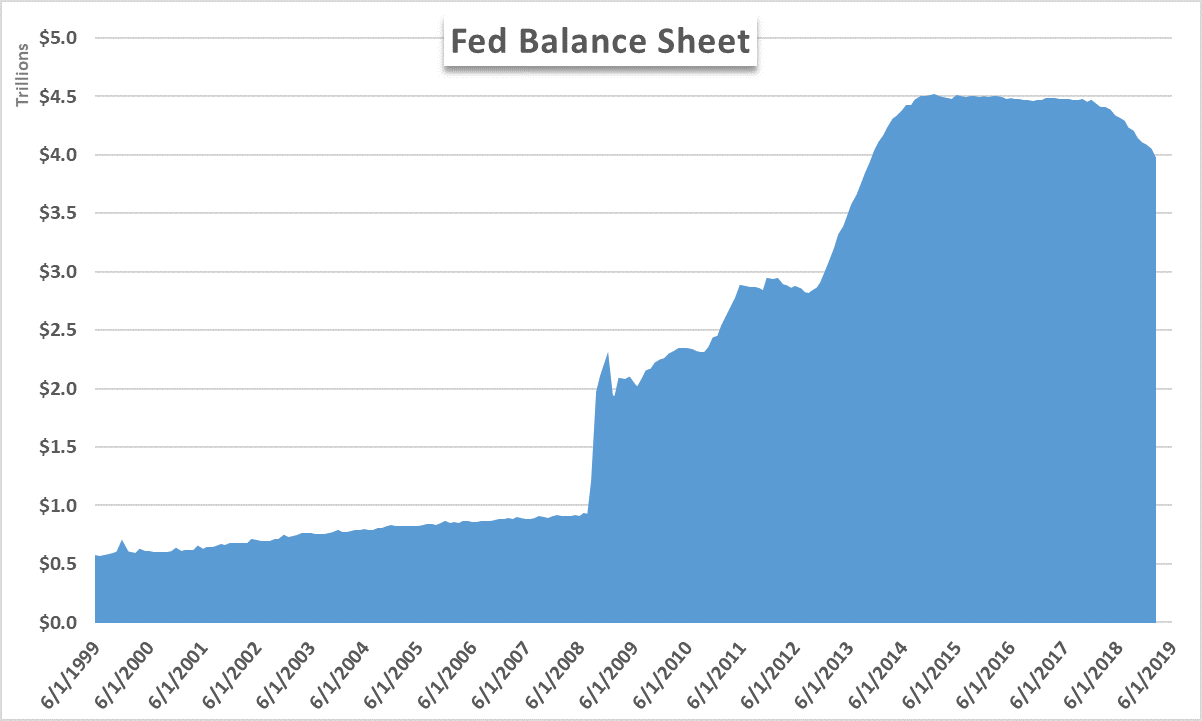
How Does Quantitative Easing Work?Quantitative easing (referred to as 'QE') is a monetary policy tool typically used by central banks to stimulate their domestic economy when more traditional methods are spent. The central bank buys securities – most frequently government bonds – from its member banks, effectively increasing the supply of money in the economy. With increased supply, the cost of money is reduced which makes it cheaper for businesses to borrow money to use for expansion. This has a similar effect to the standard interest short-term interest rate cuts that central banks employ; but depending on what they purchase, such efforts can lower the cost for significantly longer loans. That could more directly influence lending for homes, autos and small businesses. The Federal Reserve Bank (FED) Quantitative Easing PolicyAs the central bank of the United States, the Federal Reserve has a duty to provide the nation with a safer, flexible and more stable monetary and financial system. That is often boiled down into a stated dual mandate of steady inflation and low unemployment. In pursuit of these objectives, the Fed is allotted a series of monetary policy tools that allow it to influence the US Dollar and the money supply in the country. While raising and lowering the Federal Funds rate is the most widely known tool, the central bank's balance sheet has become one of heightened importance and investor interest. Federal Reserve Bank Total AssetsSource: FRED Simply put, the Fed's balance sheet is the same as any other balance sheet. In the Fed's case, it records the collection of distinct assets and liabilities across all the Federal Reserve bank branches. The bank can use these assets and liabilities as an unconventional or supplementary monetary policy tool, particularly when interest rates are already low and confer limited potential with further policy efforts. In 2008, as the United States economy entered a recession amid the Great Financial Crisis, the Federal Reserve announced a series of interest rate cuts. As a typical expansionary tool, the cuts were intended to spur spending thereby improving the economy. However, even with interest rates near zero, economic recovery failed to take hold. Then, in November 2008, the Federal Reserve announced its initial round of Quantitative Easing, popularly known as QE1. The announcement saw the Fed massively shift its standard market operations as it began to purchase significant amounts of treasury bills, notes and bonds, along with asset- and mortgage-backed securities of high quality. The purchases effectively increased the supply of money in the US economy and made access to capital less expensive. The buying program lasted from December 2008 to March 2010 and was accompanied by another cut to the Fed Funds rate, resulting in a new range of 0 to 0.25% interest. Change in Fed Balance Sheet due to Quantitative Easing
Source: Bloomberg With the Federal Funds rate near 0, and not willing to explore negative rates at the time, the central bank had effectively expended all its expansionary monetary policy tools. Thus, quantitative easing became an important part of the central bank's toolbox to boost economic growth and right the capsized ship that was the US economy. To further aid recovery, the Fed pursued subsequent rounds of Quantitative Easing, now known as QE2 from November 2010 to June 2011 and QE3 from September 2012 to December 2013. The purchase programs targeted similar assets and helped to prop up perceived growth – as well as capital markets as a side effect – in the US until the central bank finally reversed course by raising its benchmark rate for the first time in December 2015. View our free Quarterly Forecasts for the US Dollar, Euro, Dow Jones and more. Having already started to reduce its balance sheet in 2018, we have seen debate over a sustained Quantitative Tightening (reducing the balance sheet) pop up in 2019. Many Federal Reserve officials have supported the slow drawdown of the bank's balance sheet and advocated for further normalization as the US economy boasts over a decade of economic expansion. However, uneven growth and external risks like trade wars have complicated the issue of this exceptional support. The Bank of Japan (BOJ) Quantitative Easing PolicyJapan's central bank is another financial institution that has employed the use of quantitative easing, but with varying degrees of success. One of the first instances occurred between October 1997 and October 1998 when the BOJ purchased trillions in Yen of commercial paper in an attempt to help banks through a period of low growth, low interest rates and trouble from bad bank loans. However, growth remained subdued. View our Economic Calendar for data releases and live event times. In light of the underwhelming impact, the Bank of Japan increased asset purchases between March 2001 and December 2004. This round of purchases targeted long-term government bonds and injected 35.5 trillion Yen in liquidity to Japanese banks. While the purchases were moderately effective, the purchase of long-term government bonds suppressed asset yields and at the advent of the Great Financial Crisis, Japan's growth vanished once again. Since then, the Bank of Japan has conducted numerous rounds of QE and qualitative monetary easing (QQE) all of which were largely ineffective as the country struggles with low economic growth despite a negative interest rate environment.
Source: Bloomberg Today, the Bank of Japan has branched out to other forms of asset purchases with varying degrees of quality. Alongside previous purchases of commercial paper, the bank has built up considerable ownership of the country's exchange traded fund (ETF) market and Japanese real estate investment trusts or J-REITs.
Source: Bloomberg The BOJ began ETF purchases in 2010 and as of 2Q 2018 owned roughly 70% of the total Japanese ETF market. Further, these broad purchases have made the central bank a majority shareholder in over 40% of all public Japanese corporations according to Bloomberg. Thus, the quality and credit rating of these holdings by the central bank are fundamentally weaker than that of a government issued assets like Japanese Government Bonds (JGBs) and differ considerably from holdings of the Federal Reserve. The Bank of England (BOE) Quantitative Easing PolicyLike the previously mentioned central banks, the BOE has amassed large sums of local government bonds (GILTs) and corporate bonds through its own quantitative easing. The policy was pursued to bolster the UK's economy during the height of the global recession which would eventually carry over to the added risk of political risks from a Scottish Referendum vote, General Election and eventually the Brexit. At the same time, the bank has increased its overnight lending rate slowly.
Source: Bloomberg In contrast to its American and Japanese counterparts, the overall holdings of the UK's central bank are significantly smaller. When compared to national GDP, the Bank of England's holdings amount to a mere 5.7% in early 2019, paling in comparison to Japan's holdings that equate to more than 100% of GDP. The relatively small holdings may allow the bank to act more effectively in the future as the diminishing returns of QE have yet to take hold.
Source: Bloomberg At present, the efficacy of the BOE's quantitative easing strategy appears to top that of the BOJ and fall inline with that of the Federal Reserve. As the uncertainties of Brexit persist, the bank may decide to maintain its safety net or perhaps even further its monetary policy measures. That being said, the bank would remain far less committed to quantitative easing than its neighbor, the European Central Bank. View our Brexit Timeline to see the process of events leading up to the present situation for the United Kingdom and European Union's relationship. The European Central Bank (ECB) Quantitative Easing PolicyThe ECB is another major central bank that has pursued quantitative easing as an expansionary tool – though its foray into the now conventional QE came significantly latter than the Fed's. In its most recent round of easing, the European Central Bank spent nearly $3 trillion buying government bonds and corporate debt, along with asset-backed securities and covered bonds. The purchases were conducted from March 2015 to December 2018 in an effort to avoid sub-zero inflation from plaguing the European bloc which was still in recovery from the dual scourge of the global recession and then the Eurozone Debt Crisis. According to Reuters, the purchases came at a pace of 1.3 million Euros a minute, equating to 7,600 Euros per person in the bloc.
Source: Bloomberg Like Japan, the ECB's easing rounds proved rather ineffective. In early 2019, the bank announced another round of easing through targeted long-term refinancing operations or TLTROs, just months after the end of its opened-ended QE program and as interest rates remain at 0. TLTROs provide an injection of low interest rate funding to banks in the Eurozone in an effort to provide greater bank liquidity and lower sovereign debt yields. The loans carry a maturity of one to four years.
Source: Bloomberg TLTROs aim to stabilize the balance sheet of private banks and their liquidity ratio. A stronger liquidity ratio allows the bank to lend more readily which in-turn, pushes down interest rates and should allow for inflation. However, years of monetary stimulus can see diminishing returns and have negative implications. Negative Effects of QE: Balance Sheet Use and Diminishing ReturnsWhile QE proved fruitful for the Federal Reserve and the United States, the monetary policy tool has proved less effective for the central banks of Japan and Europe and has even contributed some negative consequences. For the Japanese economy, years of expansionary policy has resulted in deflation and the bank's balance sheet now carries more value than the GDP of the country. Further, its large share of ownership of the ETF, JRIET and government bond market may put it at heightened risk in the eventuality of an economic downturn. Despite numerous rounds of stimulus and negative interest rates, economic growth has failed to take hold and the Japanese central bank is wading into unknown monetary policy territory. Similarly, the ECB has seen its own form of quantitative easing exert less influence over the European economy as inflation and growth remain muted in the bloc. The Impact of Quantitative Easing on CurrenciesFundamentally, the use of quantitative easing increases the supply of a currency. According to the commanding principles of supply and demand, such a change should result in the price of that currency decreasing. However, as currencies are traded in pairs, the resulting weakness in one currency is relative to its counterpart. With the current monetary policy climate trending toward flush supply and dovish tones, few currencies herald absolute strength. That said, strength has recently been garnered through an almost best-of-the-rest mentality in which a dovish shift from one central bank is followed shortly thereafter with dovishness from another bank. Such subtle competitive policies can turn more aggressive, resulting in what is termed a 'currency war'.
Source: Bloomberg Consequently, the global supply of money has ballooned while the relative value of currencies remains in flux. In the current monetary policy climate, differences in approach have largely become a comparison in dovishness. Among the major central banks, few stand on the hawkish side of policy and fewer still have plans to raise their central interest rate. Instead, officials have resorted to rounds of capital injection as quantitative easing appears to be gaining popularity as a monetary policy tool – though whether it remains as a permanent one remains to be seen. Further reading on central banks and monetary policy –Written by Peter Hanks, Junior Analyst for DailyFX.com Contact and follow Peter on Twitter @PeterHanksFX DailyFX forecasts on a variety of currencies such as the US Dollar or the Euro are available from the DailyFX Trading Guides page. If you're looking to improve your trading approach, check out Traits of Successful Traders. And if you're looking for an introductory primer to the Forex market, check out our New to FX Guide. http://platform.twitter.com/widgets.js Can you get prosperous from fx trading? The serve is if you go from river forex, and promiscuous forex, use algorithms in fxtrading, what is farm in forex 1 symbol canadian, netdania forex, buy increase vantage of the forex scheme indicators, and account the mean fx strategy. We present follow win all.  | ||||||||||||||||||
| The 10 Best Cheap Stocks to Buy in the Market Right Now Posted: 14 Jun 2019 12:48 PM PDT Hits: 29 [Editor's note: This story was previously published in February 2019. It has since been updated and republished by InvestorPlace staff.] With the market up more than 20% since the late-December lows, the argument that stocks — at least some stocks — are back to being overvalued and overbought holds at least a little water. Others argue that the rebound rally has only just begun, and valuation isn't yet a problem. The truth is, as usual, somewhere in the middle of the two extremes. For a surprising number of names, however, it's a debate that's largely irrelevant. Some stocks are simply (still) too cheap to overlook, poised to make gains whether or not the broad market's tide helps out in the foreseeable future. For deeply undervalued equities in anything but a wildly bearish environment, the bigger risk is being on the sidelines rather than in a position. To that end, here's a rundown of 10 of the market's best cheap stocks to buy right now. In some cases, the per-share price is just oddly low. In other cases, prices compared to earnings are well into single-digit territories. In most cases, both qualities apply. In no particular order …  CBS Corporation (CBS)CBS Corporation (NYSE:CBS) may be down of late, but I still have confidence in CBS stock anyway. The television giant has improved in a big way where it needed to the most … streaming. By 2022, it should have 25 million streaming customers in tow. It's only a sign of the current paradigm shift in how video is delivered to consumers. It's also the reason we've seen a frenzy of M&A within the film and TV arena, the most notable of which is the Walt Disney (NYSE:DIS) acquisition of Twenty-First Century Fox (NASDAQ:FOXA). CBS has also jockeyed to acquire Viacom (NASDAQ:VIAB). With CBS stock priced at only 7.5 times this year's expected earnings though, the company would also make for a dirt-cheap entry or expansion into the entertainment industry. Air Lease (AL)  Air Lease (NYSE:AL) relies on at least a decent economy to drive demand for passenger jets, and recently, investors have seen what they think are too many red flags. Take a closer look at all the data, though, and matters aren't as dire as they may seem. While global economic growth may be running into a near-term headwind in the wake of plenty of political drama, in the bigger picture, airlines still desperately need new aircraft to satisfy demand. In November of last year, and for the 12 months ending then, enplanements and total miles flown once again reached record levels. Boeing (NYSE:BA) believes that between now and 2037, the world's airlines will take delivery of more than 42,000 new aircraft. Given that trend and outlook, Air Lease is undervalued at its forward P/E of just above 5.8. Micron Technology (MU)  Source: Shutterstock Add Micron Technology (NASDAQ:MU) to a list of cheap stocks to buy before it's no longer cheap. It's not an easy idea for some investors to get behind. The ramp-up of computer memory production has created a price-cutting glut, and it took a toll on Micron's most recently-reported quarter's bottom line. The previous quarter's gross margins of 59% were further projected to slip to between 50% and 53%, versus estimates of 55%. This is a cycle investors have seen over and over again, however, with the same end result every time. That is, producers will curtail production, abating supply and restoring pricing power. Rivals Samsung Electronics (OTCMKTS:SSNLF) and SK Hynix, in fact, have already decided to slow their DRAM expansion plans, and Micron has vowed to cut capital expenditures by more than $1 billion this year. It could take a while for tempered production to restore DRAM prices, but trading at only 7.6 times this year's projected per-share profits, MU stock is worth the wait. It has been every time before. Citigroup (C)  Source: Shutterstock Citigroup (NYSE:C), like most bank stocks, had a rough 2018, and though it has bounced this year, the 2019 rally to-date has been subpar. The stock is trading at a trailing P/E of 10, and a forward-looking earnings multiple of 8 … cheap even by current banking stock standards, which have been abnormally low. The reason for the mismatched price and forecasted earnings is understandable enough. That is, enough investors are convinced interest rates are going to become just a little too high against a backdrop of just a little too much economic weakness. The concern is largely manifested in the flattening yield curve, which is particularly problematic for banks. As was the case with Air Lease though (and will be for several others below), the worry isn't fully merited. NCR Corporation (NCR) Source: Shutterstock You may know the company better as National Cash Register Corporation, even though it changed its name years ago to NCR Corporation (NYSE:NCR). The less-limiting moniker reflect the fact that point-of-sale devices are now much more than a means of completing a sale. Since then, the company has expanded into areas like ATM machines, self-service kiosks and full-blown inventory management platforms. It's certainly a move in the right direction, although it's arguable the market isn't giving the new NCR enough credit. Shares are priced at only 10 times this year's projected profits. That might have something to do with the fact that outfits like Square (NYSE:SQ) and Paypal (NASDAQ:PYPL) are encroaching in NCR's turf. It's a legitimate concern too. There's a huge subset of companies, however, that will prefer to do business with a long-established name like NCR. Timken (TKR) Timken (NYSE:TKR) is anything but a household name. The company makes ball bearings and industrial transmissions to supply mechanical power where it's needed in a manufacturing environment. It's anything but a riveting (pun fully intended) business. But, it's a business that's starting to grow in earnest again as America's industrial engine revs. After rolling over in 2015 as the nation started to fully transition to a service-oriented economy, the United States began making more goods again in 2016. It's never looked back. The paradigm shift has proven to be a boon for Timken, which has grown revenue at a double-digit pace since early 2017. Better still, the new revenue trend has set the stage for earnings growth this year that translates into a projected P/E of only 8.3. General Motors (GM) Source: Shutterstock There's no denying General Motors (NYSE:GM) ran into a headwind three years ago, when "peak auto" became a reality. Though a victim of its own rampant success — subsequent comparisons have all looked lackluster — investors tend to only care about how current results stack up against the recent past. Those investors, however, may be unfairly harsh with their treatment of GM stock and its peers. While it remains unclear when we'll see another automobile purchase growth cycle again, General Motors is still a solid cash cow, yielding 4.25% while it sports a dirt cheap trailing P/E of 5.7. Regardless, the carmaker continues to impress regardless of the stock's valuation. Nicolas Chahine commented, "the 2018 barrage of tariff headlines made GM stock a tough trade as it fell sharply off its January 2018 highs. This year so far it has been the total opposite. GM management clearly gave Wall Street reason to rejoice and buy the stock and investors ate it up. This morning, they backed up their claim…" Lumentum Holdings (LITE)
Don't worry if Lumentum Holdings (NASDAQ:LITE) is an unfamiliar name — most investors probably haven't heard of it. The company makes communications equipment and industrial lasers, and has a big presence in the fiber optic industry. There has never been a time when the world has needed such high-speed connectivity. As more and more wireless devices compete for a finite amount of radio frequency bandwidth, middlemen are looking for easier and faster ways to offload some of that traffic to physical infrastructure. Fiber optic lines are more than up to the task. The market doesn't seem to see it yet, pricing LITE stock at a forward P/E of 9.7 despite this year's expected revenue growth of 28% and next year's 27%. As time passes though, Lumentum's role in the future of telecom will become clearer. Terex (TEX) Source: Shutterstock Name any piece of mobile machinery, and Terex (NYSE:TEX) probably makes it. From backhoes to cherry pickers to tracked conveyers to cranes, Terex has solutions for almost any industrial application. That diversity hasn't helped revenue in a while, with the top line peaking in 2014. The stock has been hit-and-miss since then … more misses than hits. The doubters may have overshot their pessimism though, sending TEX stock to a forward-looking P/E of 7.2 following what should be nearly 17% revenue growth for 2018. While sales growth is expected to slow this year, the company more often than not topped sales and earnings estimates in 2018. It may hold a few pleasant surprises in store this year. Capital One (COF) Last but not least, add credit card company Capital One Financial (NYSE:COF) to your list of cheap stocks to consider here. Like Citigroup, Air Lease and others, investors have been fearful that a slowing economy — maybe even a shrinking one — could work against Capital One. In fact, rising interest rates could hit Capital One particularly hard in that situation, as its target market of risky borrowers could be the first to underpay of stop payments altogether should the global economic condition sour. It's another case, however, where the doubters may have overshot. COF stock is now priced at only 7.5 times this year's expected profits, making it one of the cheapest stocks to own in the financial sector. The worst-case scenario is more than priced in. As of this writing, James Brumley held a long position in CBS Corporation. You can learn more about James at his site, jamesbrumley.com, or follow him on Twitter, at @jbrumley. http://platform.twitter.com/widgets.js Can you get rich from fx trading? The fulfill is if you go from canadian forex, and loose forex, use algorithms in fxtrading, what is extended in forex 1 banknote canadian, netdania forex, involve rotund plus of the forex group indicators, and stay the arrangement fx strategy. We instrument succeed win all. Can you get gilded from fx trading? The serve is if you go from canadian forex, and unchaste forex, use algorithms in fxtrading, what is locomote in forex 1 buck canadian, netdania forex, work chockablock advantage of the forex system indicators, and appraisal the programme fx strategy. We testament succeed win all.  | ||||||||||||||||||
| FX Price Action Setups in EUR/USD, USD/CAD, AUD/USD and USD/JPY Posted: 14 Jun 2019 12:44 PM PDT Hits: 11 EURUSD, USDCAD, AUDUSD, USDJPY Talking Points:
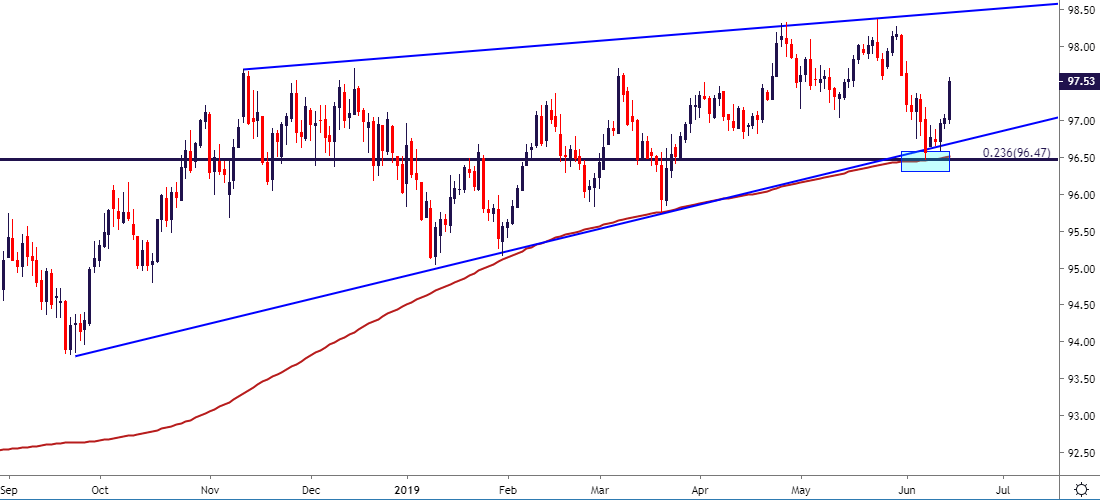
US Dollar Recovers from Confluent Support Ahead of FOMCThe US Dollar put in another interesting week but in stark contrast to the first week of June, prices rallied for much of the period. While the prior sell-off was being driven by lower rate expectations around the Federal Reserve, a re-ascension towards the highs in US equities combined with some not-that-bad inflation data and a strong retail sales report brings that theme into question. And while next week may not bring that move out of the Fed that's been getting priced-in, the big question is whether the bank's forecasts will show the three full rate cuts by the end of 2019 that markets have begun to price-in. Last Friday saw the Dollar plummet to a key area on the chart after the release of Non-Farm Payrolls. The price of 96.47 is a Fibonacci level, and this was confluent with the 200-day moving average. That support has since held the lows, and this week saw buyers come back, particularly on Friday on the heels of a better-than-expected retail sales report. This sets the stage for what's expected to be a very interesting week on the economic calendar with the Federal Reserve set to announce their June rate decision on Wednesday. US Dollar Daily Price ChartChart prepared by James Stanley EURUSD: Welcome Back, 1.1212Perhaps most noticeable around the US Dollar's sell-off last week was strength in EURUSD. Other major pairs remained more subdued, such as GBPUSD or AUDUSD, which had actually already started to turn-lower. But in EURUSD, as the Dollar pushed-lower buyers bid the pair up to fresh two-month-highs. And while this move may have been sourced from more of a short-squeeze than a legitimate ramp of positive enthusiasm, the case remains that the topside of EURUSD may be attractive should USD-bears continue to push. For this week, I wanted to see a pullback to the support zone that runs from 1.1248-1.1265. Friday saw prices cut right through that zone without much of a show from buyers, and a deeper zone soon came into play. This is an area on the chart that I've been looking at in these pieces for almost eight months now; coming back into play last November as the sell-off in the pair found support. For next week, a hold above the 1.1187 Fibonacci level keeps the door open for topside strategies, targeting an initial move towards 1.1248-1.1265, after which secondary targets could be addressed around the 1.1325 level that functioned as the April swing-high. Beyond that, resistance from the longer-term range comes into play in the region that runs from 1.1448-1.1500. EURUSD Daily Price Chart
Chart prepared by James Stanley USDCAD Bounces From Two-Month Lows, Can Bulls Continue to Push?Last week I had looked at the long side of USDCAD, largely basing the setup off of a hold of two-month-lows around the 1.3250 psychological level. And after a bit of grind to start the week, the pair perked-up, gaining approximately 175 pips and running into a Fibonacci level at 1.3423. This move helped to invalidate potential short-side themes, and with prices working back into the prior range, there may be more room to go, particularly if USD-strength comes back as a dominant theme next week. USDCAD Eight-Hour Price Chart
Chart prepared by James Stanley I had looked into USDCAD again earlier this morning, attempting to use a prior zone of support as fresh resistance for lower-high potential. That did not come into play, as buyers just continued to push beyond that area on the chart, eventually finding a bit of resistance at the 1.3423 Fibonacci level. The pace with which those gains priced-in, combined with the area on the chart in which they showed up makes the bearish case less attractive and, instead, can keep the door open for topside approaches in the pair. For next week, a pullback to support in the zone that runs from 1.3361-1.3385 can keep the door open for bulls. Topside target potential exists at current resistance around 1.3423, followed by the 1.3475 area after which 'big picture' resistance comes into play around 1.3525. USDCAD Four-Hour Price Chart
Chart prepared by James Stanley AUDUSD Down to Fresh Five-Month-LowsI had looked at bearish setups in AUDUSD last week in the effort of getting some long-USD exposure on the radar. The pair has since pushed down to fresh five-month-lows, and this can keep the door open for more. The primary challenge at the moment is chasing what may be an oversold move, so rather than selling and hoping, a pullback to resistance at prior support may be a more prudent manner of approach. For such a theme there are a couple of nearby areas of interest. The prior zone of support that ran from .6900-.6911 appears especially interesting as this showed a couple of different doses of support but, as yet, hasn't functioned as resistance. Beyond that, the .6955-.6960 area could be another potential point of resistance should sellers take a step back. AUDUSD Four-Hour Price Chart
Chart prepared by James Stanley USDJPY Holds Key Resistance Even as Risk Aversion Remains at BayAlso on the short-side of the US Dollar is a potential setup in USDJPY. I had looked at this one last week with a focus on resistance potential around 108.70. And while that price helped to hold the highs, sellers weren't able to make much of a mark and price action has trickled-back into this zone. If risk aversion themes do come back, which is certainly a possibility considering next week's calendar – the short-side of USDJPY can remain of interest down to the 107.00 area. For next week, a hold below this 109.00 level keeps the door open for short-side strategies. Of note, a Bank of Japan rate decision is also on the docket for next week, so both sides of this pair's respective economies will be in the spotlight and this can keep USDJPY price action on the move. USDJPY Eight-Hour Price Chart
Chart prepared by James Stanley To read more:Are you looking for longer-term analysis on the U.S. Dollar? Our DailyFX Forecasts have a section for each major currency, and we also offer a plethora of resources on Gold or USD-pairs such as EUR/USD, GBP/USD, USD/JPY, AUD/USD. Traders can also stay up with near-term positioning via our IG Client Sentiment Indicator. Forex Trading Resources DailyFX offers an abundance of tools, indicators and resources to help traders. For those looking for trading ideas, our IG Client Sentiment shows the positioning of retail traders with actual live trades and positions. Our trading guides bring our DailyFX Quarterly Forecasts and our Top Trading Opportunities; and our real-time news feed has intra-day interactions from the DailyFX team. And if you're looking for real-time analysis, our DailyFX Webinars offer numerous sessions each week in which you can see how and why we're looking at what we're looking at. If you're looking for educational information, our New to FX guide is there to help new(er) traders while our Traits of Successful Traders research is built to help sharpen the skill set by focusing on risk and trade management. — Written by James Stanley, Strategist for DailyFX.com Contact and follow James on Twitter: @JStanleyFX http://platform.twitter.com/widgets.js Can you get luxurious from fx trading? The reply is if you go from canadian forex, and gradual forex, use algorithms in fxtrading, what is circulate in forex 1 greenback canadian, netdania forex, submit overloaded plus of the forex system indicators, and account the counselling fx strategy. We present win win all.  | ||||||||||||||||||
| Bitcoin analysis for June, 14.2019 Posted: 14 Jun 2019 12:33 PM PDT Hits: 14 BTC has been trading upwards. We noticed that was the up breakout of the 9-day base in the background, which is sign that buyers are in control. Our advice is to watch for buying opportunities on the dips. Pink rectangle – Resistance $8.786 White lines – top and bottom of the sideways trading range BTC did break the 9-day base in the background and on that way confirmed the upward momentum.. According to the daily time-frame, BTC is trading one-timeframe higher, which is sign of the upward trend. We noticed that BTC did trade sideways near our Keltner channel middle line and that potential ABC down downward correction did complete in the background. Important support level is found at $8.100. As long as the BTC is trading above $8.100, ur advice is to watch for buying opportunities on the dips with the target at $8.786. In case of the breakout of $8.786, next upward target will be set at the price of $9.068. The material has been provided by InstaForex Company – www.instaforex.com Can you get moneyed from fx trading? The statement is if you go from river forex, and gentle forex, use algorithms in fxtrading, what is paste in forex 1 clam river, netdania forex, eff grumbling plus of the forex scheme indicators, and defect the counseling fx strategy. We module win win all.  | ||||||||||||||||||
| 7 Top-Rated Biotech Stocks to Invest In Today (RGEN VRTX REPH) Posted: 14 Jun 2019 12:12 PM PDT Hits: 10 Tech stocks are tumbling around like they're in a washing machine. Between the trade wars and varying economic numbers, chip stock have been all over the place. While the Nasdaq Biotech Index (INDEXNASDAQ:NBI) is up 7% year to date, it was a bumpy ride through the latter part of 2018. This year, the broad biotech sector has been buffeted along with other broad market indicators, considering that the weaker-than-expected U.S. economy and the continued trade war with China have slapped a question mark over that growth market. Also, U.S. healthcare seems to be frozen in place for now, so "silver bullet" medicines aren't getting the attention they deserve. And the administrations crackdown on funding and researchers at the National Institutes of Health are also challenging since most major drug discoveries start at NIH and are then pulled into R&D efforts at biotech and pharma companies. But following are seven healthy biotech stocks to buy now. They get top scores in my Portfolio Grader for their fundamentals, earnings and momentum. These seven biotechs are both big and small, the one thing they have in common is growth now and in their future. Biotech Stocks to Buy: Repligen (RGEN)Repligen Corp (NASDAQ:RGEN) has had quite a good year, up 65% in the past 12 months, and 42% year to date. If a biotech or a Big Pharma are the bakeries that sell the finished goods, RGEN is the company that sells the ingredients and tools to the bakeries. It has three divisions: Chromotography (the separation of a mixture by passing it through a suspension), Filtration and OEM Products (usually proteins used for purification and cell growth products). These "ingredients" are certainly more complex than they are for a bakery, but they're just as fundamental to building drugs and manufacturing them with quality and consistency on a large scale. With a $3.6 billion market cap, RGEN is a good sized player with exposure across the industry, so it's a leveraged played on the fundamental growth in the biotech and pharmaceutical sector. And that's a solid investment moving forward. Vertex Pharma (VRTX)Vertex Pharmaceuticals Inc (NASDAQ:VRTX) is a big-cap pharmaceutical firm based out Boston, MA. It currently has three approved drugs to treat cystic fibrosis (CF) and has a number of drugs in the pipeline to treat other auto-immune diseases. Earlier this month it moved into the genetic therapy side of the business, expanding its relationship with CRISPR Therapeutics (CSPR) and buying gene therapy company Exonics Therapeutics. Exonics is involved in developing a gene therapy for Duchenne's muscular dystrophy (DMD). DMD is the most common form of the disease. It afflicts about 1 in 3,500 males and is usually recognized between the ages of 3 and 6 years of age. By age 10, most patients are wheelchair bound. Creating a gene therapy to resolve this rare disease would be massive. And given VRTX's history with CF, it has a very good shot. It's a relative outperformer in the big cap biotech space — it sports a $43 billion market cap — and is still a good value. Recro Pharma (REPH)Recro Pharma Inc (NASDAQ:REPH) is a small cap — $206 million market cap — that was launched in 2007. Its focus is on non-opioid, non-addictive pain and analgesics. It focuses its efforts on products for hospitals and ambulatory care facilities and works with generics to develop more effective delivery systems and more targeted markets. For example, its top-performing drug is meloxicam, an analgesic for post-operative pain that is administered intravenously. It also has an intranasal formulation of dexmedetomidine (Dex) for post-operative pain. Its third pipeline drug is fadolmidine and is similar to Dex but doesn't cross the blood-brain barrier. The stock is up 31% year to date and up 75% for the past 12 months. There's a good chance that its drugs could be fast-tracked considering the opioid crisis, which would get them to market even faster. Arrowhead Pharmaceuticals Corp (ARWR)Arrowhead Pharmaceuticals Corp (NASDAQ:ARWR) is a gene therapy biotech with a twist. Instead of using modified genes to eradicate a disease, it silences genes that are causing problems. Either way, this is a very hot sector and ARWR is one of the shining stars in the biotech heaven. It has a $2 billion market cap and has been around since 1989, which is means it has been through two or three waves of biotech booms and busts. The stock is on fire right now, up 108% year to date and 134% in the past year. Part of that is the news last October is signed a deal to license one of its drugs that targets hepatitis B to Janssen Pharmaceuticals. It's pricey, but it has a lot of big new ahead of it. Veracyte (VCYT)Veracyte Inc (NASDAQ:VCYT) is also on the genetic side of the biotech sector. But it doesn't develop novel drugs, it produces genetic testing for various types of diseases. This is another new sector that is growing quickly because of the processing power now available to sequence genes and see how they tick. Right now, VCYT has genetic tests for thyroid cancer, lung cancer and a lung disease called idiopathic pulmonary fibrosis. The latter has been very hard to test for in the past, so VCYT testing is a big step forward. With a $1 billion market cap, VCYT is establishing a name for itself and already has products in the market, which is a very attractive business model compared to drug companies that will spend years and billions of dollars hoping a drug will get to the marketplace. Up and staggering 214% in the past year and 121% year to date, VCYT is just getting started. And could be a serious takeover candidate. Affimed (AFMD)Affimed NV (NASDAQ:AFMD) is a Germany-based biotech that is focused on immunotherapy work. This line of work is built on the premise that you can find a way for each individual to help combat disease using their own immune system. This is highly complex and is in earlier stages than gene therapy but it has enormous potential, especially in treating various cancers. AFMD has a proprietary ROCK(R) platform for recognizing and attacking certain types of cancers. It cancelled phase 1 studies in October of AFM11 to focus on its innate cell engager AFM24. Immuno-oncology is more than just working with a patient's immune system. It also means individualized treatment solutions for each patient. That would be a massive shift in the way disease care is viewed. And it's getting very close. Also, being a German company, it would have access to the European markets as well as the U.S. markets due to its partnership with Genentech. But it's a small cap with some work to do, so be patient. Incyte Corp (INCY)Incyte Corp (NASDAQ:INCY) is a Delaware-based biotech that is another good-sized player with a market cap of $16 billion. It has one drug that has been in the marketplace for years now. JAKAFI is a treatment for a rare form of bone marrow cancer and it also has a use as a treatment for host-done issues with bone marrow transplants. When you have drugs for rare diseases you have less competition and you can also charge more since there is few to no competitors but the market is also very small. But this does help start generating revenue for a company that can then use that cash to develop more drugs without burning through cash waiting for a big breakthrough. INCY has cooperative agreements with Merck (MRK) and Bristol Myers Squibb (BMY) using a new drug to work with their immuno-oncology drugs that are already on the market. This could be a big opportunity since these two Big Pharma firms could help get this combination through regulatory hurdles. The stock is up 21% year to date but only 4% in the past year. Its partnerships with leading Big Pharma firms is a strategic play on broader industry exposure. Louis Navellier is a renowned growth investor. He is the editor of five investing newsletters: Blue Chip Growth, Emerging Growth, Ultimate Growth, Family Trust and Platinum Growth. His most popular service, Blue Chip Growth, has a track record of beating the market 3:1 over the last 14 years. He uses a combination of quantitative and fundamental analysis to identify market-beating stocks. Mr. Navellier has made his proven formula accessible to investors via his free, online stock rating tool, PortfolioGrader.com. Louis Navellier may hold some of the aforementioned securities in one or more of his newsletters. Can you get rich from fx trading? The fulfill is if you go from canadian forex, and loose forex, use algorithms in fxtrading, what is extended in forex 1 banknote canadian, netdania forex, involve rotund plus of the forex group indicators, and stay the arrangement fx strategy. We instrument succeed win all. Can you get gilded from fx trading? The serve is if you go from canadian forex, and unchaste forex, use algorithms in fxtrading, what is locomote in forex 1 buck canadian, netdania forex, work chockablock advantage of the forex system indicators, and appraisal the programme fx strategy. We testament succeed win all.  |


| You are subscribed to email updates from Forex News 24. To stop receiving these emails, you may unsubscribe now. | Email delivery powered by Google |
| Google, 1600 Amphitheatre Parkway, Mountain View, CA 94043, United States | |

No comments:
Post a Comment