
Forex analysis review |
- The market is waiting for gold at $1500
- Perhaps the pound would like to touch the heavens, but it's hardly worth waiting for miracles
- Powell, the Fed Minutes, the central bank of Canada ... Who shakes the markets?
- EUR/USD: Will Jerome Powell and the FOMC "Minutes" say something new to the dollar?
- EUR/USD. 1-0 in favor of the euro
- GBP/USD. July 10th. Results of the day. The British pound has slightly improved its position, but still remains in a downward
- EUR/USD. July 10th. Results of the day. Jerome Powell did not report anything new to the markets
- Gold is dancing to the music of central banks
- July 10, 2019 : EUR/USD is facing a confluence of SUPPLY levels around 1.1275.
- Gold 07.10.2019 - Good sell zone around $1.408
- July 10, 2019 : GBP/USD heading towards 1.2540 based on the recent bullish rejection around 1.2450.
- EUR/USD for July 10,2019 - Strong rally of key support
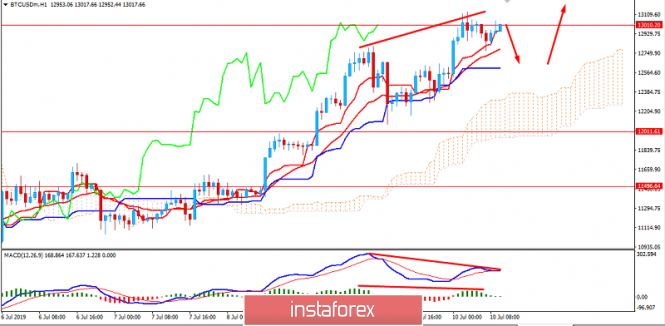
- BTC 07.10.2019 - Strong sell zone at $13.000
- EURUSD bounces towards our short-term target and resisance of 1.1250
- Gold bounces off support but is trading still inside trading range
- EURUSD: The US dollar fell after the Fed Chairman said he expected a slowdown in the US economy in the 2nd quarter of this
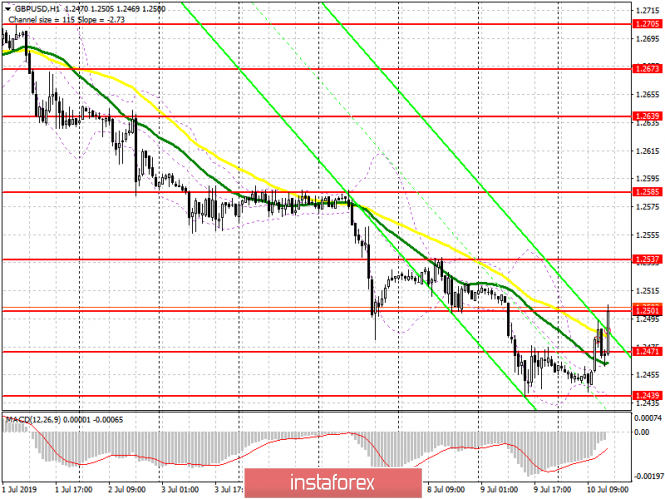
- GBP/USD: plan for the American session on July 10. Pound buyers returned to the market, but hardly for a long time
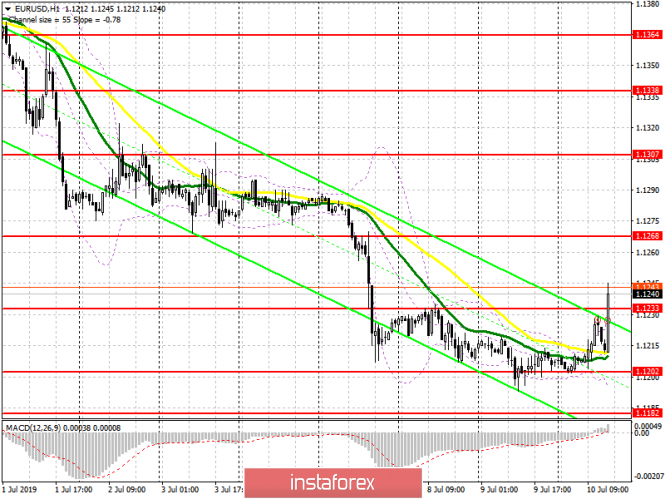
- EUR/USD: plan for the American session on July 10. Powell's statements put pressure on the US dollar
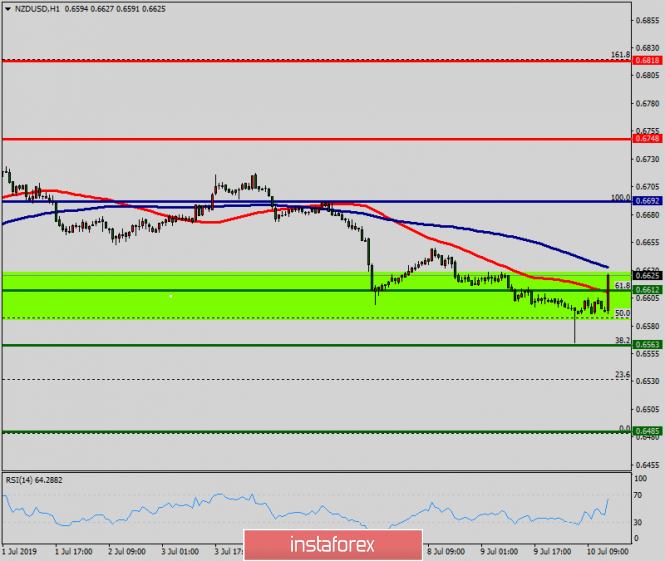
- Technical analysis of NZD/USD for July 10, 2019
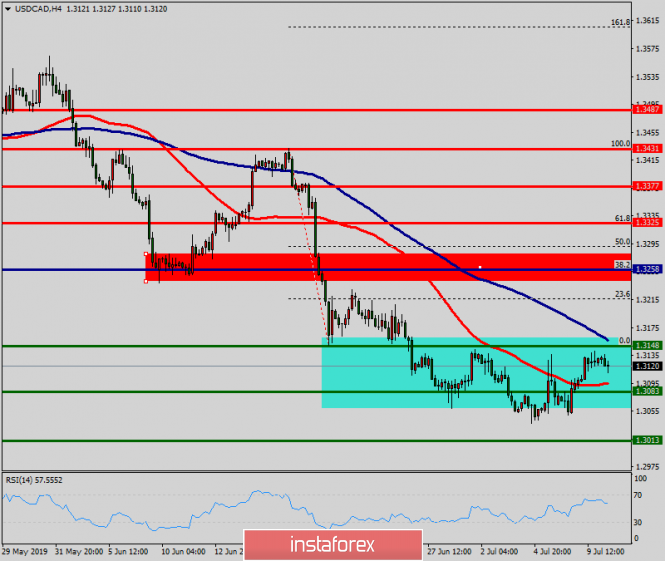
- Technical analysis of USD/CAD for July 10, 2019
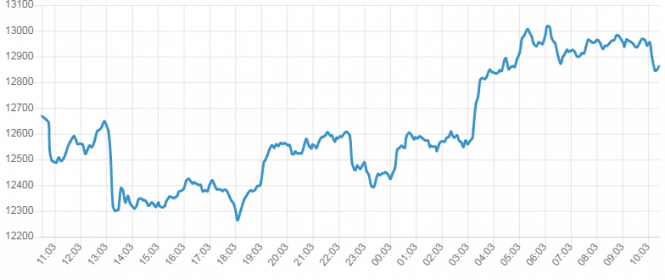
- BITCOIN finds resistance at $13,000. July 10, 2019
- The digital leader is in the race: Bitcoin is growing again
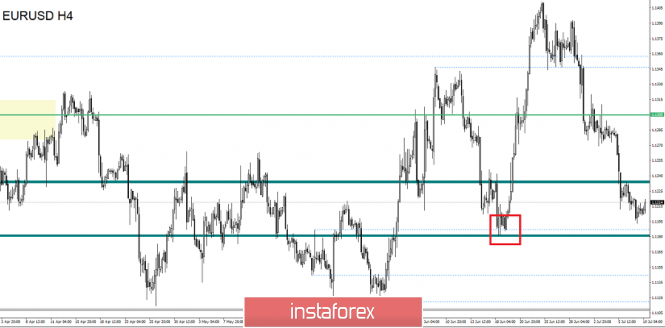
- Trading recommendations for the EURUSD currency pair - placement of trading orders (July 10)
- Trading plan for EURUSD on 07/10/2019
- Breaking forecast 07/10/2019 EURUSD and trading recommendation
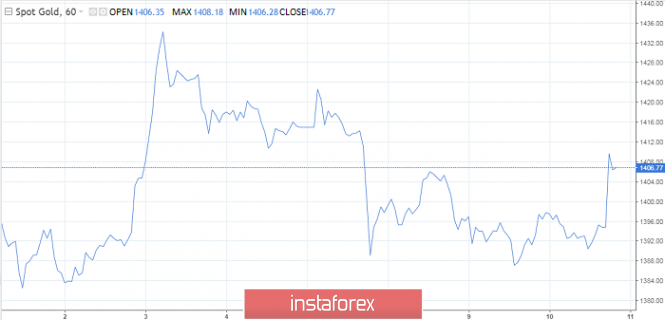
| The market is waiting for gold at $1500 Posted: 10 Jul 2019 04:49 PM PDT Gold is now trading near a six-year peak of $1,439 a week ago. A return to $1,400 is unlikely to be a problem, investors are most interested in whether quotes will manage to get to their favorite level of $1,500 and move on. This, in particular, will depend on what the Fed's main figures will say this week. It all starts with Jerome Powell's two-day speech. Market participants have reduced their appetite for the pace of rate hikes in the United States after the release of strong data on employment, but still believe in a symbolic easing policy. In Powell's words, they will scrupulously look for hints of the prospects for lower rates this month. The publication of the minutes of the June Fed meeting is significant for gold traders. This document will help them better understand why the officials then decided to postpone the rate cut. In June, officials removed the word "patience" from their statement, and Powell recently used the phrase "prevention is better than treatment". This suggests that the US central bank is leaning toward preventive policy easing in order to avoid a possible slowdown in the economy. Judging by the past meetings, the US regulator is known for its discretion. Therefore, it may not postpone the rate cut by 25 bp, which the market relies on so much to follow the situation in the country's economy. It is worth noting that there are traders expecting a decline of 50 bp, but such units. This week, there will be a whole group of Fed officials and the most interesting one for investors will be the President of the Federal Reserve Bank of St. Louis, James Bullard. At the June meeting, he was the only one who did not agree with the decision to leave interest rates unchanged. Bullard compared with other members of the Fed committee holds the most dovish stance. Analyst opinions on gold Gold will reach $1,500 and move higher, according to Bank of America Merrill Lynch. However, strategists are worried about short-term risks. "The market overestimated the likelihood that the US central bank will lower rates," and if policy easing is postponed, for example, "due to the constructive results of the G20 summit," this will cause a drop in precious metal prices. The same opinion is shared by UBS. However, they are waiting, gold will end the current year below $1,400, the next one will be close to $1,450, and only then will investors see the coveted mark of $ 1,500. The National Australia Bank raised its forecast for the price of the yellow metal in 2019 to $1,400 per ounce. Earlier it was about $ 1,380 per ounce. "We are still expecting two reductions in the US Federal Reserve rates - in July and September. This will support the precious metal," analysts wrote. Gold is expected to become more attractive in the event of a further decrease in the yield of G7 countries. The demand for precious metals will grow from both long-term investors and short-term speculators. The world's central banks will also show an increased interest in gold. The material has been provided by InstaForex Company - www.instaforex.com |
| Perhaps the pound would like to touch the heavens, but it's hardly worth waiting for miracles Posted: 10 Jul 2019 04:49 PM PDT If in the spring, currency market participants argued about how long the pound would take to recover from last year's highs, now, according to some analysts, the British currency is directed at 2017 lows. The inability of bears on GBP/USD to update the multi-month lows that were recorded yesterday was the reason for taking profits on short positions in the pound. The publication of positive statistics for the UK has given a fresh impetus to this process, providing a breakthrough to levels above 1.25. According to the National Statistical Service (ONS), the country's GDP expanded by 0.3% in May compared to April, when a decrease of 0.4% was noted. In annual terms, the figure increased by 1.5%. ONS analysts noted that the recovery of economic growth was mainly provided by the car manufacturing sector. According to them, the state's GDP may continue to decline in quarterly terms. "The growth rate in May was a pleasant event, but it is unlikely to be sustainable. We believe that by the end of the second quarter the indicator will be close to zero. At the same time, an improvement in the situation in the third quarter is not expected. Reducing political tensions in the UK should be expected no earlier than July 23, when the name of the country's new prime minister is finally known. However, after clarifying this issue, the focus will shift to the negotiations on Brexit, which may put additional pressure on the pound," ING representatives said. They adhere to the forecast for GBP/USD at the end of the third quarter at 1.22. Strategists at TD Securities, in turn, believe that the latest statistical data on the UK may give reason for some reduction in the "shorts" for the pound, but no more. "It is obvious that a lot of negative was taken into account in the pound, but we still see no reason for investors to reassess risks, and we believe that the GBP/USD decline to new lows remains the least resistance when the currency market participants warm against the dollar. At the same time, we expect the GBP/USD pair to recover by 1.29 by the end of the third quarter," said TD Securities. "Over the past few months, the pound has dropped significantly, but the potential for its decline has not been exhausted. The uncertainty factor in the question of the UK's withdrawal from the EU remains. The fundamental picture also looks less and less favorable. In particular, we see the risks of reducing the country's GDP in the second quarter, which will push the Bank of England to further soften the rhetoric at a meeting in August," said MUFG experts. "We do not believe that the GBP/USD pair will be able to stabilize at the lows of December 2018 - January 2019, and we believe that attempts at its growth should be considered as an opportunity for selling. A break below 1.2500 will be a blow to the bulls and will pave the way for movement to the 1.20 mark," they added. The material has been provided by InstaForex Company - www.instaforex.com |
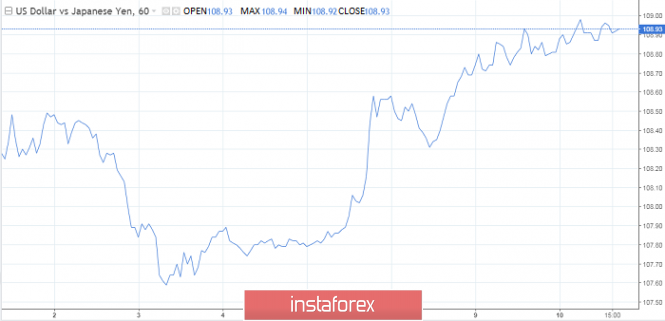
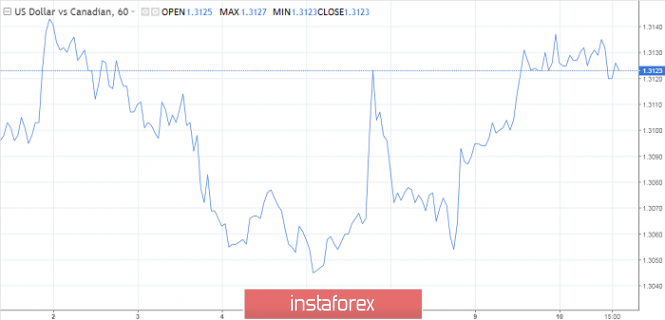
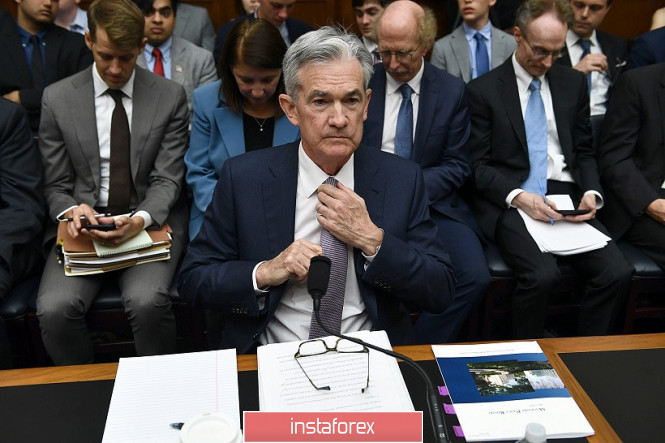
| Powell, the Fed Minutes, the central bank of Canada ... Who shakes the markets? Posted: 10 Jul 2019 04:48 PM PDT Jerome Powell will begin his two-day speech in Congress today. In the coming days, the dynamics of the dollar will largely depend on the Fed chairman's tone and his economic comments. In anticipation of an important event, the dollar index froze near highs reached as a result of the publication of strong statistics on employment in the United States. The questions that are most interesting to the market are: has that anxious time come when easing of monetary policy is necessary to save the country from a recession? Is there enough uncertainty in US trade policy to justify a rate cut while the economy is fine? The futures market has now significantly reduced the likelihood of a rate cut by 50 bp at the meeting in late July from 40% to less than 2%, and in 2019 - from 65% to 41%. Mitigation is seen as a safety net, aimed at changing the slope of the yield curve - an indicator that accurately predicts recessions over the past 50 years. It is clear that the market overreacted to the testimony about the US central bank's readiness to reduce the rate. The growing risks of the ECB's earlier reaction to the problems of the eurozone economy are supporting sellers of EUR/USD. A need for ultrasoft monetary policy in Europe, said Benoit Coeure. Following him, a dovish rhetoric noted from Philip Lane. According to the leading economist of the ECB, the region is in dire need of a monetary stimulus due to weak inflation and the threat of weakening GDP growth. According to Bloomberg respondents and the derivatives market, the European regulator will declare its desire to lower rates at the next meeting and possibly revive QE. It will most likely begin to take action in September. What if the prediction is wrong and the central bank starts taking action as soon as possible? In this scenario, the euro cannot escape from a powerful blow. This is a bit later, but for now traders are significantly focused on Jerome Powell, who may well overshadow the minutes of the June meetings of the Fed and the ECB. He can both confirm the readiness to reduce the rate in July and put an end to it. In the second case, Powell risks provoking a collapse of US stock indices, which is already difficult to keep at record highs. It is worth noting that over the past two decades, the belief in easing the Fed's policy was not a long-playing driver for the S&P 500. The stock index fell after the expected earnings of issuers of shares for the next 12 months went down to zero. Now the indicator has dropped to 3% from more than 20% in December. The S&P 500 correction is an argument for buying safe-haven assets, including the yen, franc and gold. Powell can delay it, but not stop it. His neutral position will allow euro bulls to grab the $1.12 mark, while the hawks drop the top pair. As for the yen, it can resume growth in tandem with the dollar in the region of 107.50. This will happen if the Fed recognizes the need for monetary easing. Bank of Canada This is perhaps the only central bank in the world that has not begun to talk about policy easing, and everyone is looking forward to when this happens. At the May meeting, financial regulator officials remained optimistic, calling the slowdown in the economy a temporary phenomenon. Since then, the first signs of weakness have appeared. Retail sales in April almost did not increase, the number of employees in June decreased. However, in May, the labor market set a new record, and wage growth accelerated. The picture is unclear, and the Bank of Canada is likely to prefer to wait for new data before initiating talk about lower rates. If officials find that recent weak performance means nothing, USD/CAD will continue to fall to the lowest level in 1.5 years. A long-term low could begin to form for the USD/CAD pair only when the central bank becomes cautious.  |
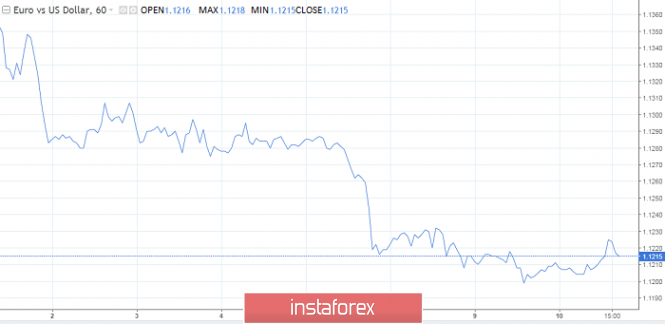
| EUR/USD: Will Jerome Powell and the FOMC "Minutes" say something new to the dollar? Posted: 10 Jul 2019 04:35 PM PDT The focus of traders is the speech of the head of the Federal Reserve System (FRS) of the US Jerome Powell in Congress and the publication of the minutes of the June meeting of the FOMC. It is assumed that they will shed light on the way in which the Federal Reserve's next meeting, scheduled for the end of July, will take place. The EUR/USD pair is trading near the 1.1220 mark in anticipation of signals from the Fed. Since the June data on the US labor market turned out to be stronger than previously expected, the need to mitigate the Fed's monetary rate has slightly dropped, and record high quotes on the American stock market, which received support from cheap money, are beginning to put pressure on investors, who have recently, surprisingly , rejoiced at weak US economic data and grieved because of signs of recovery of the country's economy. "Are we really in a world turned upside down, where the good state of the US economy is the worst thing in the world for markets, since it raises doubts that the Fed will continue to generously distribute money?" Said John Hardy, chief currency strategist Saxo Bank. Last month, the Fed hinted that it was prepared to lower the rate in order to support economic growth in the United States in the context of trade wars. The derivatives market still assesses the probability of a rate cut at the July FOMC meeting at 100%. Speech by the Fed Chairman in Congress This week, Fed Chairman Jerome Powell should signal to the market what the regulator intends to do in the future. It is unclear whether the US central bank will act or is still not sure and will continue to monitor the incoming data. Today, the Fed chairman will deliver a semi-annual report on monetary policy in the Financial Services Committee of the House of Representatives, and tomorrow in the Senate Banking Committee. Most likely, during the speeches in Congress, J. Powell will leave the door wide open to lower the federal funds rate, although the latest release on the US labor market has weakened arguments in favor of haste with monetary easing. It is possible that the head of the Fed may repeat the wording from the June statement and that the regulator will act accordingly to support economic growth in the country. This may strengthen the market in the opinion that the US central bank will lower the interest rate at the next meeting on July 30-31. FOMC Minutes The minutes from the last FOMC meeting will be released today. This publication is important in order to determine the course of the Fed's current policy and its future prospects. The minutes will contain clarifying details regarding the outcome of the June Fed meeting and can demonstrate how "soft" the regulator's position is now. The fears of the latter are primarily related to international trade. Although Washington and Beijing at the G20 summit agreed to restart trade negotiations, only time will tell whether the parties can make real progress. It is expected that the "soft" tone of the minutes will have a negative impact on the US dollar, while the "hard" rhetoric of the Fed's leadership regarding monetary policy prospects will push the greenback to further growth, including in relation to the euro. EUR/USD outlook A regular meeting of the Federal Reserve is set to take place at the end of July, according to the results of which market participants are waiting for a reduction in the federal funds rate by 0.25%. At the same time, analysts seriously fear that if the Fed does not lower the rate, the head of the White House, Donald Trump, may proceed to active actions aimed at weakening the US currency. "Can frustration with the Fed's policies encourage the US president to take matters into his own hands and weaken the dollar? If the ECB lowers rates at the end of July or starts a new round of quantitative easing in September, and this will increase the pressure on the EUR/USD pair, Washington could potentially react. Given the threat of currency intervention, we assume that the dollar will reach highs this summer. Therefore, we maintain our forecast for the EUR/USD pair at 1.15 for the end of the year," noted currency strategists at ING. Bipan Rai, North America Head of FX Strategy at CIBC, noted that this scenario is not basic for the bank, but with such a development, the US Treasury may require the Fed to liquidate its balance in order to free up more dollars for market intervention. "This may have a long downward pressure on the greenback, given the incredible size of the Fed's balance sheet," the analyst said. Meanwhile, Barclays analysts believe that the decline in the dollar can be forgotten, while the euro, by contrast, looks even more vulnerable. "Although, in general, the latest statistics on the United States were mixed, they showed that the positive momentum persists, particularly in the labor market. Under these conditions, the Fed may stick to "soft" rhetoric, however, the regulator definitely has no reason to rush to the actual reduction in rates. At the same time, signals from the eurozone turned out to be negative. A recession combined with low inflation in the region will force the ECB to go for additional easing, although it will not be easy. Therefore, we decided to lower the outlook for EUR/USD at the end of the third quarter from 1.14 to 1.12, and at the end of the year from 1.11 to 1.10," Barclays said. The material has been provided by InstaForex Company - www.instaforex.com |
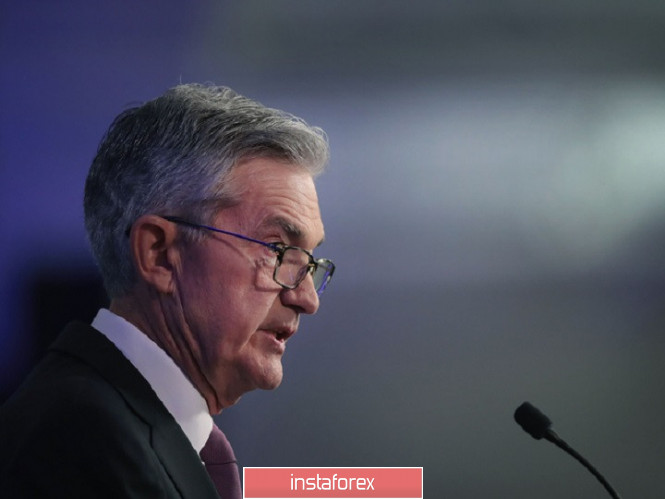
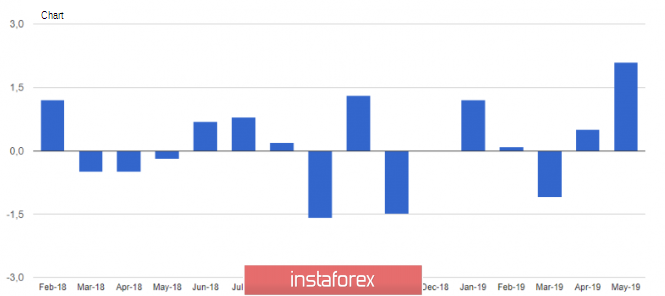
| EUR/USD. 1-0 in favor of the euro Posted: 10 Jul 2019 04:21 PM PDT The US dollar did not rest long on its laurels: after Friday's take-off on strong Nonfarm, today it began to swoop down just as rapidly throughout the entire market. Contrary to the hopes of dollar bulls, the Federal Reserve chief did not revise his position on the prospects for monetary policy and in fact confirmed the previously announced intention to lower the interest rate at the July meeting. The tone of his rhetoric was quite categorical and key messages were not ambiguous. Powell made it clear that the Fed is ready to ease monetary policy, and will proceed to this step in the very near future. The key message of the Fed head is that the US economy is in a strong form, but assistance from the regulator is needed in order to maintain it - in the form of lower interest rates. Throughout his speech, he cited facts arguing this idea. In general, despite the fact that Powell has positively assessed the state of the US economy, he expressed serious concern about its prospects. The head of the US Federal Reserve noted that after the June Fed meeting (at which, in fact, the dovish intentions of the regulator were announced), the overall uncertainty only increased. Powell actually offset the optimism of traders associated with the outcome of the US-China talks in Osaka. He said that a truce is certainly a positive signal, but in general the situation has not changed. Global trade conflicts, according to Powell, have slowed the economic momentum in many countries, and this fact has a negative effect on the US economy. A temporary truce, unfortunately, does not solve these problems. Denoting problems of a global nature, Powell also mentioned Brexit (which is likely to follow the "hard" scenario), as well as the issue of federal debt. As for internal problems, the key "headache" of the Fed is inflation. According to Jerome Powell, inflation continues to be weak, and this weakness may be more stable and systemic. It is worth recalling that during the first half of the year, the Fed chief assured investors that the slowdown in key inflation indicators is a temporary phenomenon, and that the situation will change for the better in the second half of the year. Now Powell is by no means certain of that. According to him, the latest indicators of wage growth are "very weak" for accelerating inflation (the June figures were in the red zone, not reaching the forecast values). Early inflation indicators suggest that inflationary pressure will remain muted this year. The latest published releases were really not in favor of the dollar. For example, the indicator of consumer confidence in Americans slumped to two-year lows, and the volume of orders for durable goods disappointed traders with negative dynamics. The indicator remained in the negative area (-1.3%), thus continuing the April trend. It is also worth noting the fall in business investment, the slowdown in global growth and the decline in investment in housing and manufacturing. I'm not even talking about the release of the consumer price index (general and pivotal), which also showed weak growth. In other words, Powell's dovish position looks quite justified. It even "got" to the US labor market, which showed growth last Friday. Powell stated a fact, but noted that for many residents of the United States, this growth was "uneven". He voiced the structure of Nonfarms, according to which Asians and whites found work more often, unlike African Americans and Latin Americans. Powell also assured Congress that the labor market is not "overheated", and therefore there is no need to restrain with high rates. Thus, Jerome Powell made it clear that the Fed will cut interest rates by 25 basis points at the end of this month. But the next steps of the regulator will depend on the incoming data, above all - inflation. The head of the Fed has mentioned that the real numbers may show a lower result relative to the preliminary forecasts of the regulator. In this case, he assured members of Congress that the Fed "will use all its means to keep economic growth and key indicators in the right path." In other words, inflation indicators will particularly strongly influence the dollar position - and in this context, tomorrow's release can cause increased volatility for the EUR/USD pair. We are talking about the publication of data on the growth of US inflation. The overall consumer price index should show a negative trend, dropping to 1.6% in annual terms and down to zero - on a monthly basis. Core inflation, excluding prices for food and energy, can demonstrate minimal growth in monthly terms (from 0.1% to 0.2%) and remain at the same level (2.0%) in annual terms. If the real numbers are below fairly weak forecast values, the dollar may again fall under the wave of sales. Tomorrow, Powell will continue his speech in the US Congress - this time in the Banking, Housing and Urban Affairs Committee. Today's round of "correspondence" has ended in favor of the euro. On Thursday, EUR/USD bulls can consolidate their results and enter the area of the 13th figure, hinting at the restoration of the upward trend. The material has been provided by InstaForex Company - www.instaforex.com |
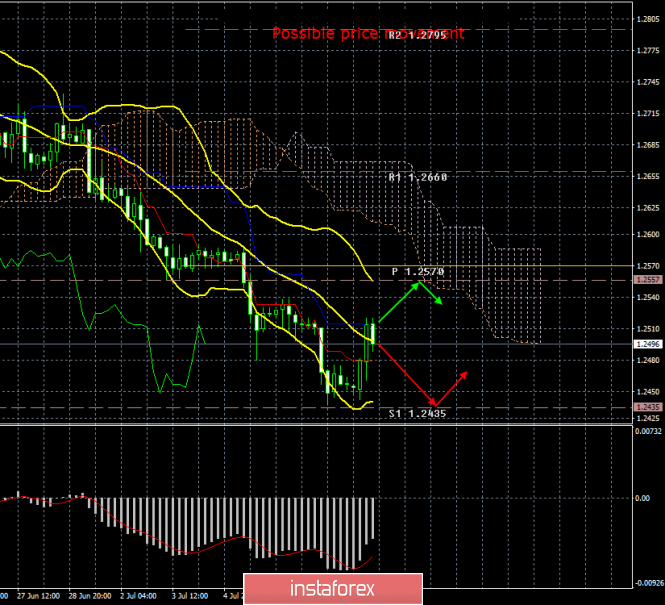
| Posted: 10 Jul 2019 04:07 PM PDT 4-hour timeframe The amplitude of the last 5 days (high-low): 43p - 25p - 107p - 40p - 81p. Average amplitude for the last 5 days: 59p (56p). Today, the British pound also adjusted to the critical Kijun-sen line and for the same reasons as the euro. Today, data on the UK's GDP in May was released (+ 0.3% m/m) and industrial production in May (+0.9% y/y and + 1.4% m/m), this in no way affected the movement of the pound/dollar currency pair. From the morning, traders began to trim short positions due to the concerns of Jerome Powell's dovish rhetoric in Congress. However, it can be said that the fears were not justified. Even if Powell's rhetoric can be regarded as a concrete signal to the reduction of the key rate in July or September, by and large, the situation has not changed either for the US dollar or the pound sterling. The US dollar may begin a protracted decline when the rate will indeed be reduced and that is not a fact, since the political crisis and uncertainty around Brexit in the UK are not resolved. Accordingly, the pound is still in a losing position compared to the US currency. At the moment, the pound/dollar pair has fulfilled the Kijun-sen line just like the euro/dollar pair. The price rebound from this line may trigger a resumption of a downward trend, which, from our point of view, will be reasonable. Another speech from Powell at the Congress will take place tomorrow, this time in front of the banking committee, but it's unlikely there will be fundamentally new information. However, we still do not recommend to lose sight of this event. Trading recommendations: The pound/dollar currency pair started an upward correction. Thus, traders are advised to wait for its completion (a rebound from the Kijun-sen line) and re-sell the pound sterling in order to support the level of 1.2435. It will be possible to buy the British currency not earlier than consolidating the pair above the critical line. In this case, the bulls will have a small chance to form an upward trend with the first target of 1.2557. In addition to the technical picture should also take into account the fundamental data and the time of their release. Explanation of the illustration: Ichimoku indicator: Tenkan-sen - the red line. Kijun-sen - the blue line. Senkou Span A - light brown dotted line. Senkou Span B - light purple dotted line. Chikou Span - green line. Bollinger Bands indicator: 3 yellow lines. MACD Indicator: Red line and histogram with white bars in the indicator window. The material has been provided by InstaForex Company - www.instaforex.com |
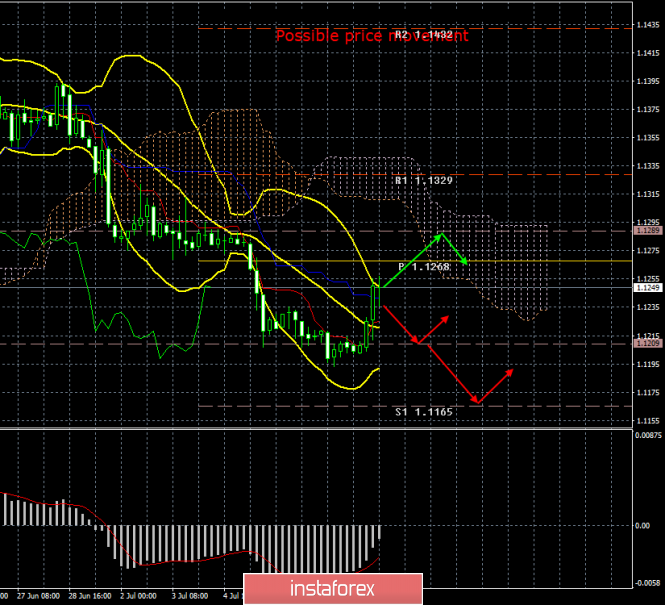
| EUR/USD. July 10th. Results of the day. Jerome Powell did not report anything new to the markets Posted: 10 Jul 2019 03:52 PM PDT 4-hour timeframe The amplitude of the last 5 days (high-low): 44p - 22p - 81p - 28p - 26p. Average amplitude for the last 5 days: 40p (44p). The strengthening of the European currency began early in the morning of July 10th. It was caused solely by profit taking by bears on dollar positions opened earlier. In anticipation of Jerome Powell's speech to the Congressional Financial Services Committee, traders decided not to take risks and close some of their shorts. The likelihood that Powell will adhere to a "dovish" rhetoric was present. However, as it became known just an hour ago, the dovish rhetoric, though preserved in Powell's speech, was nothing new to the markets and was not communicated to Congress. The key points of his speech were "economic uncertainty has increased in recent months," "the slowdown in the growth of the economies of some large countries may affect the economy of the United States," "requires resolution of the issue of US trade policy," "weak inflation may take longer than we (the Fed) expect now." However, Powell notes, the baseline scenario still assumes steady growth and a strong labor market. Thus, in brief, Powell and the Federal Reserve are afraid of various factors that may have a negative impact on the US economy, but at the same time, in their absence, steady economic growth will continue. We believe that the speech of the Fed chief can be regarded as moderately dovish. No way weaker than after the last Fed meeting. Thus, new grounds for suggesting a reduction in the key rate did not appear in July, and the morning fears of traders were in vain. It facilitates the analysis of the euro/dollar currency pair that the fact now is the price has fulfilled a critical line. Accordingly, a price rebound from it will trigger a resumption of a downward trend, which will be logical from a fundamental perspective. Overcoming the line Kijun-sen will make it possible to continue the pair's corrective growth, which can be purely technical. Trading recommendations: The EUR/USD pair has begun to be adjusted. Thus, it is now recommended to wait for a rebound from the Kijun-sen line and sell the pair with targets at 1.1209 and 1.1165. It is recommended to buy the euro/dollar pair in small lots not earlier than when the price consolidates above the Kijun-sen line with the first target level of 1,1289 and the Senkou Span B line. In addition to the technical picture should also take into account the fundamental data and the time of their release. Explanation of the illustration: Ichimoku indicator: Tenkan-sen - the red line. Kijun-sen - the blue line. Senkou Span A - light brown dotted line. Senkou Span B - light purple dotted line. Chikou Span - green line. Bollinger Bands indicator: 3 yellow lines. MACD Indicator: Red line and histogram with white bars in the indicator window. The material has been provided by InstaForex Company - www.instaforex.com |
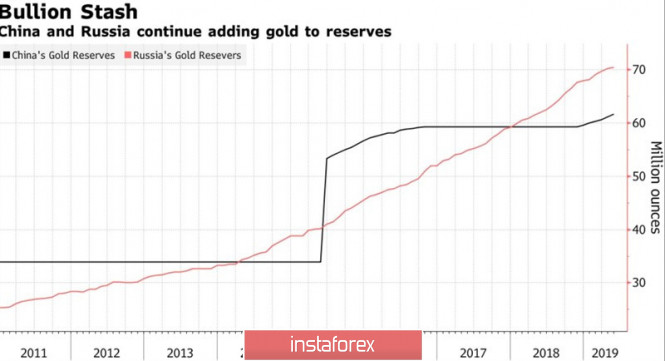
| Gold is dancing to the music of central banks Posted: 10 Jul 2019 03:42 PM PDT Profit taking on long speculative positions after the release of strong statistics on the US labor market in June gave gold the second worst day in 2019. Futures quotes slumped by 1.6%. This is slightly better than -1.8% on the first day of July on the information that Donald Trump was able to negotiate with Xi Jinping to resume the Washington-Beijing trade negotiations. In general, in the current year, the precious metal lost 1% or more of its value per day by only six times, and its market conditions, despite the retreat at the end of the first half of summer, remain bullish. Over the last month, according to Commerzbank's estimates, the stocks of specialized exchange funds (ETF) increased by 110 tons, and speculators increased net long positions in gold by six times. The persistence of geopolitical tensions, protectionism and a slowdown in the global economy force the central banks to diversify reserves in favor of the precious metal. In 2018, their reserves expanded by 651.5 tons (+ 74% y/y), from January to May 2019 - by 73% y/y. If Russia and China will increase their purchases of gold at the same pace as last year, the total amount of reserves of regulators, according to Citigroup, may increase by 700 tons. In June, the People's Bank of China purchased another 10.3 tons, increasing gold reserves by 84.3 tons in seven months. Dynamics of China's gold reserves and Russia The current situation in monetary policy has a lot in common since 2011, when the leading central banks of the world actively used incentive programs in the fight against the global economic crisis. In particular, rumors that the US QE will provoke hyperinflation pushed XAU/USD quotes to record highs. It has now become clear that the asset purchase program is not as dangerous as previously thought. Inflation did not accelerate to 50%; nevertheless, the fact that $13 trillion of debt obligations are traded with negative returns due to ultra-soft monetary policy provides serious support to the precious metal. In addition, it traditionally sensitively reacts to the growth of the US budget deficit. In 2009-2011 it exceeded 10% of GDP and, according to estimates of the Congressional Budget Office, in 2049 it will more than double compared with current values up to 8.7% of GDP. UBS predicts that gold will rise to $1,450 by the end of 2019, and to $1,500 per ounce by the end of 2020, amid a weaker US dollar and lower US bond market rates. In the short run, speeches by Jerome Powell in front of the House of Representatives and the Senate can influence its dynamics. The Fed chairman can both refute and ratify the idea of a futures market to lower the federal funds rate in July. Technically, as long as the quotes of the precious metal are above $1,372 and $1,352 per ounce (38.2% and 50% of the CD wave of the AB = CD pattern), bulls continue to control the situation. Updating the June highs activates AB = CD with targets of 161.8% and 200%. The first of them corresponds to the mark of $1475, the second - $1490. The material has been provided by InstaForex Company - www.instaforex.com |
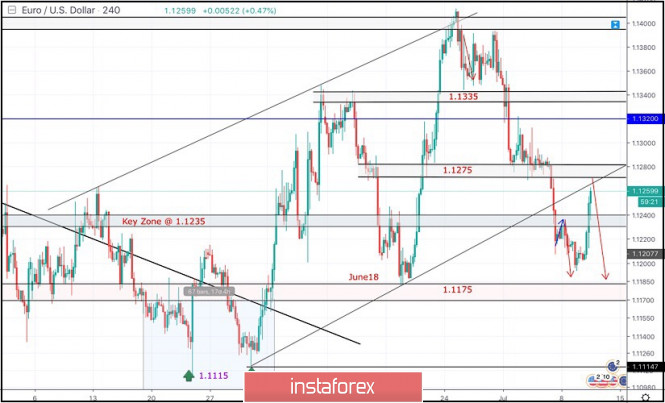
| July 10, 2019 : EUR/USD is facing a confluence of SUPPLY levels around 1.1275. Posted: 10 Jul 2019 09:04 AM PDT
On the highlighted period between (May 17th and June 5th), temporary bearish breakdown below 1.1175 was demonstrated on the chart. This allowed further bearish decline to occur towards 1.1115 where significant bullish recovery brought the EUR/USD pair back above 1.1175 which stands as a prominent DEMAND level until now. Initially, Temporary Bullish breakout above 1.1335 was demonstrated (suggesting a high probability bullish continuation pattern). However, the EURUSD pair has failed to maintain that bullish persistence above 1.1320 and 1.1275 (the depicted price levels/zones). This was followed by a deeper bearish pullback towards 1.1175 where significant bullish price action was demonstrated on June 18. The EURUSD looked overbought around 1.1400 facing a confluence of supply levels. Thus, a bearish pullback was initiated towards 1.1275 as expected in a previous article. Further Bearish decline below 1.1275 enhanced a deeper bearish decline towards 1.1235 (the lower limit of the newly-established bullish channel) which failed to provide enough bullish support for the EUR/USD. The recent bearish breakdown below 1.1235 invited further bearish momentum to move towards 1.1175. However, significant bullish momentum was earlier demonstrated around 1.1200 bringing the EUR/USD pair again above 1.1235. That's why, the current bullish pullback is expected to pursue towards the price zone around 1.1275 where a confluence of resistance/supply levels come to meet the pair. Bearish price action should be anticipated near the price zone of 1.1275 where a valid Intraday SELL position can be considered. Trade recommendations : For Intraday traders, a valid SELL entry is expected to be offered at retesting of the broken key-zone around 1.1275. Initial Target levels to be located around 1.1235, 1.1200 and 1.1175. Stop Loss should be placed above 1.1300. The material has been provided by InstaForex Company - www.instaforex.com |
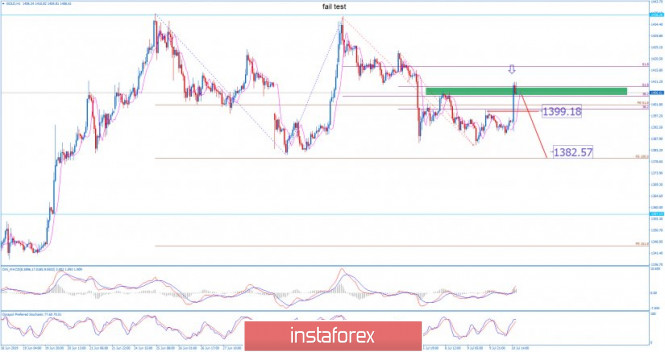
| Gold 07.10.2019 - Good sell zone around $1.408 Posted: 10 Jul 2019 08:04 AM PDT The Gold did exactly what I expected yesterday. Gold is at the critical Fibonacci confluence resistance at the price of $1.408. This area may provide very good selling opportunity.
On the 4H time-frame I found that there is rejection of the key Fibonacci confluence that I marked with the green rectangle. It is not bad idea to look for short opportunity on the Gold with the potential protective stop at $1.415. There is a good chance that Gold trades at least to previous swing high at $1.399 or even $1.382. On Daily time-frame, I found that there is the test of the 3DMA, which provides nice resistance. The material has been provided by InstaForex Company - www.instaforex.com |
| July 10, 2019 : GBP/USD heading towards 1.2540 based on the recent bullish rejection around 1.2450. Posted: 10 Jul 2019 08:02 AM PDT
Since May 17, the previous downside movement within the depicted bearish channel came to a pause allowing the recent sideway consolidation range to be established between 1.2750 - 1.2550 with a prominent key-level around 1.2650. On June 4, temporary bullish consolidations above 1.2650 were demonstrated for a few trading sessions. However, the price level of 1.2750 (consolidation range upper limit) has prevented further bullish advancement. Moreover, early signs of bearish rejection have been manifested (Head & Shoulders reversal pattern with neckline located around 1.2650). Bearish breakdown below 1.2650 (reversal pattern neckline) confirmed the reversal pattern with bearish projection target located at 1.2550, 1.2510 and 1.2450. Short-term outlook remains under bearish pressure as long as the market keeps moving below 1.2650 (mid-range key-level and neckline of the reversal pattern). In general, the recent Bearish breakdown below 1.2570 - 1.2550 (the lower limit of the depicted consolidation range) confirms a trend reversal into bearish on the intermediate term. Immediate bearish decline was expected towards 1.2505. Further bearish decline was expected to pursue towards 1.2450 (the lower limit of the current movement channel) where early signs of bullish rejection were manifested. The current bullish pullback towards 1.2550-1.2570 should be considered as a valid SELL signal for Intraday traders. On the other hand, An Intraday bullish position can ONLY be considered if the current bullish rejection manages to bring the GBP/USD again above the price level of 1.2540. If so, Intraday bullish target should be projected towards 1.2650. Trade Recommendations: Conservative traders can have a valid SELL Entry anywhere around the lower limit of the broken consolidation range near (1.2550-1.2570). T/P levels to be located around 1.2490 and 1.2440. S/L should be placed above 1.2610. The material has been provided by InstaForex Company - www.instaforex.com |
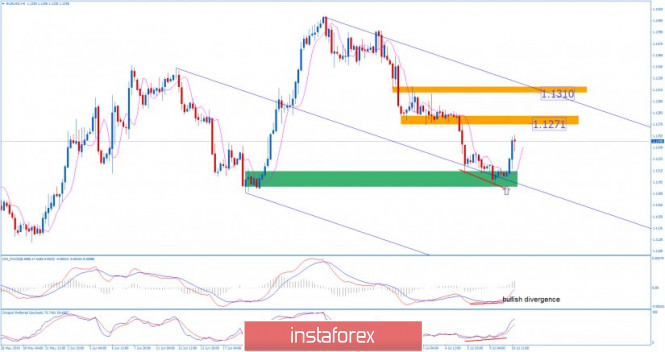
| EUR/USD for July 10,2019 - Strong rally of key support Posted: 10 Jul 2019 07:50 AM PDT The EUR did exactly what I expected yesterday. The EUR reacted from the critical support at the price of 1.1192 and rallied very well on the upside. Our up targets are still in the play at 1.1270 and 1.1310. If you have long position from yesterday, it is good idea to exit partial or at least move your stop on the breakeven.
The fundamental focus now shifts to the FOMC meeting minutes later in the day. On the 4H time-frame I found that there is bull cross on the Stochastic and MACD, which represents short-term upward trend in place. It is interesting that EUR rejected exactly from the Pitchfork median line, which served very well like support. If you see the break of the 1.1310, there is chance that EUR may go to 1.1400. The material has been provided by InstaForex Company - www.instaforex.com |
| BTC 07.10.2019 - Strong sell zone at $13.000 Posted: 10 Jul 2019 07:39 AM PDT Industry news: Marlin Protocol has reeled in a $3 million seed round from Binance Labs, Arrington XRP, Electric Capital, NGC and other investors. The startup, based in San Francisco and Bangalore, India, works to increase network speeds across a variety of block chains. Throughput constraints – or limitations on how much data can smoothly flow through a network – are seen as a major impediment to widespread block chain adoption. Trading recommendation:
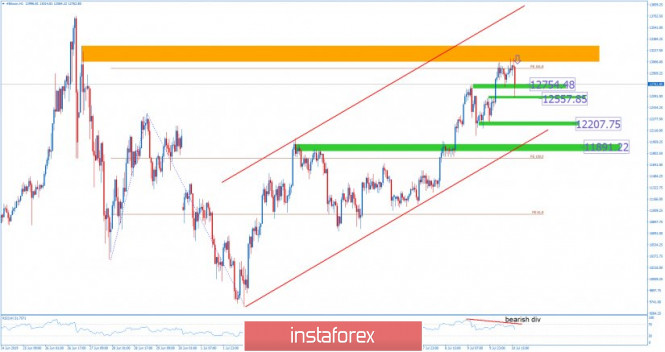
BTC did test very strong resistance at the price of $13.000 also round number. The zone from $13.000 to $13.300 is critical for BTC. I found that buyers struggling to break trough, which can be a first warning for the further downside. Orange rectangle – $13.000-$13.300 (Strong resistance) Green rectangles- Support levels at $12.557, $12.207 and $11.900 RSI – Bearish Divergence RSI oscillator is showing the bearish divergence and reading below 70, which is good indication for the potential downward movement.. As long as the BTC is trading below the key swing high at $13.700, I would watch for selling opportunities on the rallies, level of $13.00 looks like a solid sell zone. Downward targets are set at the price of $12.557, $12.200 and $11.890. The material has been provided by InstaForex Company - www.instaforex.com |
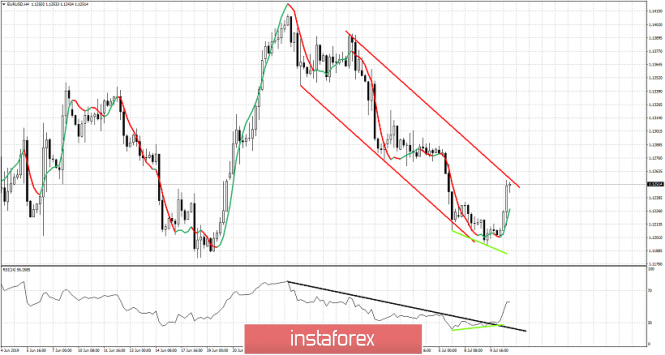
| EURUSD bounces towards our short-term target and resisance of 1.1250 Posted: 10 Jul 2019 06:52 AM PDT EURUSD has finally bounced as expected towards 1.1250. The bullish divergence warning signs we mentioned in our last analysis have been confirmed and price is now testing short-term channel resistance as expected.
Red lines - bearish channel Green line - bullish divergence Black line - RSI resistance The RSI resistance has been broken. The bearish channel remains and we remain cautious as a rejection at current levels would push price to 1.1150-1.1170. Breaking above 1.1280 which is the next important resistance would be an important short-term bullish reversal sign. Bulls now want to see price making higher highs and higher lows, Support is at 1.1195 and they do not want to see price below it. On the other hand they want to see price pull back make a lower high and then break out of the bearish channel. Bears remain in control of the trend despite the bounce in EURUSD. Bears now want to see a rejection at current levels and a break below 1.12. The material has been provided by InstaForex Company - www.instaforex.com |
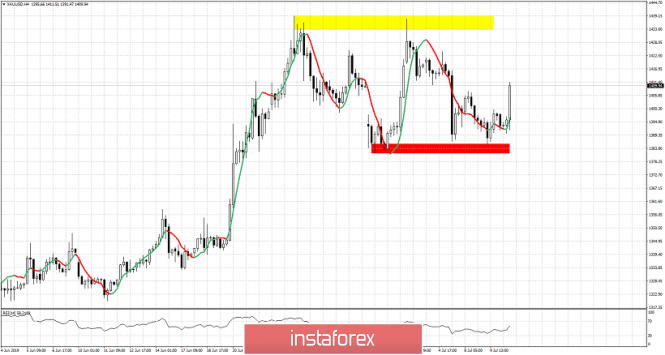
| Gold bounces off support but is trading still inside trading range Posted: 10 Jul 2019 06:46 AM PDT Gold price is bouncing off the $1,385 support area. Our view to be bullish near support and bearish near resistance remains the same and is working nicely thus far. However we should also be very cautious in case we see price break out of the trading range.
Yellow rectangle - resistance Gold price has respected support at $1,385-90 and is now trading again above the $1,400 level. Gold price has resistance at $1,440 and a break above this level will open the way for a move towards $1,500-$1,525. A rejection and reversal near $1,440 will increase the chances of a move back below $1,400 with increased chances of breaking below $1,385. For now price remains supported. If support fails to hold we should expect Gold to reach $1,330-$1,300. The material has been provided by InstaForex Company - www.instaforex.com |
| Posted: 10 Jul 2019 06:27 AM PDT The euro and the pound rose sharply only after Fed Chairman Jerome Powell's speech in the US Congress, while reports on France's industrial production and UK GDP growth in the first half of the day were almost ignored by traders. According to data, industrial production in France in May this year increased more than economists had expected. Thus, industrial production in May increased by 2.1% compared to April this year, where the data were revised upwards to +0.5%. Economists had expected growth to be only 0.2% in May. Compared to the same period in 2018, industrial production in France increased by 4%. The strongest growth was observed in the mining and energy industries. Today, the European Commission also published a report, according to which economists continue to forecast GDP growth in the eurozone in 2019 at 1.2%, while the forecast for 2020 was revised downward to 1.4% from 1.5%. As for the flagship economy of the eurozone – Germany, the European Commission also reduced the growth forecast in 2020 to 1.4% from 1.5%. As noted, the growth of the European currency resumed after the speech of Fed Chairman Jerome Powell, who, although he did not speak directly about lowering interest rates but made it clear that he was not happy with the current situation in the economy. During his speech in the US Congress, the Fed Chairman said that since the June meeting, uncertainty continues to put pressure on the prospects of the US economy, but the basic scenario assumes that economic growth will remain strong. In his opinion, the risks associated with trade tensions, global economic growth, and low inflation are a key problem for the Fed, so the uncertainty of prospects has increased in recent months. By "uncertainty of prospects", most likely, the Fed Chairman meant the situation with the current interest rates. Jerome Powell also touched on Friday's report on the US labor market, saying that the situation remains favorable, but the advantage of a strong labor market in recent years has received more attention than was necessary. Now, according to the head of the Fed, the main risk is weak inflation, which may be more stable than expected. At the end of his speech, Jerome Powell said that he expects a slowdown in US economic growth in the 2nd quarter of this year, which finally undermined the position of the US dollar against a number of world currencies. As for the technical picture of the EURUSD pair, a reversal and completion of the downtrend are planned, but this requires consolidation above the resistance of 1.1240, which will push new buyers of risky assets to the highs of 1.1270 and 1.1300. The material has been provided by InstaForex Company - www.instaforex.com |
| Posted: 10 Jul 2019 06:27 AM PDT To open long positions on GBP/USD, you need: The speech of the Fed Chairman Jerome Powell instigated the purchase of the British pound, however, it is unlikely that the correction will not last long. To build a larger growth in GBP/USD requires a consolidation above the resistance of 1.2501, which will allow the bulls to reach the highs of 1.2537 and 1.2585, where I recommend taking the profit. In a scenario of the falling pound in the second half of the day, long positions are best to look on the test support of 1.2471 or from the monthly minimum in the area of 1.2439. To open short positions on GBP/USD, you need: Sellers of the pound need to form a false breakout in the resistance area of 1.2501, which will keep the bearish trend in the pair. Only in this scenario, you can count on short positions that will return the pound to the area of the lows of 1.2471 and 1.2439, where I recommend fixing the profits. If the bulls continue to push the pair up, it is best to look at the short positions after the resistance test of 1.2537 and 1.2585. Indicator signals: Moving Averages Trading is conducted above 30 and 50 moving averages, which indicates a possible completion of the bearish market. Bollinger Bands In the case of the GBP/USD decline in the second half of the day, the support will be provided by the lower limit of the indicator around 1.2439.
Description of indicators
 |
| EUR/USD: plan for the American session on July 10. Powell's statements put pressure on the US dollar Posted: 10 Jul 2019 06:27 AM PDT To open long positions on EURUSD, you need: Buyers of the euro managed to stay above the support of 1.1202, and at the very beginning of the speech of the Fed Chairman, they attempted to break the resistance of 1.1233. Consolidation at this level will allow continuing the growth of EUR/USD in the area of highs 1.1268 and 1.1307, where I recommend taking the profit. In the scenario of the return of the euro to the level of 1.1233, it is best to return to long positions after updating the support of 1.1202 or to rebound from the new weekly low in the area of 1.1182. To open short positions on EURUSD, you need: Sellers can only hope for a false breakdown of the resistance of 1.1233, since the return to it in the afternoon may scare off buyers of the euro, which will lead to the closure of a number of long positions and a decrease in the pair to the minimum area of 1.1202. The break of this range will return the bearish trend to the market, which will open a direct road to the support of 1.1182 and 1.161, where I recommend taking the profits. In the scenario of further growth of the euro above 1.1233, it is best to open short positions on the rebound from the maximum of 1.1268. Indicator signals: Moving Averages Trading is conducted above 30 and 50 moving averages, which indicates a possible market reversal and the completion of the bearish trend. Bollinger Bands In the EUR/USD decline scenario, the downward trend may be limited by the lower limit of the indicator in the area of 1.1200.
Description of indicators
 |
| Technical analysis of NZD/USD for July 10, 2019 Posted: 10 Jul 2019 05:35 AM PDT The NZD/USD pair broke the resistance that turned into strong support at the level of 0.6612. The level of 0.9966 coincides with a golden ratio (61.8% of Fibonacci), which is expected to act as a major support on the H1 chart today. Consequently, the first support is set at the level of 0.6612. Moreover, the RSI starts signaling an upward trend, and the trend is still showing strength above the moving average (100). Hence, the market is indicating a bullish opportunity above the area of 0.6612. So, the market is likely to show signs of a bullish trend around 0.6612 - 0.6650. In other words, buy orders are recommended above the ratio of 61.8% Fibonacci (0.6612) with the first target at the level of 0.6748 in order to test last bullish wave in the same time frame. If the pair succeeds to pass through the level of 0.6748, the market will probably continue towards the next objective at 0.6818 . The daily strong support is seen at 0.6612. Thus, if a breakout happens at the support level of 0.6612/0.6600, then this scenario may be invalidated. The material has been provided by InstaForex Company - www.instaforex.com |
| Technical analysis of USD/CAD for July 10, 2019 Posted: 10 Jul 2019 05:33 AM PDT The USD/CAD pair continues to move downwards from the level of 1.3258. This week, the pair dropped from the level of 1.3258 (this level of 0.9965 coincides with the double top) to the bottom around 1.3148. Today, the first resistance level is seen at 1.3258 followed by 1.3325, while daily support 1 is found at 1.3148. Also, the level of 1.3258 represents a weekly pivot point for that it is acting as major resistance/support this week. Amid the previous events, the pair is still in a downtrend, because the USD/CAD pair is trading in a bearish trend from the new resistance line of 1.3258 towards the first support level at 1.3038 in order to test it. If the pair succeeds to pass through the level of 1.3038, the market will indicate a bearish opportunity below the level of 1.3038 in order to continue towards the point of 1.3013. However, if a breakout happens at the resistance level of 1.3325, then this scenario may be invalidated. The material has been provided by InstaForex Company - www.instaforex.com |
| BITCOIN finds resistance at $13,000. July 10, 2019 Posted: 10 Jul 2019 03:32 AM PDT Bitcoin has caught bullish momentum residing at the edge of $13,000 area. Bitcoin has been in a firm uptrend for the past several months and has only recently found itself caught in a period of consolidation after it failed to break above its recently established 2019 high at $13,800. Looking at the closing candles when Bitcoin last broke the $13,000 resistance could indicate where it is going next. On the daily chart, both candles closed below this level despite bitcoin hitting a yearly high of $13,800. A close above $13,000 on the daily candle may spell another push to $14,000 or higher. From an intraday low of around $12,100, it has turned into another thousand dollar day for Bitcoin adding 8 percent from that dip. Daily volume has pushed towards $30 billion as market capitalization has reached $230 billion. $14,000 is also a key level as there is very little resistance above this all the way up to $17,000, for further upward pressure Bitcoin must close above $13,000 with a daily close today to make any further headway. From a market dominance aspect, Bitcoin is doing even better and is at its highest share since December 2017. Total crypto market capitalization is currently over $350 billion with Bitcoin is solely responsible for most of those gains. TRADE RECOMMENDATION The price has been consolidating at the edge of the $13,000 area. The price trend is still bullish but the throwback towards $12,000 and $12,500 is likely to happen before the next upward trend. It may break above $13,000 area and head higher with the target towards $14,000. SUPPORT: 11500, 12000, 12500 RESISTANCE: 13000, 14000, 15000 BIAS: BULLISH MOMENTUM: NON-VOLATILE
 |
| The digital leader is in the race: Bitcoin is growing again Posted: 10 Jul 2019 02:40 AM PDT
Many experts shared a unanimous opinion saying that the main digital currency will be more expensive. On Tuesday, July 9, the price of Bitcoin rose to $ 12,700. Previously, the cost of the cryptocurrency number 1 reached such indicators in late June. Now, its course is moving towards levels of $ 13000- $ 13200 levels, according to analysts from NewsBTC. Experts recalled the point of having successfully overcoming the resistance at $ 11,500. The leading digital asset reached $ 12,000. On Tuesday, the level of $ 12,250 served as a support function, and in the near future, the value of a virtual asset should not fall below this figure. For further successful growth, Bitcoin must overcome the level of $ 12,800. Then he can rise sharply above $ 13,000. The next important step will be the level of $ 13,200, noted in NewsBTC. Analysts emphasize that Bitcoin can now continue to recover slowly. Over the previous day, cryptocurrency number 1 was near the psychologically important mark of $ 13,000, reaching a resistance level of $ 12,829.87. Experts draw attention to the fact that all bitcoin price trends. Short-term and long-term are in the growth phase. The next target for cryptocurrency number 1 is the short-term resistance level of $ 13,857.20, a breakthrough which opens up opportunities for testing the medium-term level of $ 1,69663.21. After overcoming this peak, the probability of a repeated exit to the zone of the historical maximum at the level of $ 19,474 is high, analysts summarize. According to experts, Bitcoin has excellent chances to reach price peaks in the near future.
 |
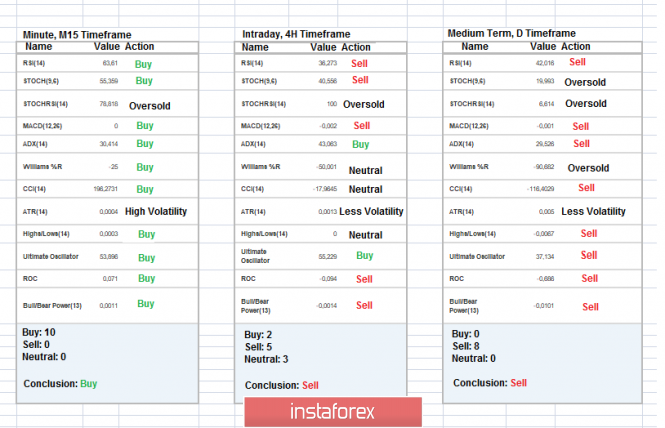
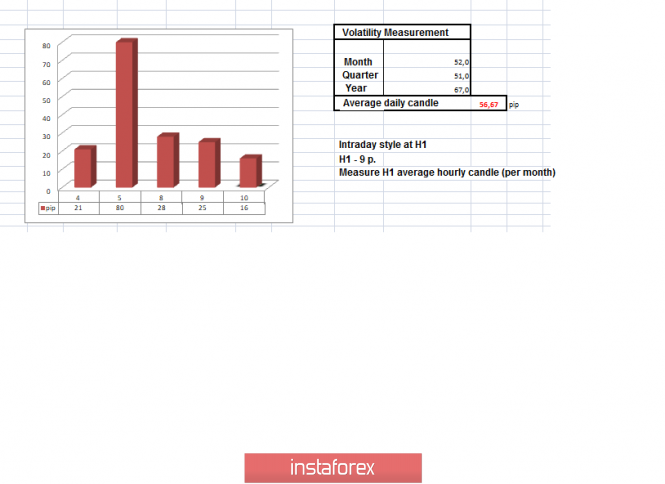
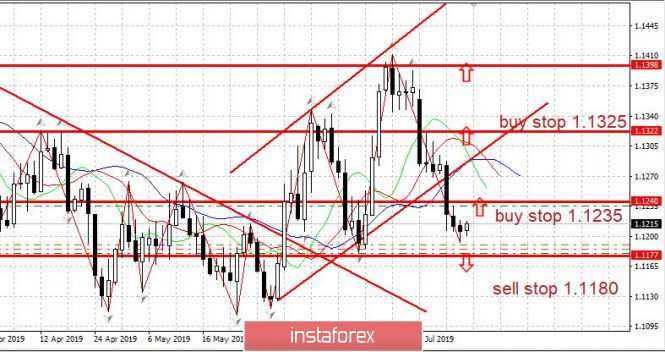
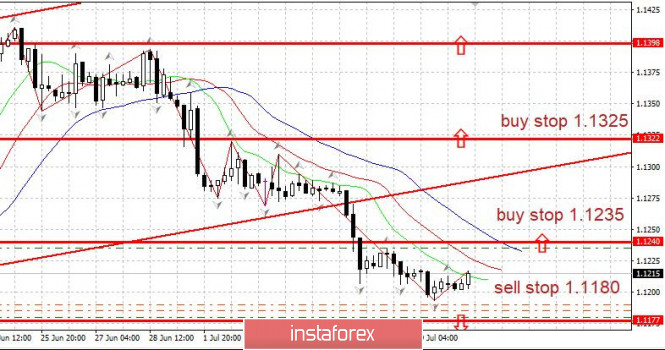
| Trading recommendations for the EURUSD currency pair - placement of trading orders (July 10) Posted: 10 Jul 2019 01:55 AM PDT For the last trading day, the euro / dollar currency pair showed extremely low volatility of 25 points again, as if traders took a pause in anticipation of a life-giving event. From the point of view of technical analysis, we see that the quotation came close to the control point at 1.1180, where it is already close to the periodic support, slowing downward motion and forming a stagnation-rollback. For a long time, traders kept their short positions, and the current periodic support is not the first point where a partial exit was made. Considering the trading chart in general terms, we have already said that since the beginning of the month, the euro has lost more than 150 points, and the movement itself looked like a pulse move, which suggests a possible overheating of short positions. The global movement of the pair has not changed yet, carrying a downward trend. The news background had statistics about open vacancies in the United States, where growth was expected from 7.449M to 7.470M, but as a result, the previous values were revised to the worst, and the new indicators were worse than expected: 7.372M ---> Act. 7.323M. The dollar against this background sluggishly went into a stagnation stage, showing low volatility. Returning to the information background, Fed Chairman Mr. Powell had delivered a speech, but, as expected, there was no pressure on the market, since the topic of discussion did not affect the refinancing rate, but the issue of stress tests of the banking system was discussed. Today, the focus of all market participants is the speech of Fed Chairman Jerome Powell in the United States Congress, where, of course, everyone is waiting for specifics about the fate of monetary policy, in particular the refinancing rate. But there is one instance, particularly the publication of the FOMC minutes was appointed after Mr. Powell's speech. Meanwhile, the meeting in Congress will be held in two days (July 10-11), thus, on the first day, it is likely that the banking system will be relatively stress-tested. The question regarding the rate will remain until tomorrow. According to the statistics, we do not have anything cardinal, the only thing that is, is the data on inventories in the wholesale warehouses in the United States, where they expect an increase of 0.4%. Further development Analyzing the current trading schedule, we see a sluggish movement in the form of a rollback-stagnation, where the market participant seemed to lie low in anticipation of an important event. It is actually difficult to say whether there will be any jumps in the market today. It is necessary to carefully monitor the information flow and possible emissions regarding rates from such publications as Bloomberg. Thus, the major players take a waiting position, closing their positions, while speculators, on the contrary, is carefully monitoring the market behavior and trying to catch possible jumps, which is not expected to happen for today. Based on the available information, it is possible to decompose a number of variations, let's consider: -It is advisable to consider buy positions with a pending order slightly higher than 1.1240. More risky speculators are trying to see the entry point relative to the current fluctuation and possible slowdown (consolidation). -For sale positions, traders seek to fix and tighten restrictive orders as much as possible. Further transactions will be considered in the case of price fixing lower than 1.1180, with the support of the inertial move, coupled with the information and news background, if it will take place on the market. Indicator Analysis Analyzing a different sector of timeframes (TF), we see that indicators in the short term unanimously look at the rise against the background of slowdown and rollback. Intraday and mid-term prospects are more moderate, and yet still hold back their desires on the initial downward course. Weekly volatility / Measurement of volatility: Month; Quarter; Year Measurement of volatility reflects the average daily fluctuation, based on monthly / quarterly / year. (July 10 was based on the time of publication of the article) The current time volatility is 16 points. It is likely to assume that volatility may increase due to the general information and news background. Key levels Zones of resistance: 1.1300 **; 1.1450; 1.1550; 1.1650 *; 1.1720 **; 1.1850 **; 1.2100 Support areas: 1.1180 *; 1.1112; 1.1080 *; 1.1000 ***; 1,0850 ** * Periodic level ** Range Level *** Psychological level **** The article is based on the principle of conducting a transaction, with daily adjustment. The material has been provided by InstaForex Company - www.instaforex.com |
| Trading plan for EURUSD on 07/10/2019 Posted: 10 Jul 2019 01:13 AM PDT
Today at 15:00 London time, the main event of the week is the performance of the Fed Chairman Powell in Congress (the second speech will be on Thursday, also at 15:00 London time). The market widely expects that the Fed will reduce the rate by 0.25% in July this year. However, further, there is no certainty: the market believes that the most likely decline is 0.6% by the end of the year. The question for today: will the head of the Fed understand that he is ready to reduce the rate? EURUSD: We expect a turn upwards. Buy at a break up of 1.1235 and then 1.1325. Alternative: Sell from 1.1180. The material has been provided by InstaForex Company - www.instaforex.com |
| Breaking forecast 07/10/2019 EURUSD and trading recommendation Posted: 10 Jul 2019 01:10 AM PDT On Wednesday (and then on Thursday) - the Fed chairman's report in Congress at 12:00 London time. The main question is whether the Fed will cut rates. The market expects that the Fed will reduce the rate in July by 0.25% - but the question is whether it will be a one-time cut. EURUSD: If the Fed chairman confirms plans to reduce the rate, the euro will increase. From the point of view of technical analysis, it is possible to buy at a break above 1.1235 and further, from 1.1325. In case of a downward reversal, you can sell from 1.1180. The material has been provided by InstaForex Company - www.instaforex.com |






| You are subscribed to email updates from Forex analysis review. To stop receiving these emails, you may unsubscribe now. | Email delivery powered by Google |
| Google, 1600 Amphitheatre Parkway, Mountain View, CA 94043, United States | |

No comments:
Post a Comment