
Forex analysis review |
- Trade Of The Day - GBP/NZD Video Analysis
- What are the major institutions trading? | Weekly Commitment of Traders (COT) report (17/2 to 21/2)
- Fractal analysis of the main currency pairs for February 19
- GBP/USD. February 18. Results of the day. Pound completely lost in the wilds of the foreign exchange market
- EUR/USD. February 18. Results of the day. Euro continues to fall for the 16th consecutive day, ignores all correction factors
- EUR/USD. Reconnaissance or price low? Bears entered the seventh figure for the first time since 2017
- EURUSD and GBPUSD: Investors starting to look narrowly at undervalued euro. UK labor market helps the pound regain its position
- EUR/USD: dollar feels like a king, but plays with fire
- Weak ZEW index accelerated the euro sale, pound still hopes for a new stimulus package
- Gold at $5,000 will not turn into a reality?
- February 18, 2020 : EUR/USD Intraday technical analysis and trade recommendations.
- Analysis and forecast for AUD/USD on February 18, 2020
- February 18, 2020 : GBP/USD Intraday technical analysis and trade recommendations.
- GBP/USD: plan for the US session on February 18. The bulls are happy with any good news on the UK economy. A return to the
- EUR/USD: plan for the US session on February 18. The latest data on the eurozone pushes the euro down. The nearest target
- Analysis of EUR/USD and GBP/USD on February 18. The pound, which does not want to fall, and the euro, which falls for two
- Market review. Trading ideas. Q&A
- Review for EUR/USD currency pair on February 18, 2020. Weak Germany data puts the euro under pressure
- Trading recommendations for EURUSD pair on February 18
- Technical analysis for USD/JPY on February 18, 2020
- Analysis and forecast for GBP/USD on February 18, 2020
- Oil confused in forecasts
- GBP/USD 02.18.2020 - Inverted Head and Shoulders pattern in creation, watch for buying posititons above 1.3070
- Gold 02.18.2020 - Median Pitchfork line acting like resistance, watch for potential downside rotation towards the level of
- BTC analysis for 02.18.2020 - Broken mini Pitchfork upward channel, early sell signal is present. First downward target at
| Trade Of The Day - GBP/NZD Video Analysis Posted: 18 Feb 2020 07:04 PM PST Our trade of the day today is GBP/NZD! We use Fibonacci retracements, extensions, support/resistance, momentum and trend lines to identify trading opportunities in this exciting pair today! Feel free to ask me questions on the analysis here: https://forum.mt5.com/showthread.php?226855-Dean-s-Daily-Video-Analysis-Instaforex-Chief-Strategist&p=14079976& The material has been provided by InstaForex Company - www.instaforex.com |
| What are the major institutions trading? | Weekly Commitment of Traders (COT) report (17/2 to 21/2) Posted: 18 Feb 2020 06:07 PM PST
Our strongest currency is the US Dollar with a bullish strength factor of 1.73 and with institutions adding more long contracts. Our weakest currency is the New Zealand Dollar with a bearish strength factor 1.43 and with a net bearish positions of 2,287 meaning that there are a lot of institutions adding on to their short positions (2,983) while at the same time, reducing their long positions (-696). With a weak NZD and a strong USD, it would be good to look for short NZD/USD positions for this week. Also worth noting are the weak Japanese Yen, Australian Dollar and the strong Euro, Pound and Canadian dollar. The material has been provided by InstaForex Company - www.instaforex.com |
| Fractal analysis of the main currency pairs for February 19 Posted: 18 Feb 2020 04:56 PM PST Forecast for February 19 : Analytical review of currency pairs on the scale of H1:
For the euro / dollar pair, the key levels on the H1 scale are: 1.0891, 1.0861, 1.0832, 1.0807 and 1.0751. Here, mainly, we expect a movement in correction from a downward trend. Short-term upward movement is expected after the breakdown of the level of 1.0807. Here, the target is 1.0832. The breakdown of which will lead to in-depth movement. In this case, the target is 1.0861. This level is a key resistance for the subsequent development of the ascending structure. For the potential value for the top, we consider the level of 1.0891. We await the design of expressed initial conditions before this value. A potential value for the downward movement is the level of 1.0751, however, we consider the movement to this level as unstable. The main trend is a downward structure from January 31, we expect a correction Trading recommendations: Buy: 1.0807 Take profit: 1.0830 Buy: 1.0834 Take profit: 1.0860 Sell: Take profit: Sell: Take profit:
For the pound / dollar pair, the key levels on the H1 scale are: 1.3182, 1.3157, 1.3114, 1.3082, 1.3045, 1.2990, 1.2961 and 1.2928. Here, we are following the development of the ascending structure of February 10. The continuation of the movement to the top is expected after the breakdown of the level of 1.3045. In this case, the target is 1.3082. Short-term upward movement, as well as consolidation is in the range of 1.3082 - 1.3114. The breakdown of the level of 1.3114 will lead to a pronounced movement. In this case, the potential target is 1.3157. Upon reaching which, we expect a consolidated movement in the range 1.3157 - 1.3182, as well as a correction. Short-term downward movement is possibly in the range of 1.2990 - 1.2961. The breakdown of the latter value will lead to an in-depth correction. Here, the target is 1.2928. This level is a key support for the upward structure. The main trend is the ascending structure of February 10. Trading recommendations: Buy: 1.3045 Take profit: 1.3080 Buy: 1.3083 Take profit: 1.3112 Sell: 1.2990 Take profit: 1.2962 Sell: 1.2959 Take profit: 1.2930
For the dollar / franc pair, the key levels on the H1 scale are: 0.9899, 0.9883, 0.9858, 0.9819, 0.9804 and 0.9783. Here, we are following the local ascendant structure of February 12. The continuation of movement to the top is expected after the breakdown of the level of 0.9858. In this case, the target is 0.9883. We consider the level of 0.9899 to be a potential value for the ascending structure. Upon reaching which, we expect consolidation, as well as a pullback to the bottom. Short-term downward movement is possibly in the range of 0.9787 - 0.9771. The breakdown of the latter value will lead to an in-depth correction. Here, the target is 0.9783. This level is a key support for the top. The main trend is the local potential for the top of February 12 Trading recommendations: Buy : 0.9858 Take profit: 0.9880 Buy : 0.9883 Take profit: 0.9899 Sell: 0.9819 Take profit: 0.9805 Sell: 0.9803 Take profit: 0.9784
For the dollar / yen pair, the key levels on the scale are : 110.80, 110.47, 109.99, 109.62, 109.41 and 109.07. Here, we are following the development of the ascending structure of January 31. The continuation of the movement to the top is expected after the breakdown of the level of 110.00. In this case, the target is 110.47. Price consolidation is near this level. For the potential value for the top, we consider the level 110.80. Upon reaching which, we expect a pullback to the bottom. Short-term downward movement is possibly in the range of 109.62 - 109.41. The breakdown of the latter value will lead to an in-depth correction. Here, the goal is 109.07. This level is a key support for the top. Main trend: upward structure of January 31 Trading recommendations: Buy: 110.00 Take profit: 110.45 Buy : 110.49 Take profit: 110.80 Sell: 109.60 Take profit: 109.42 Sell: 109.38 Take profit: 109.10
For the Canadian dollar / US dollar pair, the key levels on the H1 scale are: 1.3303, 1.3281, 1.3267, 1.3228, 1.3201 and 1.3165. Here, the descending structure of February 10 is considered medium-term. The continuation of movement to the bottom is expected after the breakdown of the level of 1.3228. In this case, the target is 1.3201. Price consolidation is near this level. The breakdown of the level of 1.3200 will lead to the development of pronounced movement to the bottom. Here, the potential target is 1.3165. We expect a pullback to the top from this level. Short-term upward movement is possibly in the range of 1.3267 - 1.3281. The breakdown of the latter value will lead to an in-depth correction. Here, the target is 1.3303. This level is a key support for the downward structure. The main trend is the formation of medium-term initial conditions for the downward movement of February 10 Trading recommendations: Buy: 1.3267 Take profit: 1.3281 Buy : 1.3283 Take profit: 1.3303 Sell: 1.3226 Take profit: 1.3203 Sell: 1.3199 Take profit: 1.3167
For the Australian dollar / US dollar pair, the key levels on the H1 scale are : 0.6733, 0.6718, 0.6701, 0.6668, 0.6645, 0.6614 and 0.6594. Here, we determined the subsequent targets on the H1 scale from the descending structure on February 12. The continuation of the movement to the bottom is expected after the breakdown of the level of 0.6668. In this case, the target is 0.6645. Price consolidation is near this level. The breakdown of the level of 0.6645 should be accompanied by a pronounced movement to the level of 0.6614. For the potential value for the bottom, we consider the level of 0.6594. Upon reaching which, we expect consolidation, as well as a rollback to the top. A correction is expected after the breakdown of the level of 0.6701. In this case, the target is 0.6718. There is a short-term upward movement in the range 0.6718-0.6733. The breakdown of the level of 0.6733 will lead to the formation of initial conditions for the top. Here, the target is 0.6761. The main trend is the descending structure of February 12 Trading recommendations: Buy: 0.6701 Take profit: 0.6716 Buy: 0.6718 Take profit: 0.6732 Sell : 0.6668 Take profit : 0.6647 Sell: 0.6643 Take profit: 0.6616
For the euro / yen pair, the key levels on the H1 scale are: 119.46, 119.09, 118.85, 118.36, 118.13 and 117.64. Here, we are following the descending structure of February 5. Short-term downward movement is expected in the range of 118.36 - 118.13. The breakdown of the last value will lead to the movement to the potential target - 117.64, when this level is reached, we expect a pullback to the top. Short-term upward movement is possibly in the range of 118.85 - 119.09. The breakdown of the last value will lead to an in-depth correction. Here, the goal is 119.46. This level is a key support for the downward structure. The main trend is the descending structure of February 5 Trading recommendations: Buy: 118.85 Take profit: 119.07 Buy: 119.12 Take profit: 119.44 Sell: 118.36 Take profit: 118.14 Sell: 118.11 Take profit: 117.66
For the pound / yen pair, the key levels on the H1 scale are : 145.19, 144.57, 144.12, 143.50, 142.75, 142.47 and 142.08. Here, we are following the ascending structure of February 10. The continuation of movement to the top is expected after the breakdown of the level of 143.50. In this case, the goal is 144.12. The breakdown of this value will lead to short-term upward movement in the range 144.12 - 144.57. Hence, there is also a high probability of a reversal to correction. For the potential value for the top, we consider the level of 145.19. Upon reaching this level, we expect a pullback to the bottom. Short-term downward movement, as well as consolidation, are possible in the range of 142.75 - 142.47; hence, the likelihood of a reversal to the top. The breakdown of the level of 142.47 will lead to an in-depth correction. Here, the goal is 142.08. This level is a key support for the top. The main trend is the rising structure of February 10 Trading recommendations: Buy: 143.50 Take profit: 144.12 Buy: 144.15 Take profit: 144.50 Sell: 142.75 Take profit: 142.50 Sell: 142.44 Take profit: 142.10 The material has been provided by InstaForex Company - www.instaforex.com |
| Posted: 18 Feb 2020 03:01 PM PST 4-hour timeframe Amplitude of the last 5 days (high-low): 74p - 43p - 126p - 62p - 56p. Average volatility over the past 5 days: 73p (average). Tuesday, February 18, was held in completely illogical and versatile bidding for the British pound. One gets the impression that traders are completely unaware of which direction they need to trade in now. The GBP/USD currency pair continues to be traded inside the Ichimoku cloud, today it once again worked out its upper border, the Senkou Span B line, bounced off it again and now again tries to resume its downward movement. At the same time, a weak buy signal from Ichimoku Golden Cross remains. Bollinger Bands began to narrow, indicating the completion of the upward movement. In the current situation, it is not recommended to trade for increase or decrease in usual volumes. We have repeatedly said that the British pound has no reason to strengthen. That is, the absolutely reasonable movement would now be a downward movement. However, for some reason the bears do not want to start selling, so the current situation is very similar to the euro's situation, which we deemed paradoxical. Recall that this is a situation in which the bears have all the necessary fundamental factors for selling, but do not want to carry them out, and the bulls do not have any macroeconomic basis for purchases, therefore they are content to open only short-term positions that a priori cannot help form an upward trend. If you look at the 24-hour timeframe, the whole picture of the currency pair now looks like a classic "swing". Trend movement is completely absent, but the downward trend still persists. A new portion of fundamental information has arrived from the UK today, February 18. It is easy to guess that most of it was again disappointing. In the morning article, we listed all the macroeconomic reports that are worth paying attention to. Now we analyze them. The least interesting unemployment rate was 3.8% at the end of December, as analysts expected. More interesting data on the number of applications for unemployment benefits during January showed 5,500 instead of the expected 22,600. Thus, this report can be regarded as positive for the British currency. However, the positive news ends here. The average salary including bonuses in December showed an increase of only 2.9% against the previous value of +3.2% and the forecast of +3.0%. The average salary, excluding bonuses, showed an increase of 3.2% against the forecast of +3.3% and the previous value of +3.4%. Thus, the most important indicator, from our point of view, turned out to be worse than the expectations of traders. Thus, the whole news package from the UK can not be called uniquely disastrous, but it could not support the British pound. The British currency particularly increased in the afternoon, when the data was published, but it was short-lived and the next 4-hour candle turned out to be bearish. Meanwhile, the representative of the UK in negotiations with the EU, David Frost, said that "if the EU wants to build strong and long-term relations with the British, then the only possible way out is to build them on the basis of mutual equality." Frost also notes that London will not accept the terms of cooperation with the EU on the terms proposed by Brussels. In other words, London refuses the EU conditions on fair competition between European and British companies, on conditions related to state subsidies. "How would you feel if Britain demanded that the EU begin to quickly adapt its laws to those established in Westminster to protect its interests?", asks David Frost. Thus, as we said earlier, negotiations between the parties have not even begun, and there are already so many disagreements that it may take 11 years instead of 11 months to resolve them. This whole situation significantly reduces the likelihood of reaching an agreement, but increases the likelihood that Britain will leave the EU at the end of 2020 without any deals. Boris Johnson cannot understand the situation, nor can he understand the consequences for the British economy from the lack of a deal, however, in this situation, he will have to sacrifice something. Either drive the UK economy into an open recession, or agree to the tough influence of the European Union on many areas. From a technical point of view, the pound can move from any current position in almost any direction. The fact that the British currency failed with three attempts to cross the Senkou Span B line leaves a good chance of resuming a downward movement. Trading recommendations: GBP/USD continues to adjust. Thus, it will be possible to sell the British pound with the target of 1.2929 only after the price consolidates below the critical line and only in small lots, since the price is still inside the cloud. We recommend considering the pair's purchases with the objectives of 1.3075 and 1.3118, if the Ichimoku cloud is nevertheless overcome, but it should be understood that the fundamental factors do not remain on the side of the British currency. Explanation of the illustration: Ichimoku indicator: Tenkan-sen is the red line. Kijun-sen is the blue line. Senkou Span A - light brown dotted line. Senkou Span B - light purple dashed line. Chikou Span - green line. Bollinger Bands Indicator: 3 yellow lines. MACD indicator: Red line and bar graph with white bars in the indicators window. Support / Resistance Classic Levels: Red and gray dashed lines with price symbols. Pivot Level: Yellow solid line. Volatility Support / Resistance Levels: Gray dotted lines without price designations. Possible price movements: Red and green arrows. The material has been provided by InstaForex Company - www.instaforex.com |
| Posted: 18 Feb 2020 03:01 PM PST 4-hour timeframe Amplitude of the last 5 days (high-low): 34p - 60p - 55p - 33p - 22p. Average volatility over the past 5 days: 41p (average). The EUR/USD currency pair continued its downward movement on Tuesday, February 18, and by the end of the day it worked both the first support level for this week at 1.0786 as well as the lower boundary of the volatility channel, and it once again updated three-year lows at the same time. In fact, each new decline down to the level of 1.0339 will be accompanied by an update of three-year lows. The essence is different, the euro is now extremely weak, the EU economy, although it is keeping afloat, does not show any signs of recovery, therefore the most important thing is the absence of factors due to which one could hope for a recovery and growth of the European currency. It should also be noted that over the past 16 days no correction or even a hint of it has happened. As often happens, similar in strength trend movements begin on a flat ground. After all, nothing preceded such a confident fall in the euro. Neither the ECB meeting, nor the Fed meeting, nor the statement by the heads of central banks, nothing. The downward movement simply started against the backdrop of weak macroeconomic statistics from the EU and strong from the US (which, incidentally, was observed long before the start of the movement) and has been going on for the 16th consecutive day. Moreover, it persists even in those days when there are no macroeconomic factors to continue it. For example, yesterday or today. Not a single significant report was published at all yesterday, February 17 - the euro/dollar stayed near its lows all day, fearing it would "detach" from them. Several minor reports were published today - the euro has resumed its decline. What does this fall can not even be called strong. The average volatility of the pair is still 40-50 points per day, no more, and it has also decreased in recent days. As for macroeconomic statistics that were published today, the first three came from the ZEW Institute and reflected economic sentiment indices in Germany and the European Union, as well as an assessment of current economic conditions. In today's morning article, we were surprised at the fact that the economic sentiment indices in the last five months showed not a slight increase and literally resurrected. We wondered why investors are optimistic if the economy of Germany and the EU continues to slow down? It turned out that we were asking similar questions not in vain, because today's data showed a sharp decline in all three indices. The mood index in the business environment of Germany fell from 26.7 points to 8.7, a similar index in the EU - from 25.6 to 10.4, despite the fact that forecasts predicted growth to 30.0 points. And the index for assessing current economic conditions in Germany fell from -9.5 to -15.7. It is unlikely that these indices caused the next fall of the European currency, however, one cannot but admit that these data could further strengthen the negative attitude of traders towards the euro. A much more objective reason for the fall is the deceleration of the German economy (the locomotive country of the European Union), as well as the entire EU. Recall that, according to the latest data, German GDP slowed down to 0.4% in annual terms, and European GDP - to 0.9% yoy. Moreover, many world experts note that the Chinese coronavirus will affect not only the economy of China, but also all its trading partners, including the US, the EU, and Germany. The German economy is an export-oriented economy. If demand for its products decreases, problems begin that threaten to go into recession. However, it should be recognized that the situation with the coronavirus in China is still far from critical. According to the latest data, the number of deaths from the virus has reached about 2000, and the number of infected people does not exceed 70,000. It is clear that the real numbers are likely to be much higher, however, scientists also note that in fact the Covid-2019 virus is not so dangerous to humans, as previously thought. For example, other coronaviruses, SARS and Merce, are far more deadly. From the Chinese virus, no more than 20% of patients die as a result of complications, the rest are completely cured. Moreover, the virus causes pneumonia, that is, it spreads much better in the cold season than in the warm season. Doctors are already predicting that by the end of February, the growth rate of the incidence rate will decline. From a technical point of view, nothing new can be noted. The euro/dollar pair has another chance to start a correctional movement, since there was a rebound from the level of 1.0786, but traders did not use such an enormous amount. Trading recommendations: The EUR/USD pair keeps the downward movement. Thus, it is now recommended that you stay in euro-currency sales with targets at support levels of 1.0786 and 1.0742. The MACD indicator may begin to discharge again. It will be possible to consider buying the euro/dollar pair in small lots with the goal of a first resistance level of 1.0916, if traders manage to gain a foothold above the Kijun-sen line. Explanation of the illustration: Ichimoku indicator: Tenkan-sen is the red line. Kijun-sen is the blue line. Senkou Span A - light brown dotted line. Senkou Span B - light purple dashed line. Chikou Span - green line. Bollinger Bands Indicator: 3 yellow lines. MACD indicator: Red line and bar graph with white bars in the indicators window. Support / Resistance Classic Levels: Red and gray dashed lines with price symbols. Pivot Level: Yellow solid line. Volatility Support / Resistance Levels: Gray dotted lines without price designations. Possible price movements: Red and green arrows. The material has been provided by InstaForex Company - www.instaforex.com |
| EUR/USD. Reconnaissance or price low? Bears entered the seventh figure for the first time since 2017 Posted: 18 Feb 2020 03:01 PM PST The euro-dollar pair continues its downward track: for the first time since March 2017, the price tested the seventh figure, demonstrating the dominance of the bearish mood. Both yesterday and today, EUR/USD buyers made timid attempts at corrective growth - but as soon as the pair rises by several dozen points, it immediately attracts sellers who are pulling the euro to the bottom with even greater force. Actually, at what level is the bottom of the price for the pair - the question is open. According to many experts, the seventh figure will be "too tough" for bears, because it is one thing to test the area of long-term lows, and it is another thing to gain a foothold. That is why some currency strategists recommend that their clients refrain from short positions, despite the obvious dominance of the downward trend. In my opinion, the EUR/USD bears have not tested the seventh figure for the last time - if European statistics continue to disappoint, the pair will be under constant pressure, limiting the scale of correction rebounds. But you also need to understand that the lower the pair, the higher the probability of catching the bottom of the price. Even today's price dynamics of EUR/USD signals the existence of such risks. Momentum hitting a low of 1.0786, the pair reversed and returned to the eighth figure just as quickly. This suggests that many traders in this price area are in a hurry to take profits, thereby slowing downward movement. In addition, the pair is already attracting buyers who are also in a hurry to buy EUR/USD at a bargain price on such lows. Such a precarious position of the bears will remain at least until the end of this week. Macroeconomic statistics that are negative for the euro will push the pair down to local support levels, but the risk of a price rebound will be high in each case. Today, the euro was pressured by numbers from the ZEW Institute. In particular, the mood index in the business environment of Germany fell almost three times: if it reached 26.7 points in January, it then fell to 8.7 points in February. And although the indicator remained above the zero mark, the dynamics itself disappointed investors. Experts expected a negative trend, but according to their forecasts, the indicator should have decreased by only 20 points. In Europe as a whole, this indicator also came out much worse than forecasted values - after January growth to 25 points, it fell to 10 (with a forecast of decline to 21 points). After a recent surge of optimism, when for the first time in many months the indicators in Germany and the EU as a whole turned out to be above zero, this dynamics looks depressing, and this fact had a corresponding effect on the single currency. On the other hand, a certain pessimism was predictable, however, experts could not accurately determine its scope. The factor of coronavirus, dovish Lagarde's rhetoric, slowdown in inflation, weak German data - all these circumstances a priori could not but affect the mood of entrepreneurs. Therefore, the pair's bears used the ZEW numbers as a reason for the downward momentum today. At the same time, any definite conclusions (for example, regarding the prospects for the monetary policy of the ECB) cannot be drawn from such data. The growth of the US currency today was fueled by good statistics from the United States, however, of a secondary nature. Empire Manufacturing's manufacturing index, which is based on a survey of manufacturers in the New York Federal Reserve Region, more than doubled its forecast, reaching 12.9 points - this is the strongest result since May last year (experts expected to see it at 5.1 points) . It is worth recalling that the ISM manufacturing index was stronger than forecasts in January and reached the highest level since July last year - 50.9 points. That is why today's seemingly minor release provided significant support to the dollar index, which jumped to the level of 99.33. The prevailing fundamental picture made it possible for the EUR/USD bears to temporarily cross the line: breaking the support level of 1.0810 (the lower line of the Bollinger Bands indicator on the monthly chart), the price tested the seventh figure. But due to the activation of buyers, the pair could not stay in the area of multi-year lows. In addition, the fact that the profitability of 10-year-old Treasuries declined and was negatively reflected on the dollar (the yield fell to 1.505% during the US session). All this suggests that sellers will still try to enter the area of the 7th figure in the short term. But if we talk about the medium and even more long-term period, then the situation here does not look so clear. Most likely, EUR/USD will form a price low in the 1.0750 area (with possible testing of lower values), after which the pair will begin to be in demand, due to its oversold condition, provided there are no significant news drivers for further large-scale decline. The material has been provided by InstaForex Company - www.instaforex.com |
| Posted: 18 Feb 2020 03:01 PM PST Despite the fact that wage growth in the UK slowed at the end of 2019, the British pound strengthened its position against the US dollar after the publication of data on the number of applications for unemployment benefits. However, these statistics are unlikely to affect the Bank of England decision with interest rates, as serious problems with economic growth persist and productivity continues to stagnate. The report of the National Bureau of Statistics of the United Kingdom indicates that the average earnings increased by 3.2% from October to December 2019 compared to the same period of the previous year, which is lower than the last three-month period of 2018, when there was an increase of 3.4%. Compared with the previous three-month period from July to August 2019, growth also slowed down to 2.9% versus 3.2%. Economists had expected average wage increases of 3.1%. As for the unemployment rate, it remained unchanged at 3.8% in December 2019, while unemployment decreased to 3.8% over the period from October to December. Labor productivity remained unchanged. Let me remind you that last month, the Bank of England reiterated its statements made at the end of 2019 on the topic of interest rates, citing the low level of investment and the weak productivity growth that the UK expects in the coming years. The English regulator has repeatedly paid attention that it will reduce rates if growth prospects do not improve. Additional pressure on the economy and the British pound has uncertainty in relations between the UK and the EU. From a technical point of view, growth has been outlined, which should be supported by new fundamental data on inflation in the UK, as its growth may discourage the BoE from lowering interest rates in the near future. A breakthrough of resistance of 1.3065 will open good prospects for the restoration of a trading instrument in the area of highs 1.3170 and 1.3240. EURUSD The European currency continued to decline against the US dollar after data indicating that the indicator of economic expectations in Germany sharply fell in February 2020. According to a report from the ZEW Research Institute, the German economic expectations index fell to 8.7 points from 26.7 points in January, while economists had expected it to drp to only 21.0 points. The current situation index continued to slide further down the negative side, reaching -15.7 points in February, against -9.5 points in January. ZEW noted that the index was significantly affected by concerns about the impact on the economy of the coronavirus epidemic, which will drastically slow down world trade. The most severe blow may affect the external sector of trade, namely the automotive industry. As for the same indicator in the eurozone, the index of business sentiment from the ZEW Institute dropped to 10.4 points in February against 25.6 points in January this year. Economists had expected a decline to 21.3 points. As I noted above, the euro continued to decline against the US dollar, however, there are more and more investors who consider risky assets as undervalued. According to Bank of America, among key fund managers between February 6 and 13, 33% of respondents named underestimated euros against 31% of respondents in a January survey. As for the technical picture of the EURUSD pair, the bears are approaching a rather important level of support in the region of 1.0800, which is also a psychological mark in 2017. A breakthrough of this range will open a direct road to the area of lows 1.0740 and 1.0680. However, be careful with selling risky assets at current lows, if only for the reason that there has been no correction in the euro since the beginning of this month. The bulls returning the resistance of 1.0820 to themselves can lead to the demolition of a number of stop orders of the bears and a larger upward correction in the trading instrument to the area of the highs of 1.0860 and 1.0890. The material has been provided by InstaForex Company - www.instaforex.com |
| EUR/USD: dollar feels like a king, but plays with fire Posted: 18 Feb 2020 03:01 PM PST Contrary to the expectations of many experts, the US currency was marked as the best start since 2015. Since the end of December, the USD index has grown by more than 2%, reaching three-year highs in the region of 99 points. After touching these levels in September – October last year, the greenback reversed several times to decline. However, this time we can see further strengthening of the dollar in the region of 100-103. This will mean a return to the peak levels of 2016-2017. Then the USD index spent a little more than a quarter near thirteen-year highs before turning around to decline. A similar story happens with the main currency pair. Sifting below 1.0880 last week, it returned to April 2017 levels. From current levels, the next important milestones on the path to pull down EUR/USD are 1.0730, 1.0500, 1.0340. The first mark will close the gap in the pair that formed in connection with the presidential election in France, when the risks of coming to power of the leader of the right-wing National Front Marine Le Pen disappeared. The second mark represents the last round psychological level before the parity of the euro against the US dollar. The third is the lowest value of EUR/USD in January 2017, when the single European currency dropped at low trading volumes in the first days of the year. The fall of EUR/USD below 1.0340 will return it to the levels of 2002. These were the times when the ECB supported the euro in the early years of its existence. Then the level of confidence in the single European currency was extremely low. On the part of fundamental indicators, there are no special obstacles to pulling down EUR/USD. In the fourth quarter, the eurozone economy slowed down to 0.9% year on year against a healthy 2.3% in the United States. A wide range of statistical data indicates that the ECB needs to scale the monetary rate on a large scale in order to comply with the Fed's monetary policy. All these are arguments in favor of further strengthening of the dollar. However, there are arguments against it. This is the head of the White House, Donald Trump. The US president has repeatedly spoken out in favor of easing the monetary policy of the Federal Reserve, thereby intending to weaken the greenback's position and support exports. The issue related to the exchange rates of national currencies was actively discussed at the trade talks of Washington and Beijing. Now it can become one of the cornerstones in similar negotiations between the US and the EU, which Trump outlined for this year. There have already been precedents in the history of the United States when they forced the whole world to support, or at least not interfere, the weakening of the USD. This is the rejection of the gold standard in the early 1970s, the Plaza Accord agreement in the 1980s, and the intervention of central European banks at the dawn of the 2000s. It is believed that the weakening of the greenback is beneficial to the global economy, whose growth rate is increasing in response to the desire of the markets to put dollars in business, rather than deposit them into US Treasury securities. This could be a good argument for Washington to convince Europe and the rest of the world of the need to stop the strengthening of the USD when it seems that it has become excessive. The material has been provided by InstaForex Company - www.instaforex.com |
| Weak ZEW index accelerated the euro sale, pound still hopes for a new stimulus package Posted: 18 Feb 2020 03:01 PM PST European stock exchanges, following Asian ones, are trading in the red zone, as published macroeconomic statistics turned out to be noticeably worse than forecasts. German 10-year bonds lost 6.3% at one point, demand for securities in the UK and Switzerland has sharply increased. Oil is losing almost 2% amid growing concerns about demand for raw materials, and there is no reason to believe that the growth in demand for risky assets may resume in the short term. But until recently, it seemed that the peak of panic was over. The OECD composite indicator, which usually reacts ahead of schedule, shows that as of early February, the business cycle has formed a turning point, that is, a half-wave of growth has begun, which means that demand for risky assets will be outstripped. At the same time, the OECD in the comments emphasizes that the indicator does not yet reflect the potential negative effect of coronovirus. Of course, China will suffer the most, its real GDP growth will slow down significantly, however, data for the first quarter will be available only in April. China is also trying to be proactive, and therefore reports of new incentive measures are taken with understanding, the announced steps (lowering taxes, easing monetary policy, increasing government spending) will also ultimately contribute to increased demand. But the latest news from Japan threatens to reverse OECD calculations. After a failed Q4 report on GDP in 2019, which marks the beginning of a technical recession, an expert group led by Prime Minister Shinzo Abe said that control over the spread of coronavirus has been lost. Mizuho Bank notes that Japan is one step away from the fact that the rest of the world will see it as a cluster of coronavirus, and this is not only a problem for tourism or falling domestic demand, but a threat to the Olympic Games. The slowdown in sales was due to the expectation that the spread of coronavirus will slow down and mortality from it will decrease. Apparently, there are not many reasons for such conclusions. Judging by the latest data showing a strong slowdown in Japan and the eurozone, we are waiting for a reassessment of the economic situation downward, which entails the sale of risky assets and an increase in the demand for defensive assets. EURUSD The ZEW economic sentiment indicator for Germany fell sharply in February, falling to 8.7p from 26.7p a month earlier, the assessment of the economic situation also worsened, and, as emphasized in the press release, "in late 2019 and early 2020, the German economy turned out to be worse than expected. " We add here the reaction to the outbreak of coronavirus, which threatens, if not blocking, then drastically slowing down world trade in order to conclude that the hopes for a quick recovery after the failure in 2018/19 are unlikely to be realized. The situation is similar in the eurozone, the ZEW index fell from 25.6p to 10.4p, and now, until Friday, when the PMI Markit indices and consumer inflation data for January are published, the euro has no reason to reverse. Attempts to grow due to local overselling will be blocked near 1.0878, the fall will not hold back anything, and therefore the euro will tend to a long-term low of 1.0338. Short-term support can be found near 1.0725, but it will not hold back for a long time. GBPUSD The UK employment report for October - December was mixed. Employment rose to a record 76.5%, unemployment remained unchanged at 3.8%, but wage growth slowed from 3.2% to 2.9%, which is a negative sign from the point of view of inflationary prospects. However, the pound reacted with growth, and the reason here can only be that a decrease in inflation will serve as the basis for new stimulus measures both from the government and the Bank of England. The draft budget will be presented on March 11, and market participants expect that by this date the new government's position "spend, spend and spend" will be indicated. An attempt to grow is unlikely to lead to a breakdown of resistance of 1.3068, the impulse has no internal strength, and therefore it is logical to sell near the local peak with the target at 1.2969, stop slightly above 1.3068. The material has been provided by InstaForex Company - www.instaforex.com |
| Gold at $5,000 will not turn into a reality? Posted: 18 Feb 2020 03:01 PM PST At the end of the past year, forecasts repeatedly appeared regarding the possible high price of precious metals in 2020. Assumptions ranged from a modest $2,000 to $4,000 or more per ounce. However, these golden dreams are not destined to come true, analysts said. According to experts, the yellow metal market is at seven-year highs at the moment, reaching a certain price limit and stalled. Negative factors for gold are the situation around the coronavirus and weak global macroeconomic indicators. Experts recorded clear signals indicating the completion of the growth cycle gold quotes, which started in 2016. After analyzing the technical picture of the dynamics of precious metals, experts came to the conclusion that the four-year gold growth cycle is coming to an end. Its price reached the upper boundary of the ascending fractal channel and the key Fibonacci level of 0.62. At the moment, the yellow metal is trading at around $1,591 per ounce, and its further movement is difficult. According to Wolfgang Seybold, director of AXINO Investment GmbH and an expert in the precious metals market, the price of gold traded in major world currencies has now reached a record peak. Many central banks are actively buying precious metals for their reserves in order to reduce their dependence on the US currency. According to Seybold, it is not the yellow metal that has increased in price, but the traditional currencies have depreciated in relation to it. The expert is certain that with such depreciation, gold should cost much more, about $5000 per ounce. However, this is impossible, because it is contrary to the modern banking system. The rapid rise in gold prices is hindered by a number of factors, including overbought precious metal quotes and a fall in the shares of gold mining companies. At the same time, experts record a noticeable imbalance between the lack of growth in securities of gold mining companies and the active rise in the price of gold over the past four years. Note that since 2016, the gold quotes twice updated the current highs. In the second half of February, the precious metals market begins to become seasonally cheaper, that is, from next week, a massive decline in gold is not ruled out. Experts predict a drop in yellow metal to $1,540 per ounce, although they do not exclude the possibility of a rise. If the bar reaches $1620, gold will open the way to $1,700 per ounce or higher, analysts said. The material has been provided by InstaForex Company - www.instaforex.com |
| February 18, 2020 : EUR/USD Intraday technical analysis and trade recommendations. Posted: 18 Feb 2020 09:36 AM PST
On December 30, a bearish ABC reversal pattern was initiated around 1.1235 (Previous Key-zone) just before another bearish movement could take place towards 1.1100 (In the meanwhile, the EURUSD pair was losing much of its bearish momentum). One more bullish pullback was executed towards 1.1175 where the depicted key-zone as well as the recently-broken uptrend were located. That's why, quick bearish decline was executed towards 1.1100 then 1.1035 which failed to provide enough bullish SUPPORT for the EURUSD pair. Further bearish decline took place towards 1.1000 where the pair looked quite oversold around the lower limit of the depicted bearish channel where significant bullish rejection was able to push the pair back towards the nearest SUPPLY levels around 1.1080-1.1100 (confluence of supply levels (including the upper limit of the channel). Since then, the pair has been down-trending within the depicted bearish channel until last week when bearish decline went further below 1.0950 and 1.0910 (Fibonacci Expansion levels 78.6% and 100%) establishing a new low around 1.0790. Currently, the EUR/USD pair looks quite oversold after such a long bearish decline and if bullish recovery is expressed above 1.0845-1.0860, further bullish advancement would be expected towards 1.0910 then 1.0950. Intraday traders are advised to look for signs of bullish recovery around the current price levels of (1.0790) as a valid intraday BUY signal aiming towards1.0850 and 1.0910 (the nearest broken demand-level). On the other hand, bearish persistence below 1.0830 may enable more bearish decline towards 1.0755. The material has been provided by InstaForex Company - www.instaforex.com |
| Analysis and forecast for AUD/USD on February 18, 2020 Posted: 18 Feb 2020 06:51 AM PST Greetings dear colleagues! Today's review of the "Australian" will begin with the published minutes of the last meeting of the Reserve Bank of Australia (RBA). It follows from the minutes that RBA executives discussed options where monetary policy easing is possible or necessary. This is the current trend. Following the Federal Reserve System (FRS), the rest of the world's largest and most influential central banks do not even think about raising the main interest rates. It is still good if rates remain at the same levels and all the world's leading central banks have a tendency towards easing monetary policy. The minutes also noted that monetary policy easing at a faster pace will help achieve the inflation and employment goals. Of course, the RBA could not ignore the topic of coronavirus, which, according to bank members, poses risks to the Chinese and Australian economies. In this light, let me remind you that China is Australia's largest trading partner. In principle, there is nothing revolutionary new in the RBA minutes published today. The Australian regulator is still leaning towards easing monetary policy, however, it is in no hurry to take real steps in the form of lowering the main interest rate. It is no wonder that with this approach, the Australian dollar continues to weaken against its American namesake. To understand this in more detail, let's go to the charts of the AUD/USD currency pair. Weekly
On the weekly timeframe, it is clearly visible that this currency pair is trading in the range of 0.6663-0.6775 for the third week. It seems to me that only the exit from the designated range will indicate the further direction of the AUD/USD rate. However, the market is sometimes very unpredictable, so it is always necessary to consider alternative options. The exit from the indicated range may be false, the pair will return to it, after which the exit (already true) will take place in the other direction. This is often the case for many currency pairs, and not only for exiting different ranges. In my personal opinion, at the moment, the pair has more chances to carry out a corrective pullback than to continue the downward dynamics. In principle, there is nothing more to add to the weekly timeframe, so we move to smaller time intervals. Daily
On the daily chart, the initial pullback was limited to a strong technical level of 0.6750, after which the pair returned to a downward trend. At the time of writing this article, Ozzy has a better chance of testing the support at 0.6663 again than of returning to upward. It is clear that market participants did not like the content of the RBA minutes published today. Of course, the emphasis was on options for easing monetary policy, and not the other way around. It is worth noting the resistance provided to the price by the Tenkan line of the Ichimoku indicator. I believe that if this line is broken, the bulls on the "Australian" will breathe easier, but for now, everything is bad for them. At the same time, it must be admitted, and this is clearly visible from history, that the price area 0.6673-0.6663 has repeatedly pushed the AUD/USD rate up. Let's see what happens this time. In the case of a true breakdown of the support level of 0.6663, the fall of AUD/USD will not only continue but will become even more accentuated. H4
A very strong bearish trend is clearly visible when looking at the 4-hour chart of the AUD/USD currency pair. Naturally, in such a situation, we should only talk about sales as deals that are opened on a trend. As you can see from the stretched grid of the Fibonacci tool, the main levels for opening short positions on the "Australian" are 23.6 and 38.2 Fibo. Although the area of 0.6775-0.6780 also looks very good for sales. Here, both the resistance level of 0.6750 and the 200 exponential moving average. I believe that together they are able to give a serious rebuff to players for promotion. The main trading idea for the AUD/USD pair is selling after rollbacks and corrections, as well as opening short positions after the breakdown of the support of 0.6663, on a rollback to this broken level. Good luck! The material has been provided by InstaForex Company - www.instaforex.com |
| February 18, 2020 : GBP/USD Intraday technical analysis and trade recommendations. Posted: 18 Feb 2020 06:41 AM PST
On December 13, the GBPUSD pair looked overpriced around the price levels of 1.3500 while exceeding the upper limit of the newly-established bullish channel. On the period between December 18th - 23rd, bearish breakout below the depicted channel followed by temporary bearish closure below 1.3000 were demonstrated on the H4 chart. However, immediate bullish recovery (around 1.2900) brought the pair back above 1.3000. Bullish breakout above 1.3000 allowed the mentioned Intraday bullish pullback to pursue towards 1.3250 (the backside of the broken channel) where bearish rejection and a new wide-ranged movement channel were established between (1.3200-1.2980). Recently, new descending highs were demonstrated around 1.3200 and 1.3070. Intraday technical outlook is supposed to remain bearish as long as the pair maintains its movement below 1.3070 (recently-established descending High). Recent Bearish breakdown below 1.2980 enhanced further bearish decline towards 1.2890 (the lower limit of the movement channe) where signs of bullish rejection have been manifested Since February 10. The current bullish breakout above 1.3000 may enable further bullish advancement towards 1.3070 and probably 1.3165-1.3200 only if the price level around 1.3070 gets breached to the upside soon enough. Otherwise, any bearish decline below 1.2980 will probably lead the GBPUSD pair towards the next demand-level (the lower limit of the channel @ 1.2890) which is likely to fail to provide enough bullish support this time. The material has been provided by InstaForex Company - www.instaforex.com |
| Posted: 18 Feb 2020 06:02 AM PST To open long positions on GBPUSD, you need: In the morning review, I paid attention to the importance of the report on the state of the UK labor market, which managed to support the British pound, returning the GBP/USD pair to an upward trend, and to the level of 1.2967, from which it was possible to open long positions. The main task of the bulls for the second half of the day will be to break through and consolidate above the resistance of 1.3052, which will open a direct road to the area of the highs of 1.3093 and 1.3133, where I recommend fixing the profits. However, in case of further problems for buyers at this level, a more optimal scenario for opening long positions will be a downward correction to the support area of 1.3010, provided that a false breakdown is formed there or a purchase for a rebound after the test of the minimum of 1.2967, where the lower border of the ascending channel now passes. To open short positions on GBPUSD, you need: Sellers are not in a hurry to return to the market and small pullbacks down from the level of 1.3050 are only profit-taking for long positions. In the second half of the day, the bears need to achieve the formation of a false breakdown in the resistance area of 1.3052, and if the sellers are able to implement this scenario, we can expect the pair to return to the support area of 1.3010, which is now the middle of the side channel formed this week. A break in this range will quickly return the pound to a minimum of 1.2967, where I recommend taking the profits. If the bears do not cope with the task of holding the resistance of 1.3052 in the second half of the day, then it is best to postpone short positions until the level of 1.3093 is updated or sell GBP/USD immediately for a rebound from the resistance of 1.3133. Signals of indicators: Moving averages Trading is conducted in the area of 30 and 50 daily averages, which indicates more of a sideways nature of the market. Bollinger Bands If the pair declines, the lower border of the indicator around 1.2967 will provide support.
Description of indicators
 |
| Posted: 18 Feb 2020 05:46 AM PST To open long positions on EURUSD, you need: The bulls failed to hold the level of 1.0830 in the first half of the day after reports indicating a faster deterioration in business sentiment in Germany and the eurozone. Now there is no news that allows you to expect even a small upward correction in the pair. Most likely, the bulls will show activity in the support area of 1.0804. However, a more suitable target for opening long positions is still a minimum of 1.0773. I recommend making purchases from 1.0804 only if a false breakdown is formed. It is not an unimportant task for the bulls to return to the resistance of 1.0830, since only after this can we expect an upward correction to the area of the highs of 1.0860 and 1.0886, where I recommend fixing the profits. Given that important fundamental statistics are not published in the second half of the day, it is likely that the pressure on the euro will continue. To open short positions on EURUSD, you need: Bears continue to bend their line, and weak fundamental data on the state of the European economy helps them in this. Having achieved a return under the support of 1.0830 in the first half of the day, sellers without the slightest doubt continued to push the euro on the trend. The next target is a minimum of 1.0804, which is unlikely to stop the bears. A further task is to test the support range of 1.0773, where I recommend fixing the profits. In the scenario of an upward correction, which is unlikely to be possible without good data, short positions can be considered if a false breakdown is formed in the resistance area of 1.0830 and it is best to open short positions immediately for a rebound from the maximum of 1.0860. Signals of indicators: Moving averages Trading is conducted below the 30 and 50 moving averages, which indicates a further bearish trend in the euro. Bollinger Bands In the case of an upward correction in the second half of the day, the upper limit of the indicator around 1.0840 will act as a resistance.
Description of indicators
 |
| Posted: 18 Feb 2020 05:46 AM PST EUR/USD On February 17, the EUR/USD pair gained only a few base points, which did not affect the current wave markup, which assumes the construction of wave 3 or C of the downward trend. Thus, neither the internal correction wave in the composition of 3 or C nor the correction wave 4 begins their construction due to too weak demand for the euro. The size of the third wave already exceeds the size of wave 1 and the potential for further decline remains quite high. An unsuccessful attempt to break the 127.2% Fibonacci level may indicate that the markets are ready to move the instrument's quotes away from the reached lows. Fundamental component: There was no news background for the EUR/USD instrument on February 17. An on February 18, there were literally one or two reports that could theoretically affect the markets. The ZEW Institute's business sentiment indices for Germany and the European Union have never been indicators that cause a violent reaction in the foreign exchange market. By and large, this is a poll among managers, businessmen, and investors about what they expect from the economy in the future. If the value is high, then optimism prevails. If it is low, pessimism prevails. According to today's data, pessimism has again taken hold of businessmen and managers, as the ZEW index in Germany fell from 26.7 to 8.7, and in the European Union - from 25.6 to 10.4. Thus, the fall was quite sharp and strong. Business optimism in Germany and the European Union absolutely logically began to tend to zero. Indeed, why should it grow if the growth rate of GDP, industrial production, retail sales and other indicators in the European Union is slowing down more every month? Inflation remains weak. Monetary policy is extremely weak. Thus, just the high values of reports on business sentiment would cause some confusion. Well, the euro continued to decline today, and it doesn't even matter why the markets are selling this currency again, because of weak reports or just against the background of general sales. The main thing is that the EU currency continues to decline non-stop. General conclusions and recommendations: The euro/dollar pair continues to build a downward set of waves. The current wave markup has undergone some changes, so I recommend staying in sales with targets located near the estimated mark of 1.0784, which corresponds to 127.2% for Fibonacci. I do not recommend thinking about purchases yet, because the downward trend is too strong. GBP/USD The GBP/USD pair lost about 40 basis points on February 17. However, today, it almost completely reversed yesterday's decline. Thus, the expected wave 2 in 3 or C continues its construction with the goals located on the approach to the level of 23.6% for Fibonacci. If this assumption is correct, then the second wave 3 or C will be very deep. If the current markup is correct, then the decline in quotes will resume in the near future within the wave 3 in 3 or C with targets near the 50.0% Fibonacci level. Fundamental component: The news background for the GBP/USD instrument was also absent on Monday. But on Tuesday, markets were closely watching data on wages and the unemployment rate in the UK. As is often the case in recent months, market expectations have not matched the actual data. The rate of wage growth in the UK fell to 2.9% in December, although a month earlier there was an increase of 3.2%. The same applies to wages excluding bonuses, which increased by 3.2%, and a month earlier – by 3.4%. The unemployment rate remained the same – 3.8% in December, and the number of applications for unemployment benefits was significantly lower than market expectations – 5.5K against 22.6K. Thus, it was the latest report that probably caused an increase in demand for the British in the first half of Tuesday, which may lead to a complication of the expected wave 2 in 3 or C. General conclusions and recommendations: The pound/dollar instrument continues to build a downward wave 3 or C. Thus, I recommend selling the instrument on the MACD signal "down" with targets located near the mark of 1.2767, which corresponds to 50.0% for Fibonacci. This signal is already available and has not yet been canceled, although the pound is trading higher today. The material has been provided by InstaForex Company - www.instaforex.com |
| Market review. Trading ideas. Q&A Posted: 18 Feb 2020 05:05 AM PST Trading recommendations: EUR/USD - neutral GBP/USD - buying breakout is at 1.30700 AUD/USD - neutral USD/CAD - neutral GOLD - neutral EURCHF - buy through opening limit orders below 1.06 The material has been provided by InstaForex Company - www.instaforex.com |
| Posted: 18 Feb 2020 05:04 AM PST German economic sentiment index slumped to 8.7. The mid-point forecast was 21.5. Bundesbank, the central bank of Germany, said it does not expect acceleration of economic growth in the 1st quarter. The reason for that is the negative impact of China's coronavirus. Germany is an export-oriented economy which has large supply deliveries to China. The country produces a significant amount of parts in China as well. Weak economic data had a negative impact on the euro. The euro is expected to pull back again. EUR/USD: buy deals are from 1.0990. The stop level is better to be placed at the breakeven point. In case of rebound, buying deals are from 1.0880 and higher. The target is 1.0600. The material has been provided by InstaForex Company - www.instaforex.com |
| Trading recommendations for EURUSD pair on February 18 Posted: 18 Feb 2020 04:47 AM PST From a comprehensive analysis, we see a strong accumulation within the level of 1.0850, where the oscillation amplitude is extremely small. Now, about the details. The downward movement set a month ago is still maintained in the market, where the quote reached the interaction level of 1.0850, forming an accumulation near it. A notable point was that the accumulation has been held for more than 50 hours, which means that the concentration of trading forces has already reached the chapel and a surge of activity can occur at any time. Keeping the quote at low levels confirms the previously deduced theory of a global downward trend, where market participants on the occasion of FOMO (lost-profit syndrome) will not let the price go into a technical correction, overheating further short positions. Here, we have both pros and cons. On the positive side, we can highlight the lack of fear of the psychological ranges that are located under the quote. The downside is that overheating short positions will not lead to anything, and the stability we hold on to will be disrupted. At the same time, the pressure of sellers can be understood, the recently passed oblong correction delayed them for more than four months, and the current achievements of traders have not seen for several years. So we drag the quote down, not paying attention to the entire logical process of bar structure. In terms of volatility, we record a kind of slowdown relative to the prolonged accumulation. A notable point was that the last day was one of the most inactive in comparison with the periods before. The dynamics shrank to the point that about half of the average daily indicator was lost. See the volatility table at the end of the article. Analyzing the past day by the minute, we see all the same variables of the border of 1.0827/1.0861, where the movement occurred in the direction of the lower frame. As discussed in the previous review, traders are divided into two fronts: some have chosen the medium-term side, where they continue to hold short positions, while others are considering speculations about the limits of their accumulation. Looking at the trading chart in general terms (daily period), we see that since the beginning of February, the movement is vertical, where there is no rollback and correction. At the same time, the global downward trend is at the stage of movement, where the 2017 values are already located under the quote. The news background of the previous day had no statistical data and trading volumes were reduced due to the absence of the United States market, which celebrated Presidents' Day. Now, we understand the reason for such a strong decline in activity in terms of volatility, as we wrote above. In terms of the general information background, we see that the pressure on the market remains due to a number of toxic topics: - Upcoming negotiations between Britain and Brussels on trade relations, where the escalation of interests is recorded; - Coronavirus and the increase in the number of infected; - ECB monetary policy and actions in terms of modernization. Today, in terms of the economic calendar, we do not have data worth paying attention to in Europe and the United States, so the emphasis will be placed on the technical part, as well as on the toxic background. Further development Analyzing the current trading chart, we see that the quote concentration is still within the reach of the accumulation framework, which is not quite a breakdown of the set boundaries. In fact, the price will go beyond the limits of accumulation, which has been preserved for more than two hundred years, and this is confirmed by the instability relative to current fluctuations. Whether the quote will be able to continue the downward course, of course, only in the absence of a technical correction, you should not expect an extremely strong gain from the passed level of 1.0850. By detailing the available time interval per minute, we fix the fluctuation within the lower limit of the accumulation of 1.0827/1.0861, where the activity is still very small. In terms of the emotional mood of market participants, we see that the accumulation has focused on itself the special attention of speculators who are waiting for the first impulse outside the borders. In turn, medium-term traders do not change their traditions and continue to hold short positions. Even technical correction is not a hindrance for them. At the same time, speculators are waiting for the acceleration and the appearance of the first impulse candle relative to the specified accumulation limits. It is likely to assume that the accumulation is extremely unstable and fixing the price below the border of 1.0827 signals this. It is likely to assume that the FOMO (lost-profit syndrome) has been underestimated and its consequences are still ahead of us. Now, the downward move is considered as the basis and the technical correction as a prospect. It is advised to wait for the appearance of an impulse that signals the completion of the accumulation process, otherwise, a return to the frame of stagnation is still possible. Based on the above information, we will output trading recommendations: - Buy positions will be considered if the price is fixed higher than 1.0865, and in case of a further downward move, the technical correction point will be revised. - Positions for sale are already held by traders both intraday and medium-term. Speculators will soon join us. Indicator analysis Analyzing different sectors of timeframes (TF), we see that the indicators of technical instruments are considering a further decline. It is worth considering that while we are within the limits of accumulation, indicators for smaller periods may be variable. Volatility for the week / Volatility Measurement: Month; Quarter; Year. The volatility measurement reflects the average daily fluctuation from the calculation for the Month / Quarter / Year. (February 18 was based on the time of publication of the article) The volatility of the current time is 16 points, which is an extremely low value. It is likely to assume that in the event of a breakdown of the accumulation framework, there may be an acceleration due to the absence of the United States market. Volumes may be reduced, which will affect activity. At the same time, if the accumulation breaks down, a local surge may occur, which will affect the volatility. Key levels Resistance zones: 1.0850**; 1.0879*; 1.0900/1.0950**;1.1000***; 1.1080**; 1.1180; 1.1300**; 1.1450; 1.1550; 1.1650*; 1.1720**; 1.1850**; 1.2100. Support zones: 1.0850**; 1.0700; 1.0500***; 1.0350**; 1.0000***. * Periodic level ** Range level *** Psychological level ***** The article is based on the principle of conducting a transaction, with daily adjustments. The material has been provided by InstaForex Company - www.instaforex.com |
| Technical analysis for USD/JPY on February 18, 2020 Posted: 18 Feb 2020 04:23 AM PST Is it time to sell? Hello, dear traders! In this article, we will consider the technical picture that is observed for the dollar/yen currency pair. But before that, I would like to remind you of the most important event this week. Tomorrow at 20:00 (London time), the minutes of the last meeting of the Open Market Committee (FOMC) of the US Federal Reserve will be published. As a rule, investors carefully study the published protocol in order to get information from it about the future actions of the Federal Reserve System (FRS) in monetary policy. Usually, the market has a fairly rapid reaction to the publication of the protocols, volatility increases sharply, so be careful! Weekly
Now to the price charts, and let's start with the weekly one. Here, the candle of the past week in the form of "Long-Legged Doji" immediately catches the eye. Such candle models have one of the shadows larger than the other, which indicates the balance of forces in the market. The "our" candle had a long upper shadow. This factor shows serious problems for buyers with further price movement in the north direction. Interestingly, the closing price of last week's candle is just above the upper limit of the Ichimoku indicator cloud, but in this case, the candle itself is more important, which carries a reversal character. If you go back to last week's closing price, the decline was limited to the 144 exponential moving average, which provided the pair with strong support. In many ways, this is why the trading closed above the upper border of the cloud. I believe that the breakdown of the 144 EMA and the closing of the current weekly session within the Ichimoku indicator cloud will largely indicate bearish sentiment for USD/JPY. However, there is an 89 EMA at 109.45 that can provide support, but even if the trades close above it, but within the cloud, this can already be considered as a bearish signal. The breakdown of the resistance zone of 110.14-110.30 signals an alternative bullish version of the trading development. Only a close above 110.30 will indicate that serious buyers have entered the market and can be expected to move in a northerly direction. By the way, if anyone remembers, I repeatedly designated the mark of 110.20 as a technically very strong level and assumed that the pair could circle around the psychological mark of 110.00 for some time. Daily
Here, the picture is not as clear as on the weekly timeframe. If the pair was supported by the Tenkan line yesterday, then at the moment of writing, the dollar/yen is trading below this line. If today's trading ends under the Tenkan line, this will be another bearish signal. In this case, the pair will head to the area of 109.37-109.30, where the Kijun line of the Ichimoku indicator and the 50 simple moving average are located. Below, near the extremely important mark of 109.00, there are 89 and 144 exponential moving averages. H4
On this chart, it is worth noting that each subsequent maximum is lower than the previous one. This is a bearish signal. If we talk about trading recommendations, then, in my opinion, the most relevant are sales, the closest of which you can look at after the pair rises to the price zone of 109.65-109.85. More distant prices have already been mentioned - this is the resistance zone of 110.00-110.30. At the same time, it is necessary to take into account that a true breakdown of the level of 110.30 and fixing it above it (this is a true breakdown) will negate the bearish scenario, which I consider the most relevant at the moment. Good luck! The material has been provided by InstaForex Company - www.instaforex.com |
| Analysis and forecast for GBP/USD on February 18, 2020 Posted: 18 Feb 2020 04:23 AM PST Hello, dear colleagues! In this article, we will look at the technical picture for the pound/dollar pair and identify the most important events that can affect the price dynamics of this instrument. Let's start with macroeconomic statistics and events, and then move on to the technical picture and trading recommendations. The UK is expected to release data on the labor market, consumer price index, retail sales, as well as the PMI index. As you can see, the British currency will have a busy week, these data are important, and they will undoubtedly have an impact on the British currency rate. No less macroeconomic data is expected from the US. Rather, more reports will be submitted from the United States. I don't see any point in listing all of them here; data from the US can easily be found in the economic calendar. However, it is necessary to recall one main event. Tomorrow at 20:00 (London time), the US Federal Reserve will publish its FOMC minutes. Market participants always closely study the Fed's minutes, hoping to catch a signal for the next steps of the world's most influential central bank. I think it's time to start analyzing the price charts of the GBP/USD pair and let's start with the weekly timeframe. Weekly
At the auction of the last five days, the pair showed growth, as a result of which a candle appeared. In the graphical analysis, these candles are called "Harami", and after their appearance, there is often a change in the direction of price movement. Often, but not always. At the time of writing, the pound is moderately declining. However, this does not mean anything because all the main events of the current five-day period are still ahead. The situation may change several times. The following conclusions or assumptions can be made based on the weekly timeframe. It is still too early to talk about conclusions. If the growth continues, which was recorded last week, the nearest resistance is represented by the Tenkan line of the Ichimoku indicator. This line is located at 1.3076, and in the case of the closing of trading on February 17-21 above this mark, you can count on the subsequent strengthening of the "Briton". The downward trend scenario is signaled by a breakdown and closing below the 89 exponential moving average, which is at 1.2925. By the way, if you look at the history, this is a fairly strong technical level, which has repeatedly changed the direction of the price. An even more obvious bearish signal will be the end of trading below 1.2870, where the minimum values of the previous trades were fixed. Daily
The candle, which appeared on Friday, February 14, is very similar to the "Hanged" reversal model. Actually, yesterday we began to win back this reversal, but it confuses several points. First, judging by the weekly timeframe, further strengthening of the pair is most likely. Second, the "Hanged" candle usually appears at the very top, at the end of the upward movement. In this case, the candle formed below the highs of the previous candle. At the moment of writing, the quote is supported by the Tenkan line, while the pound shows a strengthening. The fact is that while this review was being written, statistics from the UK on the labor market were released. Unemployment in the United Kingdom remained at 3.8%. But the number of applications for unemployment benefits has decreased significantly. It was expected that 22.6 thousand Britons would apply for unemployment benefits, however, it turned out to be 5.5 thousand. After such impressive statistics on the number of applications for unemployment benefits, the pound is likely to strengthen. This means buying the GBP/USD pair. But it is up to you to decide whether to open long positions for the pound. After the release of data on the British labor market, enough time has passed, but the pound is not in a hurry to show active strengthening. There is growth but it is quite restrained. This situation can most likely be described as uncertain, and we should not rush it yet. Still, you should give preference to purchases. Good luck! The material has been provided by InstaForex Company - www.instaforex.com |
| Posted: 18 Feb 2020 04:23 AM PST Pessimistic forecasts by the International Energy Agency caused Brent to collapse to the lowest levels since December 2018, however, the confident pace of global stock indices sowed serious doubts in the minds of investors about the damage to global oil demand. It is possible that we are talking about delaying demand, rather than destroying it. In the second quarter, China and the entire black gold market will return to normal life. Is there too much optimism about the coronavirus, which is most likely still at its peak? According to the IEA, global oil demand in January-March will decrease by 435,000 b/d. This is the first decrease in the indicator since 2011. The forecast for the aggregate indicator for 2020 was reduced from 1.2 million b/d to 825,000 b/d. Citigroup estimates that demand for black gold from China may decrease by 3.4 million b/d in February and by 1.5 million b/d on average in the first quarter. These figures are a real disaster for the black gold market, while the modest decline in forecasts from OPEC (-400 b/d) looks like an attempt to give wishful thinking. Forecasts for global oil demand
Perhaps investors understand that they have overdone the sales. By the end of the week to February 11, speculative net longs for Brent fell by 20%, for WTI - by 7%, and Goldman Sachs lowered its estimate of the average price for each of the two main varieties by $10 per barrel. In the end, the behavior of global stock indices does not indicate a crisis, but rather the well-being of the world economy. The faster the victory over the coronavirus is achieved, the faster the global demand for black gold is restored, the higher the chances of a rebound in Brent and WTI. Especially when OPEC reduces production. The multidirectional dynamics of oil and the S&P 500 create a favorable ground for the strengthening of the US dollar, which, as a safe-haven asset, usually increases during periods of uncertainty and various kinds of shocks. As a result, black gold has another driver of the decline, which makes the bears' positions even less stable than before. If we add to this the growth of US oil reserves in the week to February 14 by 7.5 million barrels, which is more than twice the forecasts of Bloomberg experts, then the current short-term correction begins to look too weak to count on its continuation. Technically, after Brent quotes reached the target of 113% to the red "shark" pattern, the probability of a pullback to the levels of 23.6%, 38.2% and 50% of the CD wave increased. The bulls managed to break through to the first resistance at $57.5 per barrel very quickly, but the upward movement did not receive a new impulse. A breakout of an important level will increase the risks of a correction to $60.15, $61.45 and $62.35. On the contrary, if the current resistance remains under the control of the bears, the chances of activating the 5-0 pattern and restoring the downward trend will increase. Brent, the daily chart
 |
| Posted: 18 Feb 2020 04:07 AM PST Technical analysis:
GBP has been trading upwards. The price tested the level of 1.3040. I found that there is good potential for the upside. I found that inverted Head and Shoulders formation in creation on the 4H time-frame. The breakout of the pivot resistance at 1.3070 would confirm upside continuation and eventual test of 1.3200. Watch for buying opportunities if you see the breakout of the pivot resistance. MACD oscillator is showing increase on the upside momentum Major resistance is set at the price of 1.3070 Support level is set at the price of 1.2970 The material has been provided by InstaForex Company - www.instaforex.com |
| Posted: 18 Feb 2020 03:59 AM PST Technical analysis:
Gold has been trading upwards at the price of $1.588. I see big risk for the Gold around this zone $1.588-$1.592 due to strong resistance there. I expect further downside rotation towards the level of $1.561 The Gold is trading inside of the Pitchfork upward channel. Potential breakdown of the lower diagonal ($1.585) will confirm sell signal. MACD oscillator is showing bearish divergence and lack of the buying power. Stochastic oscillator is showing overbought condition, which is another confirmation for the risk of being long on the Gold. Major resistance is set at the price of $1.593 Support levels are seen at the price of $1.576 and $1.561 The material has been provided by InstaForex Company - www.instaforex.com |
| Posted: 18 Feb 2020 03:52 AM PST Industry news:
Decentralized finance (DeFI) protocol bZx has suffered a second attack, with a hacker this time making over $630,000 worth of ether thanks to a flash loan that manipulated the price of sUSD. The attack seemingly saw a hacker take out a flash loan for 7,500 ETH and use half of it to buy the sUSD stablecoin close to the $1 mark. The funds were then subsequently used on bZx as collateral, and part of the initial loan was used to buy more sUSD on the Kyber and Uniswap exchanges to drive its price to over $2. This way the attacker managed to take out a larger loan and borrow nearly 6,800 ETH on bZx. The funds were used to repay the original flash loan. His total profit was of 2,378 ETH, at press time worth over $630,000. Technical analysis: BTC has been trading sideways at the price of $9.712. Anyway, I found mini sell signal due to the breakout of the mini Pitchfork channel to the downside. Downward targets are set at the price of $9.450 and $9.135. MACD oscillator is showing neutral stance but the slow line made new low in the background, which is strong sign of selling pressure. Major resistance is set at the price of $10.000 Support levels are seen at the price of $9.450 and $9.135 The material has been provided by InstaForex Company - www.instaforex.com |
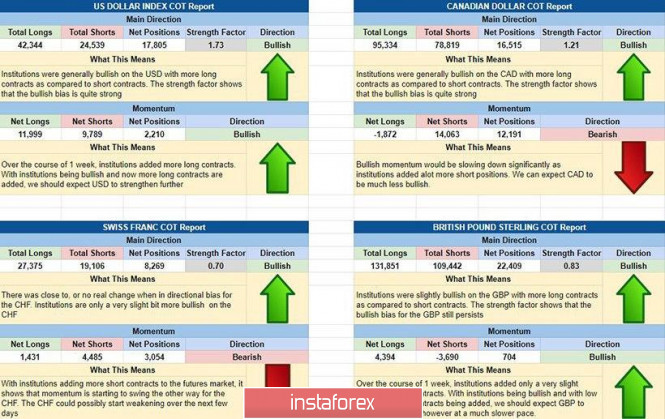
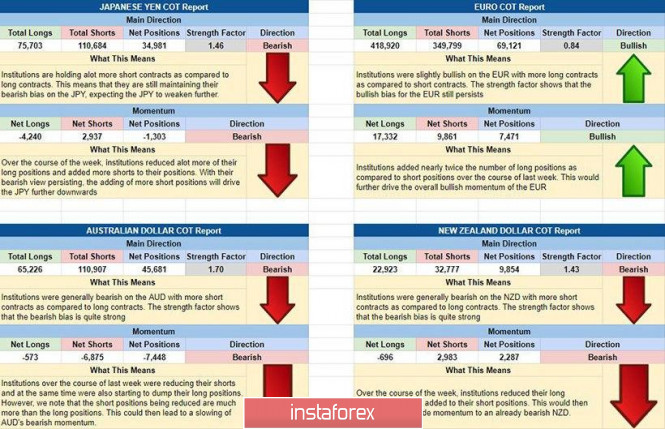
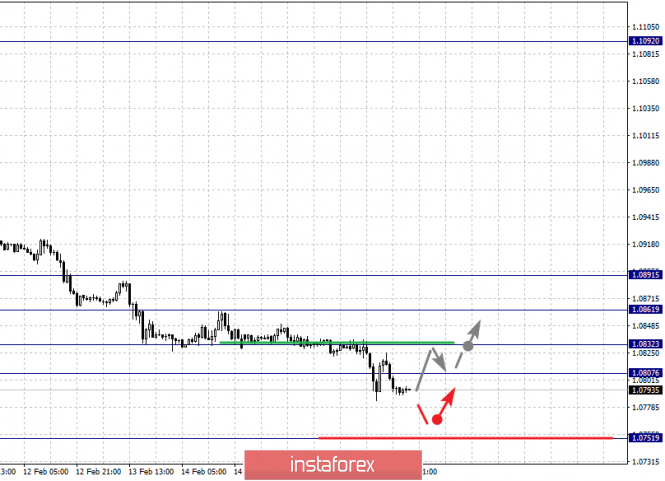
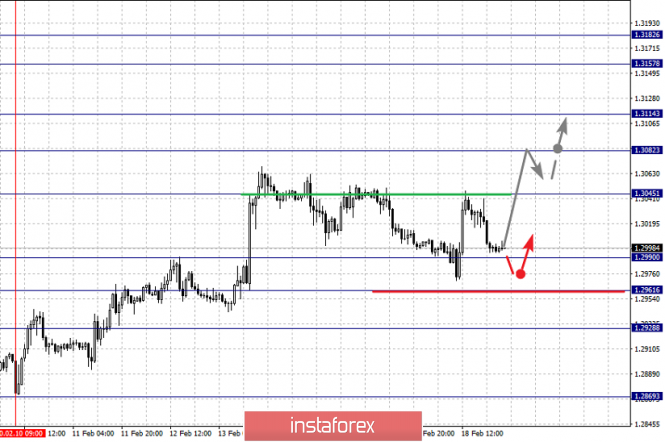
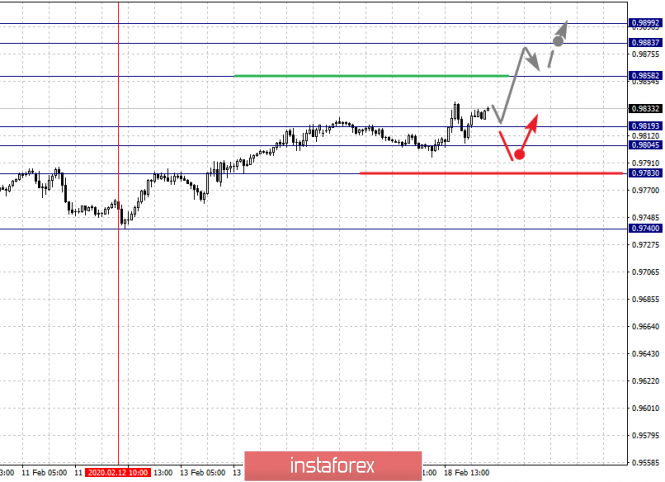
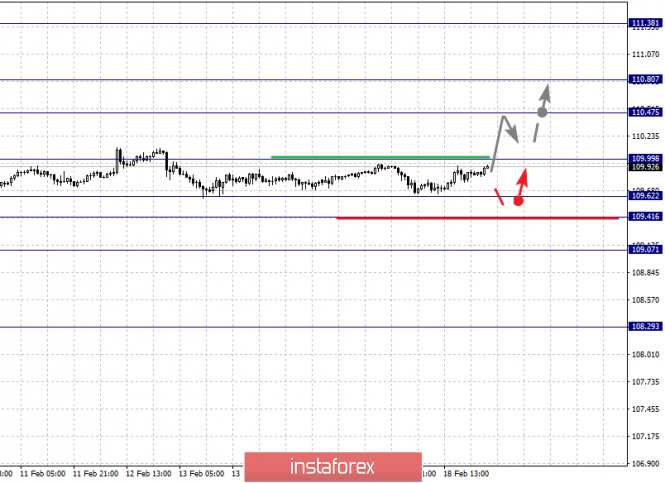
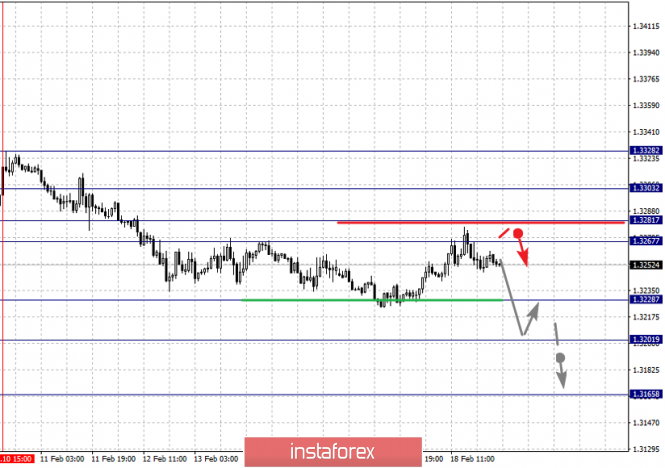
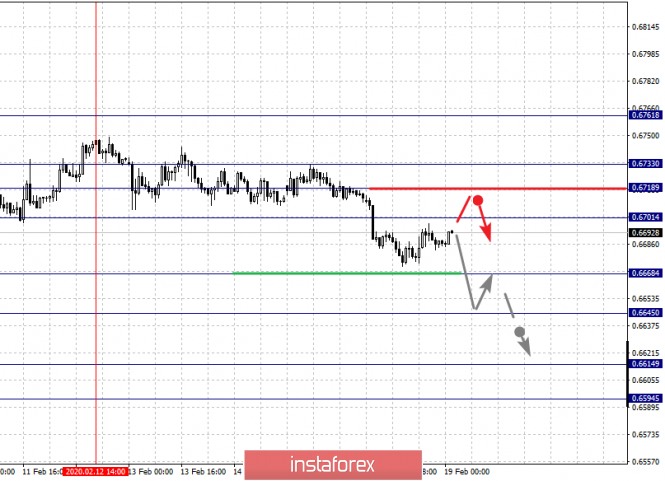
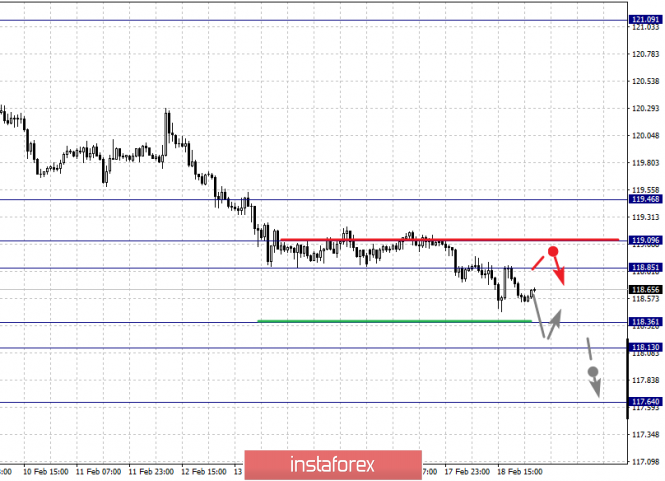
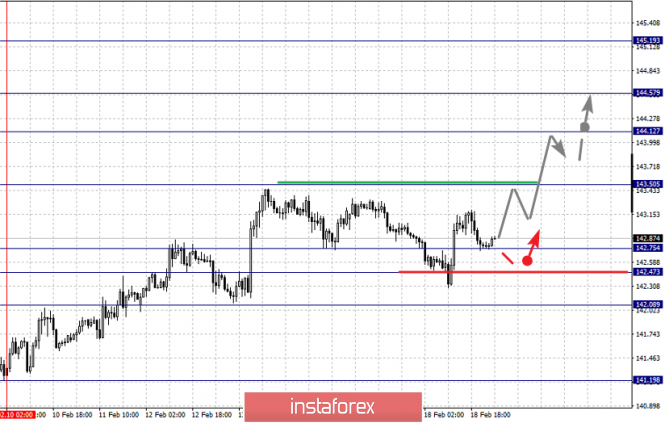
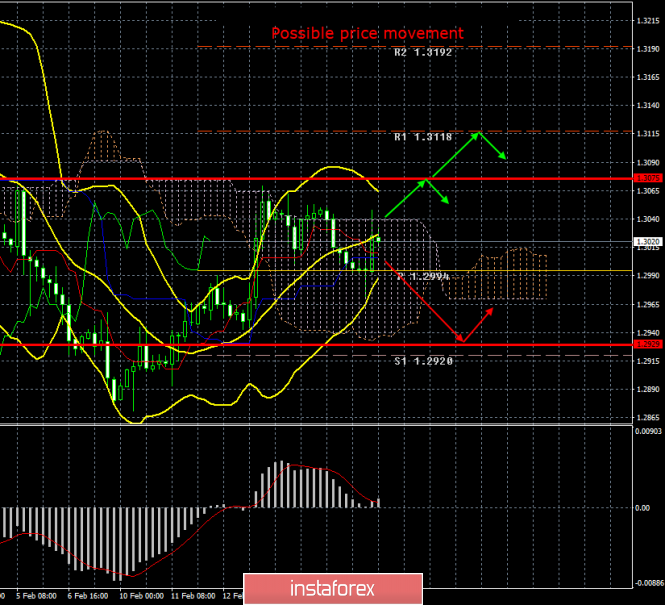
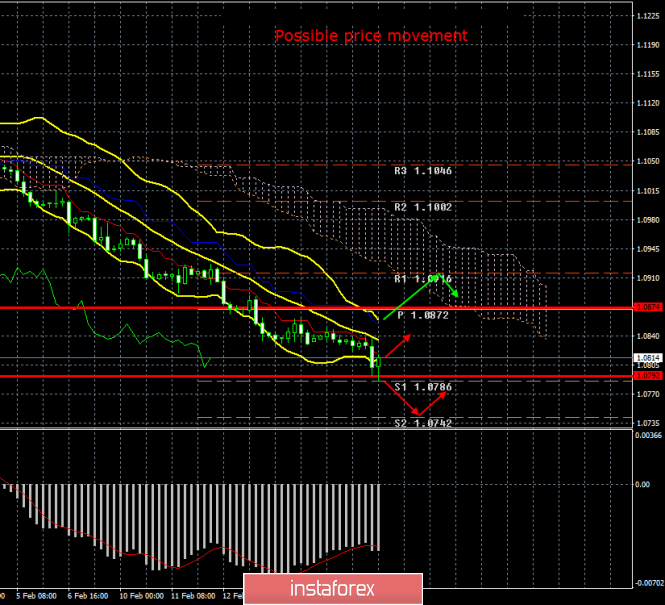

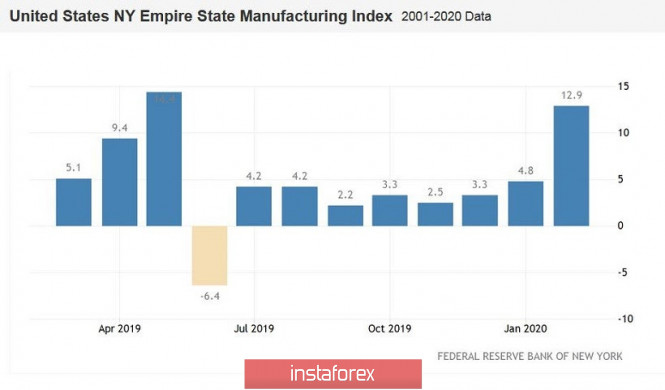
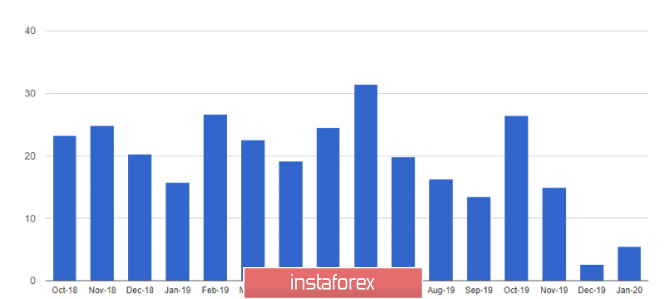
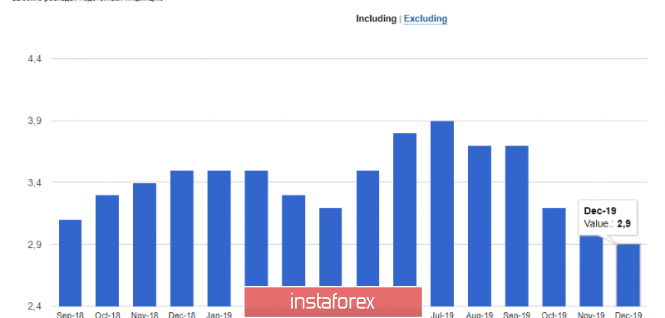
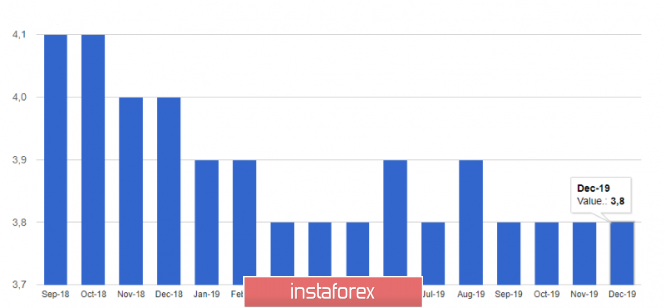
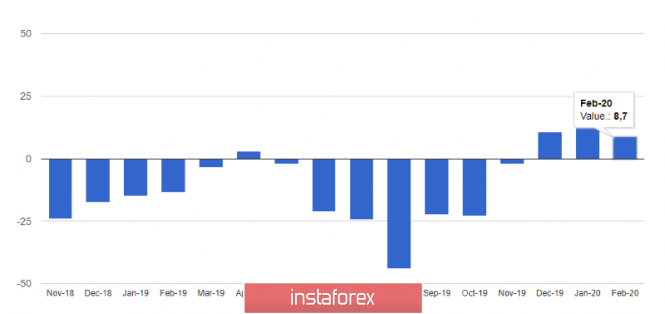
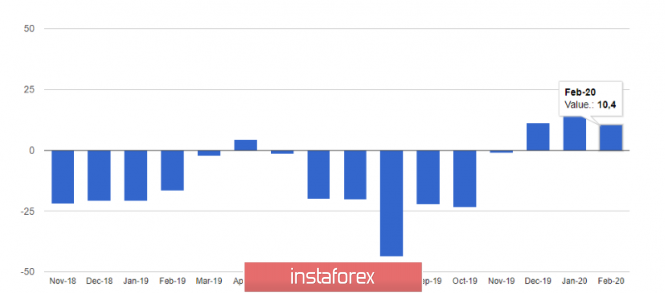

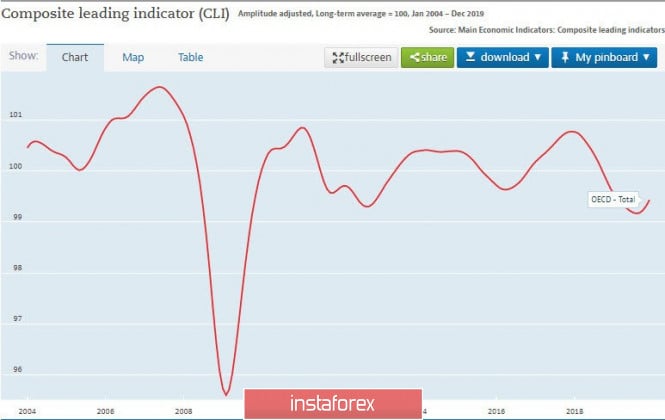
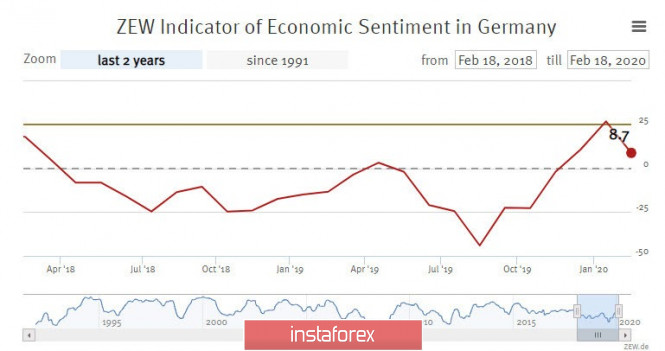
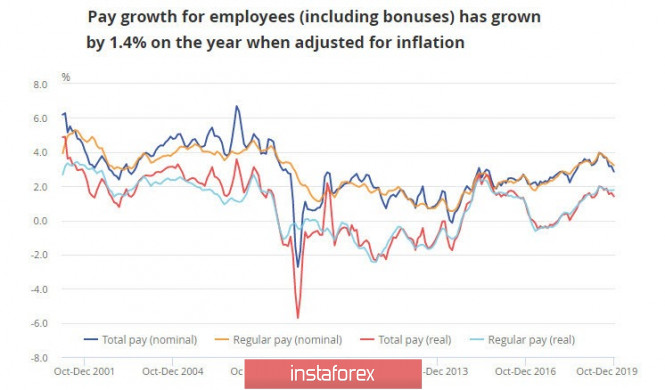

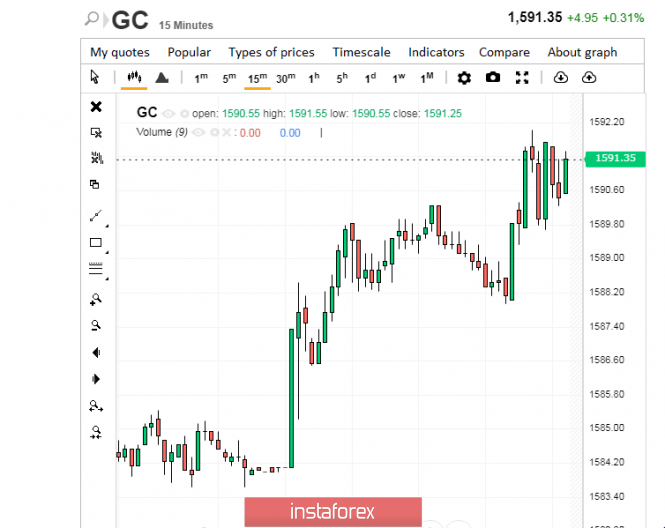
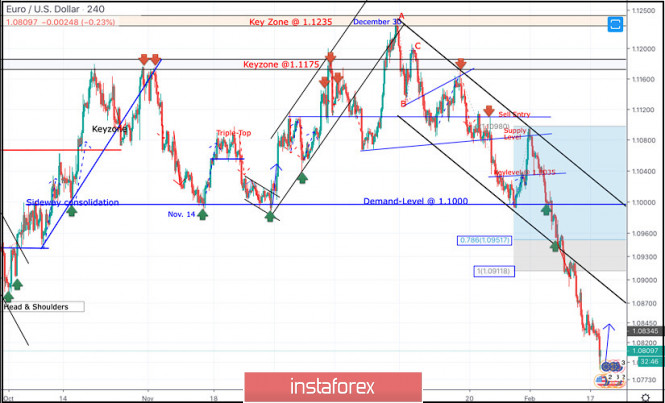
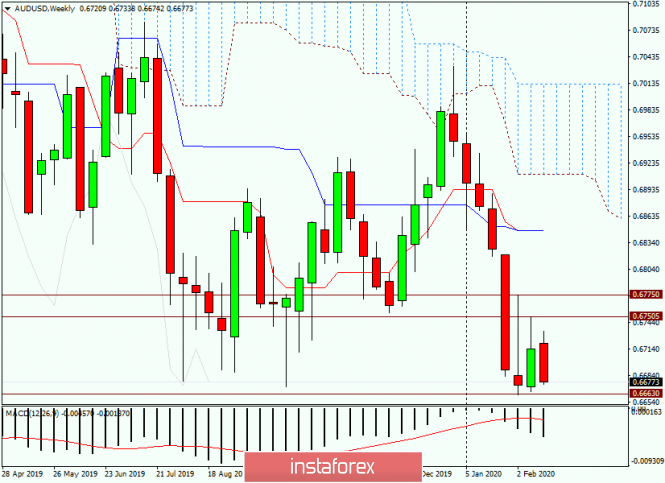
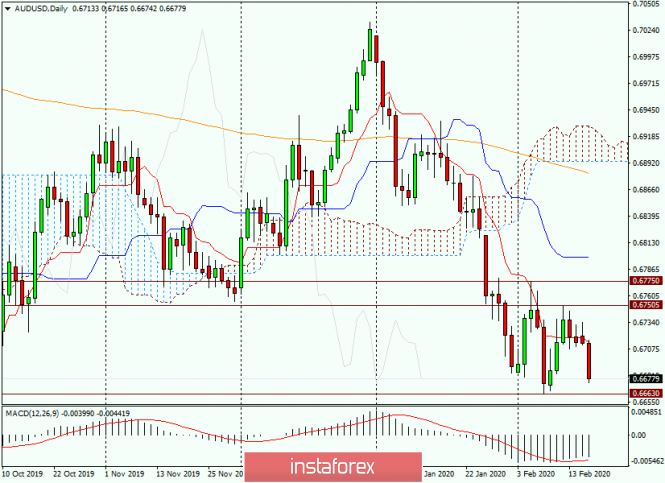
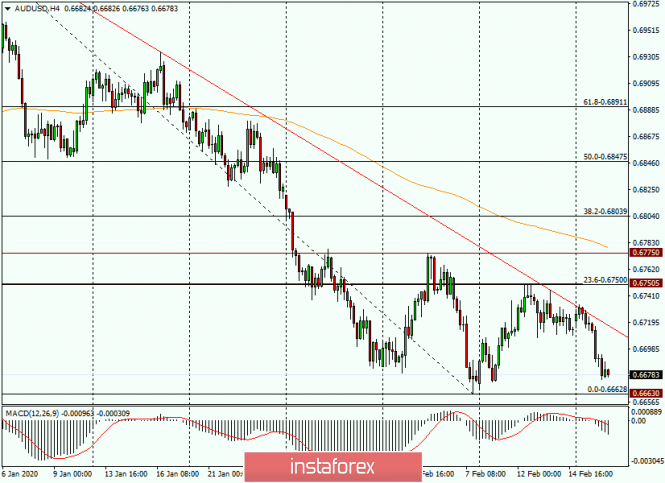
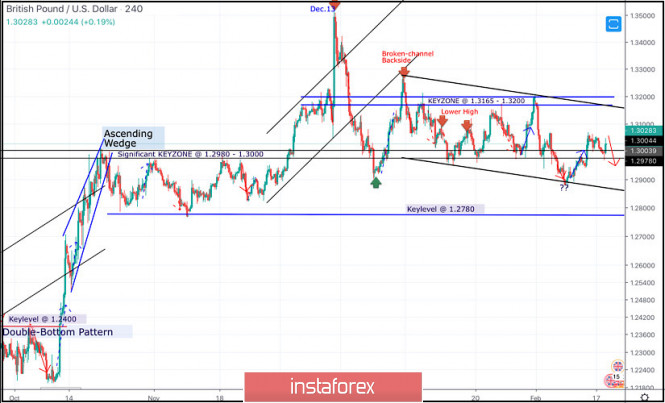
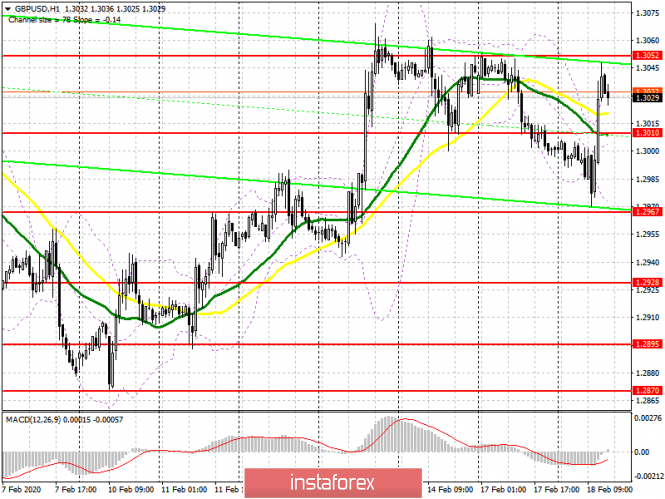
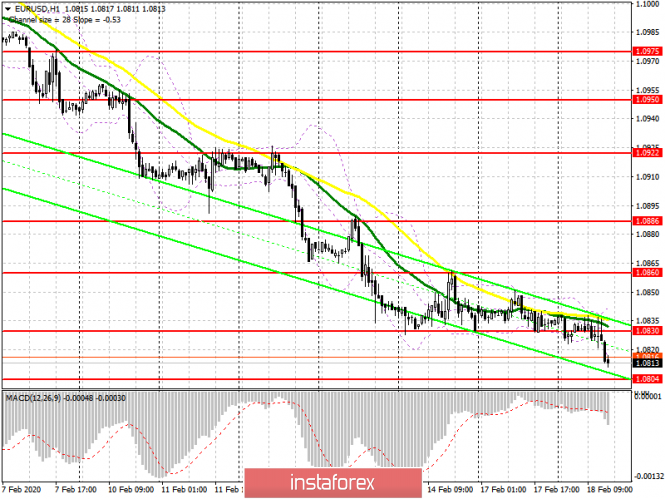
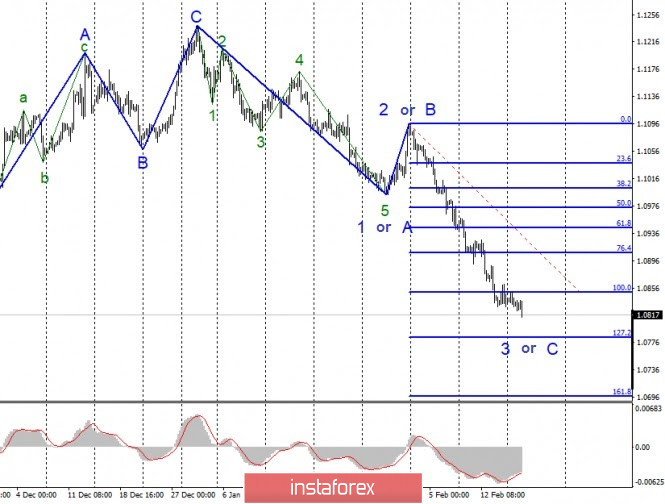
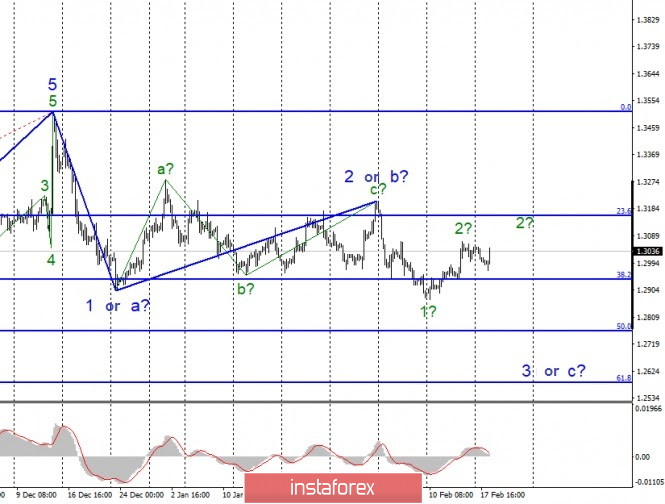

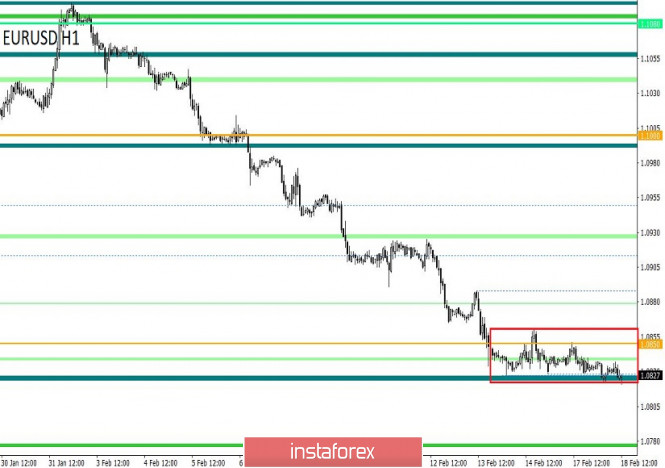
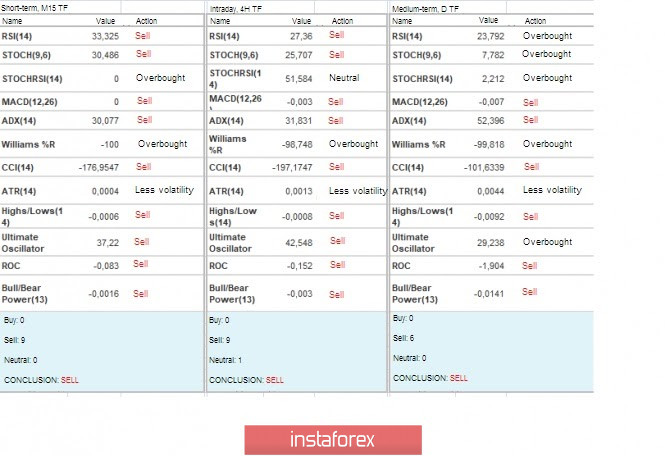
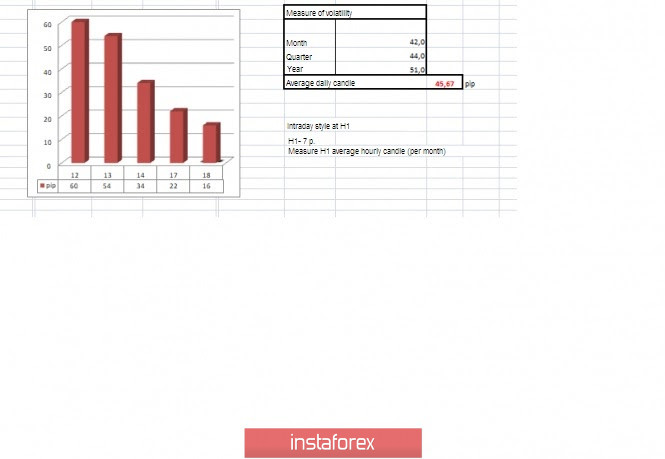
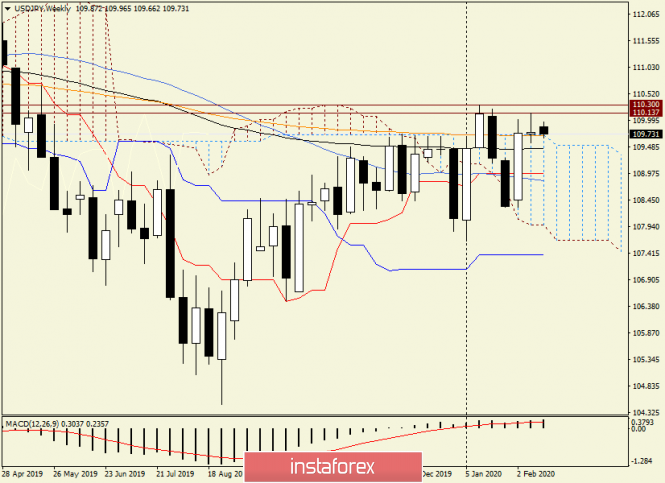
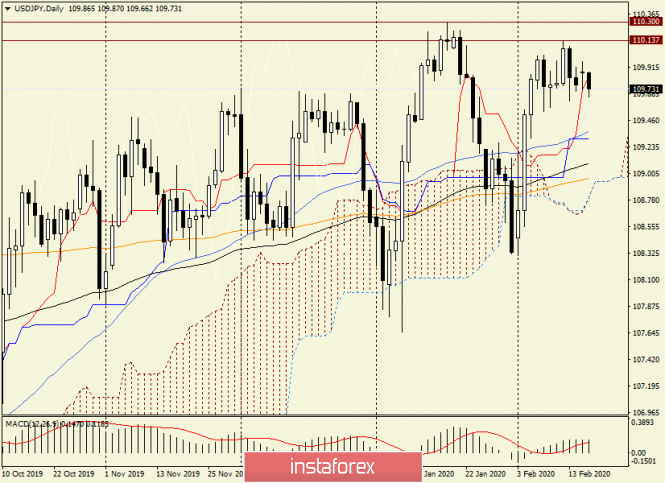
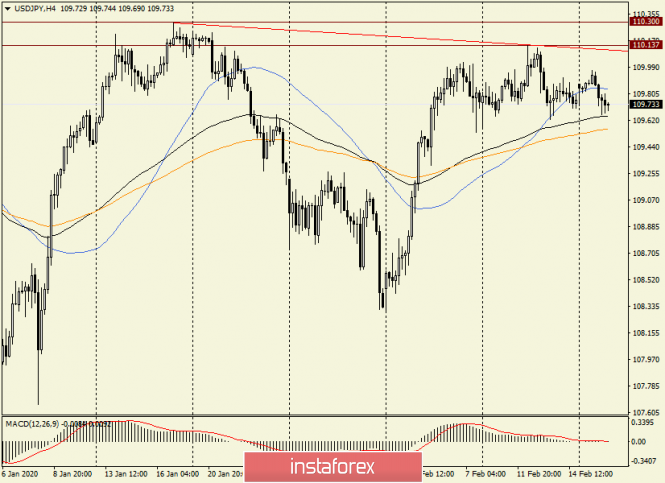
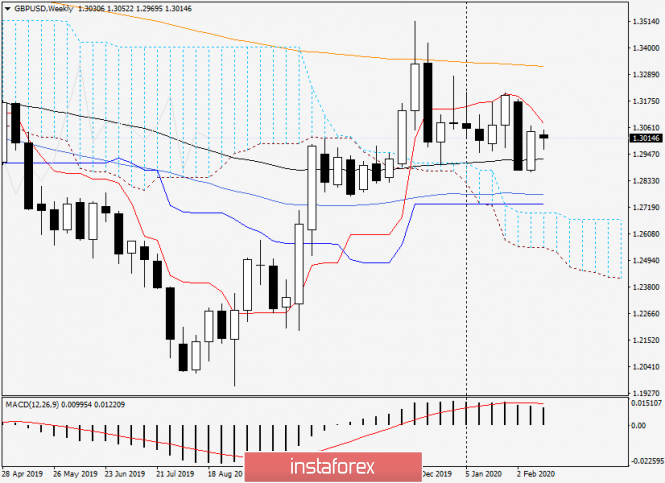
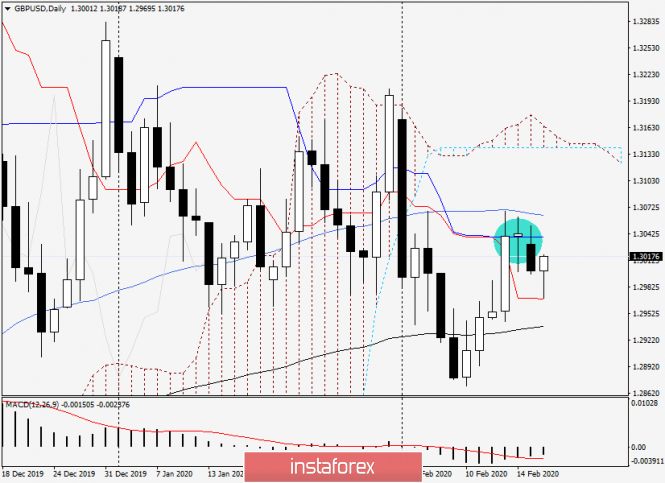
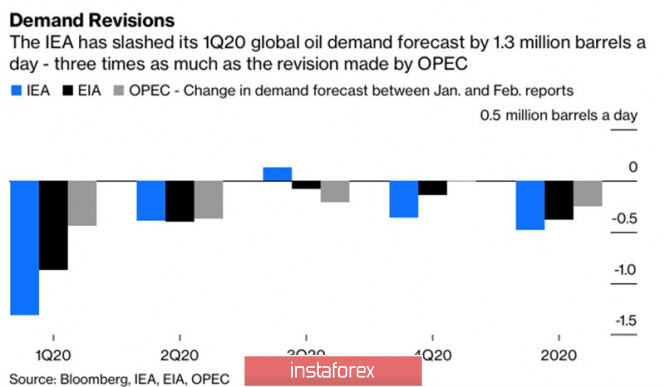
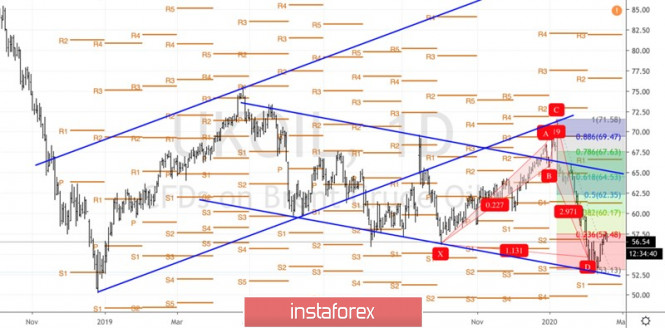
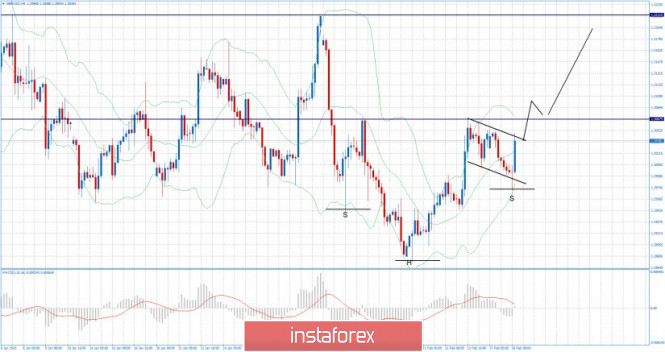
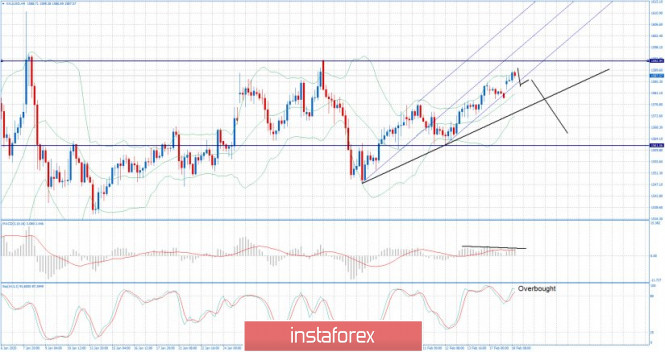
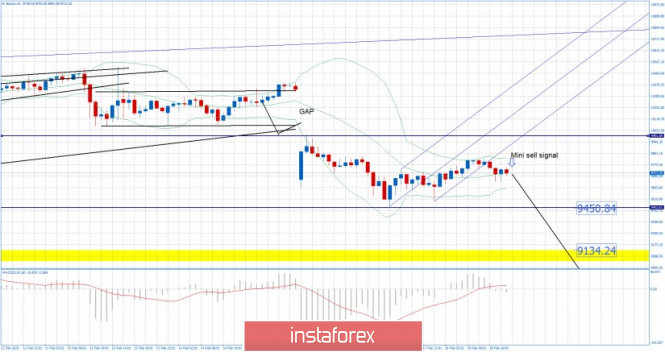
| You are subscribed to email updates from Forex analysis review. To stop receiving these emails, you may unsubscribe now. | Email delivery powered by Google |
| Google, 1600 Amphitheatre Parkway, Mountain View, CA 94043, United States | |

No comments:
Post a Comment