
Forex analysis review |
- Forecast for EUR/USD on February 21, 2020
- Forecast for GBP/USD on February 21, 2020
- Forecast for USD/JPY on February 21, 2020
- Trade Of The Day - NZD/USD Video Analysis
- Trade Of The Day - NZD/USD Video Analysis
- Trade Of The Day - NZD/USD Video Analysis
- Trade Of The Day - NZD/USD Video Analysis
- Fractal analysis of the main currency pairs for February 21
- AUD/USD. "There would be a reason, but there will be a seller": aussie slumps to multi-year lows
- EUR/USD and GBP/USD. February 20. Results of the day. Pound continues to fall, ignoring reports, euro awaits news
- EURUSD and GBPUSD: Pound drops before the start of EU-UK trade negotiations. ECB minutes knocked down bearish momentum in
- Gold vs dollar: battle of the titans continues
- Evening review 02/20/2020 EURUSD and USDJPY. Dollar trend, Trump & Sanders
- Weekly bearish divergence in Gold
- EURUSD is approaching our weekly target area
- February 20, 2020 : EUR/USD Intraday technical analysis and trade recommendations.
- February 20, 2020 : GBP/USD Intraday technical analysis and trade recommendations.
- GBP/USD: plan for the US session on February 20. The pound goes against all the rules. A good report on retail sales led
- EUR/USD: plan for the US session on February 20. The euro continues to stagnate around annual lows. The sellers' target remains
- BTC analysis for 02.20.2020 - Crash on the BTC as we expected, our both downwarrd targets are met but potential for even
- Gold 02.20.2020 - Overbought condition and resistance on the test at $1.617
- EUR/USD for February 20,2020 - Broken downard well-defined channel, posibility for the bigger rally towards the 1.0860
- Trading recommendations for EURUSD pair on February 20
- Technical analysis of EUR/USD for February 20, 2020
- Crude Oil: Buying the bottom, the next for free?
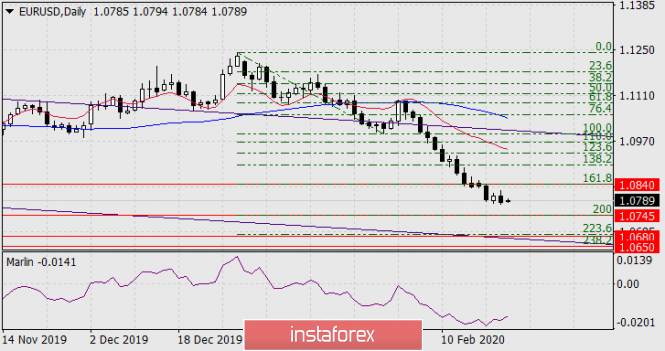
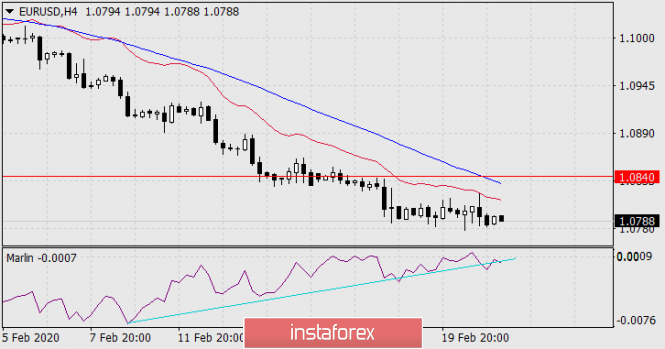
| Forecast for EUR/USD on February 21, 2020 Posted: 20 Feb 2020 07:55 PM PST EUR/USD On Thursday, the published minutes from the last ECB meeting were expected to be inconspicuous, the central regulator is no longer confident in the economy's stable growth for a number of external and internal reasons. Against this background, the growth of the US index of business activity in the manufacturing sector of Philadelphia for the current month from 17.0 to 36.7 with a forecast of decline to 10.1 only confirmed the desire of investors to continue buying the dollar. The stock market fell 0.38% (S&P 500), but this is not important for the US currency, since even if a new global crisis erupts, which is expected to begin with the collapse of the Chinese economy, the dollar will only continue to strengthen as a safe haven . The United States is fully utilizing the crisis situation by placing long-term bonds in large volumes. Short-term and long-term bonds worth 214 billion dollars were placed this week, the total US debt reached 23.310.929 trillion. dollars. The next week announced the placement of an incredible $241 billion. With this supply (and demand) for US values, the dollar can only strengthen. On the daily chart of the euro, the price continues to decline to its goals: 1.0745 (Fibonacci level of 200.0%) and in the range of 1.0650/80 formed by Fibonacci levels and an embedded line of the price channel. The price is falling below both indicator lines on the four-hour chart, the signal line of the Marlin oscillator has returned to negative territory. The material has been provided by InstaForex Company - www.instaforex.com |
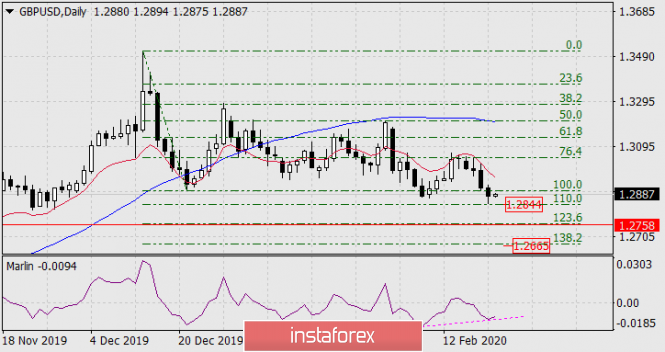
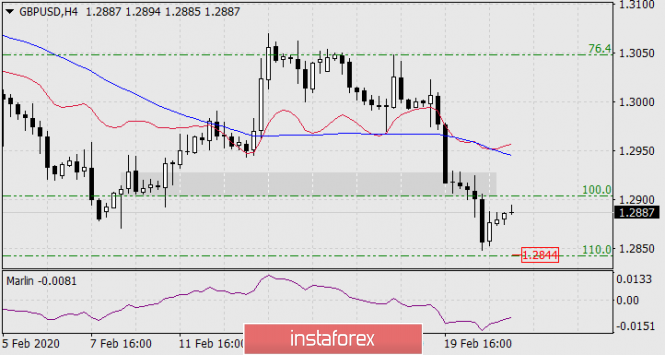
| Forecast for GBP/USD on February 21, 2020 Posted: 20 Feb 2020 07:54 PM PST GBP/USD The British pound fell by 38 points yesterday, at the peak of decline, almost reaching the first target at the Fibonacci level of 110.0% at the price of 1.2844. After overcoming yesterday's low, the price will move to the second target of 1.2758 – to the Fibonacci level of 123.6%. Then 138.2% at the price of 1.2665. This can be prevented by the impeding convergence of Marlin on the daily scale. If an active downward movement takes place today, the convergence will not form, and the signal line of the oscillator will continue to decline. In this situation, it is worth tracking the pound's reaction to the release of today's British business activity data for February. Manufacturing PMI is expected to fall from 50.0 to 49.7, Services PMI is projected at 53.4 points from 53.9 earlier. The fall of the pound on negative data is highly likely to cancel out the growing (and alternative) scenario with technical convergence. On the four-hour chart, it is noticeable how the price overcame the range on February 2 with effort and struggle. This is also a sign of the intention of the bears to consolidate success. The material has been provided by InstaForex Company - www.instaforex.com |
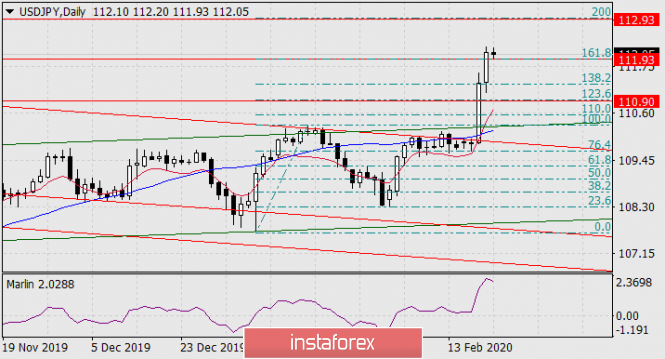
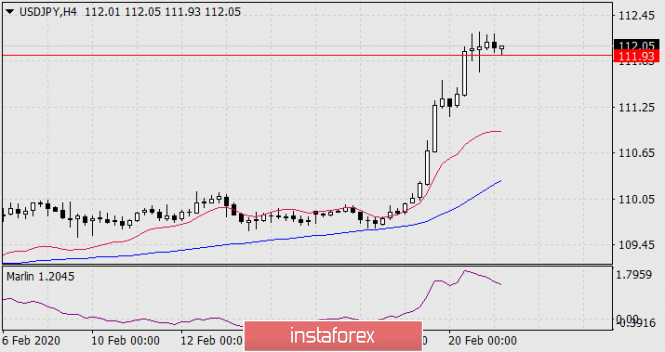
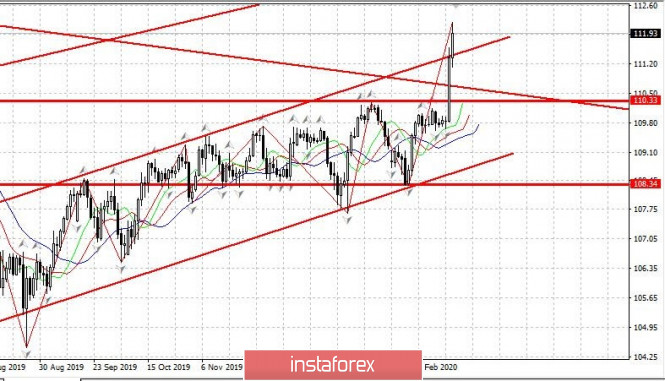
| Forecast for USD/JPY on February 21, 2020 Posted: 20 Feb 2020 07:52 PM PST USD/JPY The yen has soared (actually falling against the dollar) by 220 points over the past two weeks, showing the highest daily dynamics over the past two years. After leaving the MACD line on the daily chart, the price resolutely overcame a number of Fibonacci levels, not staying at 138.2%, stopping last night and this morning at 161.8% (111.93). Here, the price may linger a little longer, after which, according to the main scenario, it will continue to grow to the Fibonacci level of 200.0% at the price of 112.93. The Marlin oscillator is falling on the H4 chart, but in the current situation this can only mean that the price can really stay at the level reached before further growth. The material has been provided by InstaForex Company - www.instaforex.com |
| Trade Of The Day - NZD/USD Video Analysis Posted: 20 Feb 2020 06:52 PM PST Our trade of the day today is NZD/USD! We use Fibonacci retracements, extensions, support/resistance, momentum and trend lines to identify trading opportunities in this exciting pair today! Feel free to ask me questions on the analysis here: https://forum.mt5.com/showthread.php?226855-Dean-s... The material has been provided by InstaForex Company - www.instaforex.com |
| Trade Of The Day - NZD/USD Video Analysis Posted: 20 Feb 2020 06:47 PM PST Today we take a look at NZDUSD and see how we are going to play the bounce! Feel free to ask me questions on the analysis here: https://forum.mt5.com/showthread.php?226855-Dean-s-Daily-Video-Analysis-Instaforex-Chief-Strategist&p=14079976&  |
| Trade Of The Day - NZD/USD Video Analysis Posted: 20 Feb 2020 06:43 PM PST Today we take a look at NZDUSD and see how we are going to play the bounce! Feel free to ask me questions on the analysis here: https://forum.mt5.com/showthread.php?226855-Dean-s-Daily-Video-Analysis-Instaforex-Chief-Strategist&p=14079976& The material has been provided by InstaForex Company - www.instaforex.com |
| Trade Of The Day - NZD/USD Video Analysis Posted: 20 Feb 2020 06:41 PM PST Today we take a look at NZDUSD and see how we are going to play the bounce! Feel free to ask me questions on the analysis here: https://forum.mt5.com/showthread.php?226855-Dean-s-Daily-Video-Analysis-Instaforex-Chief-Strategist&p=14079976&Read more: https://www.instaforex.com/forex_analysis/165123 The material has been provided by InstaForex Company - www.instaforex.com |
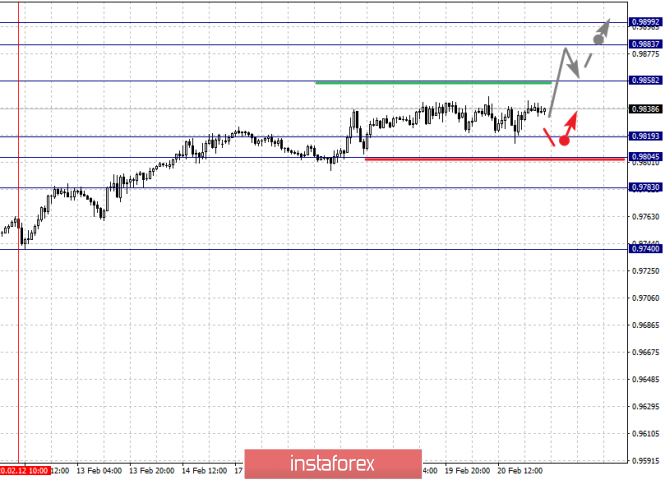
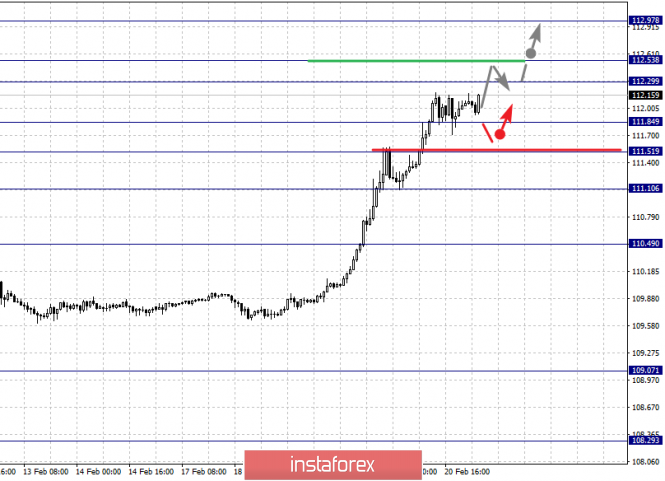
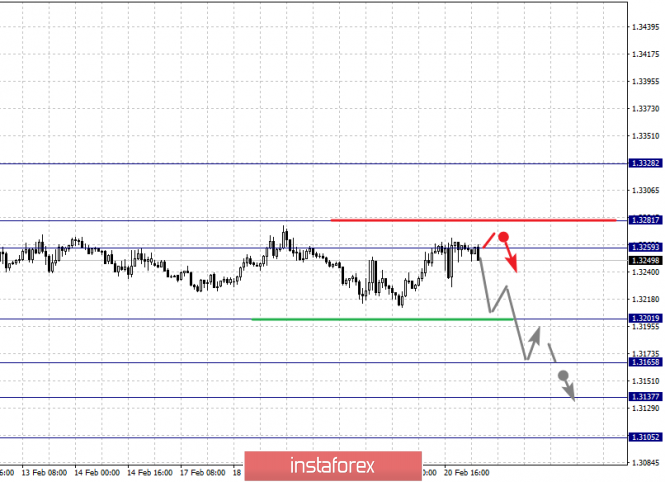
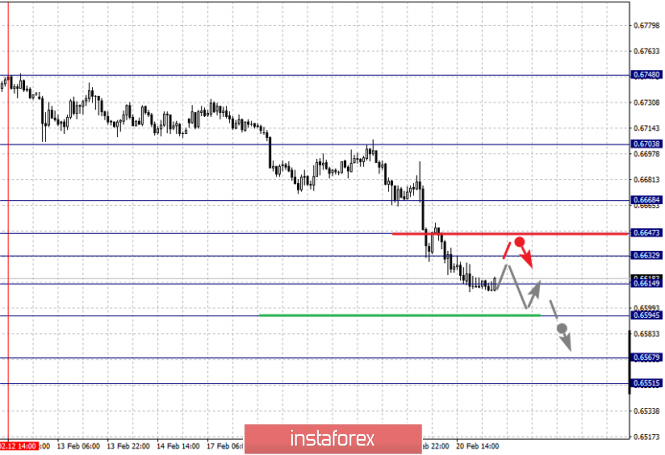
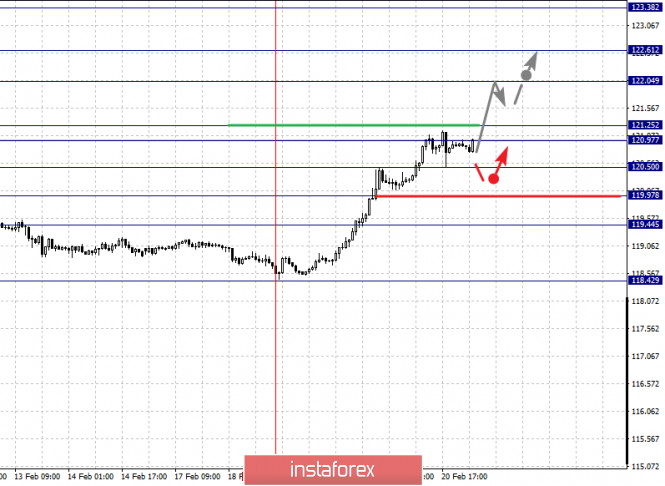
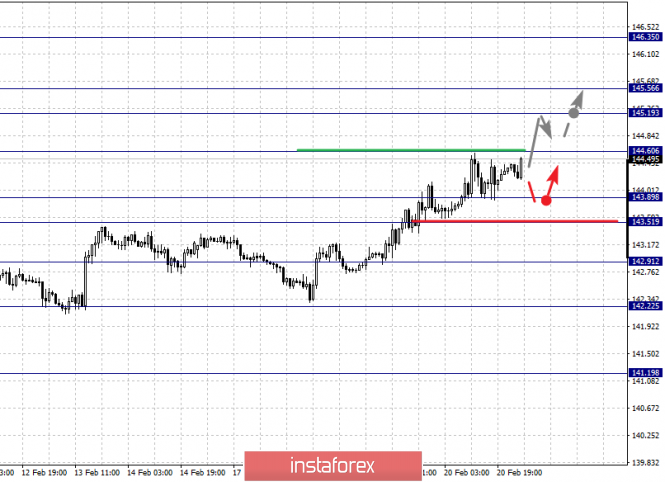
| Fractal analysis of the main currency pairs for February 21 Posted: 20 Feb 2020 05:44 PM PST Forecast for February 21: Analytical review of currency pairs in scale H1:
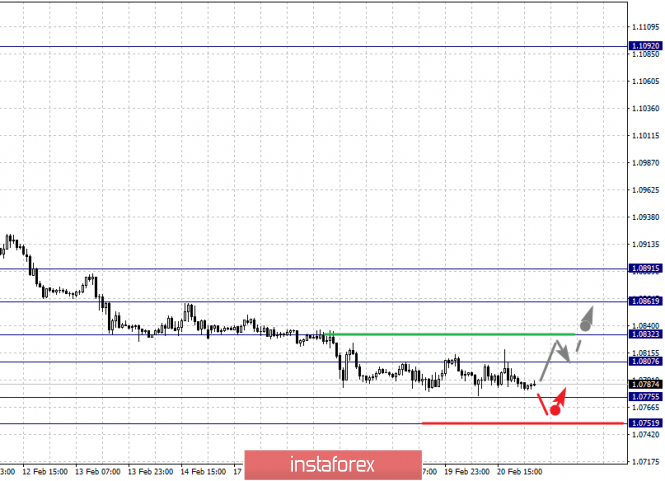
For the euro / dollar pair, the key levels on the H1 scale are: 1.0891, 1.0861, 1.0832, 1.0807, 1.0775 and 1.0751. Here, we expect a correction in a downward trend. Short-term upward movement is expected after the breakdown of the level of 1.0807. Here, the target is 1.0832. The breakdown of which will lead to in-depth movement. In this case, the target is 1.0861. This level is a key resistance for the subsequent development of the ascending structure. For the potential value for the top, we consider the level of 1.0891. We await the design of expressed initial conditions before this value. Short-term downward movement is expected in the range 1.0775 - 1.0751. From here, we expect a reversal to the top. The main trend is a downward structure from January 31, we expect a correction Trading recommendations: Buy: 1.0807 Take profit: 1.0830 Buy: 1.0834 Take profit: 1.0860 Sell: 1.0775 Take profit: 1.0752 Sell: Take profit:
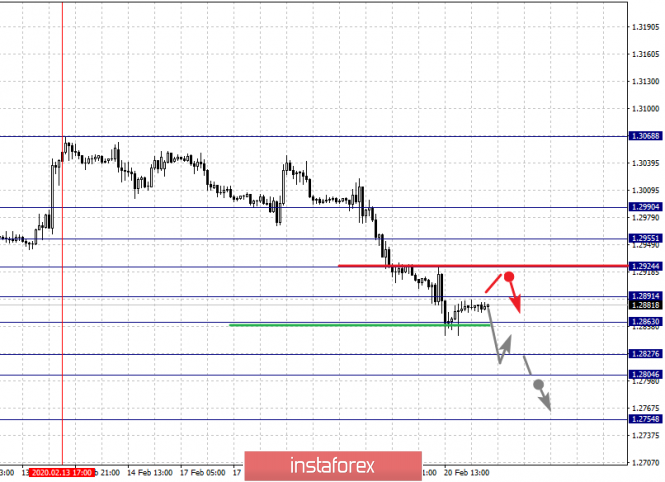
For the pound / dollar pair, the key levels on the H1 scale are: 1.2990, 1.2955, 1.2932, 1.2891, 1.2863, 1.2827 and 1.2804. Here, we are following the development of the downward cycle of February 13. Short-term downward movement is expected in the range 1.2891 - 1.2863. The breakdown of the latter value will lead to a pronounced movement. Here, the target is 1.2827. For the potential value for the bottom, we consider the level of 1.2804. Upon reaching which, we expect consolidation, as well as a rollback to the top. Short-term upward movement is possibly in the range of 1.2932 - 1.2955. The breakdown of the latter value will lead to an in-depth correction. Here, the target is 1.2990. This level is a key support for the downward structure. The main trend is the downward cycle of February 13. Trading recommendations: Buy: 1.2924 Take profit: 1.2954 Buy: 1.2957 Take profit: 1.2990 Sell: 1.2861 Take profit: 1.2828 Sell: 1.2802 Take profit: 1.2755
For the dollar / franc pair, the key levels on the H1 scale are: 0.9899, 0.9883, 0.9858, 0.9819, 0.9804 and 0.9783. Here, we are following the local ascendant structure of February 12. The continuation of movement to the top is expected after the breakdown of the level of 0.9858. In this case, the target is 0.9883. We consider the level of 0.9899 to be a potential value for the ascending structure. Upon reaching which, we expect consolidation, as well as a pullback to the bottom. Short-term downward movement is possibly in the range of 0.9819 - 0.9804. The breakdown of the latter value will lead to an in-depth correction. Here, the target is 0.9783. This level is a key support for the top. The main trend is the local potential for the top of February 12 Trading recommendations: Buy : 0.9858 Take profit: 0.9880 Buy : 0.9883 Take profit: 0.9899 Sell: 0.9819 Take profit: 0.9805 Sell: 0.9803 Take profit: 0.9784
For the dollar / yen pair, the key levels on the scale are : 112.97, 112.53, 112.29, 111.84, 111.51 and 111.10. Here, we are following the development of the ascending structure of January 31. Short-term upward movement is expected in the range 112.29 - 112.53. The breakdown of the last value will lead to a pronounced movement to the potential target - 112.97, and when this level is reached, we expect a pullback to the bottom. Short-term downward movement is possibly in the range of 111.84 - 111.51. The breakdown of the last value will lead to an in-depth correction. Here, the goal is 111.10. This level is a key support for the top. Main trend: upward structure of January 31 Trading recommendations: Buy: 112.30 Take profit: 112.52 Buy : 112.55 Take profit: 112.95 Sell: 111.82 Take profit: 111.53 Sell: 111.49 Take profit: 111.12
For the Canadian dollar / US dollar pair, the key levels on the H1 scale are: 1.3281, 1.3259, 1.3242, 1.3201, 1.3165, 1.3137 and 1.3105. Here, the descending structure of February 10 is considered medium-term. The continuation of the movement to the bottom is expected after the breakdown of the level of 1.3201. In this case, the target is 1.3165. Short-term downward movement, as well as consolidation is in the range of 1.3165 - 1.3137. For the potential value for the top, we consider the level of 1.3105. The movement to which is expected after the breakdown of the level of 1.3135. Short-term upward movement is possibly in the range of 1.3259 - 1.3281. The breakdown of the latter value will lead to the formation of an upward structure. In this case, the potential target is 1.3328. The main trend is the descending structure of February 10, the correction stage Trading recommendations: Buy: 1.3260 Take profit: 1.3280 Buy : 1.3284 Take profit: 1.3325 Sell: 1.3200 Take profit: 1.3165 Sell: 1.3163 Take profit: 1.3140
For the Australian dollar / US dollar pair, the key levels on the H1 scale are : 0.6668, 0.6647, 0.6632, 0.6614, 0.6594, 0.6567 and 0.6551. Here, we are following the descending structure of February 12. Short-term downward movement is expected in the range of 0.6614 - 0.6594. The breakdown of the latter value will lead to a pronounced downward movement. Here, the target is 0.6567. For the potential value for the bottom, we consider the level of 0.6551. Upon reaching which, we expect consolidation, as well as a rollback to the top. Short-term upward movement is possibly in the range of 0.6632 - 0.6647. The breakdown of the latter value will lead to an in-depth correction. Here, the target is 0.6668. This level is a key support for the downward structure. The main trend is the descending structure of February 12 Trading recommendations: Buy: 0.6632 Take profit: 0.6645 Buy: 0.6649 Take profit: 0.6666 Sell : 0.6612 Take profit : 0.6596 Sell: 0.6592 Take profit: 0.6569
For the euro / yen pair, the key levels on the H1 scale are: 123.38, 122.61, 122.04, 121.25, 120.97, 120.50, 119.97 and 119.44. Here, we are following the initial conditions for the top of February 18. The continuation of the movement to the top is expected after the price passes the noise range 120.97 - 121.25. In this case, the target is 122.04. Short-term upward movement, as well as consolidation is in the range of 122.04 - 122.61. For the potential value for the top, we consider the level of 123.38. Upon reaching this level, we expect a pullback to the bottom. Short-term downward movement is possibly in the range of 120.50 - 119.97. The breakdown of the last value will lead to an in-depth correction. Here, the target is 119.44. This level is a key support for the upward structure. The main trend is the formation of initial conditions for the top of February 18 Trading recommendations: Buy: 121.25 Take profit: 122.04 Buy: 122.06 Take profit: 122.60 Sell: 120.50 Take profit: 120.00 Sell: 120.95 Take profit: 119.47
For the pound / yen pair, the key levels on the H1 scale are : 146.35, 145.56, 145.19, 144.60, 143.89, 143.51 and 142.91. Here, we are following the ascending structure of February 10. The continuation of the movement to the top is expected after the breakdown of the level of 144.60. In this case, the target is 145.19. Short-term upward movement, as well as consolidation is in the range of 145.19 - 145.56. For the potential value for the top, we consider the level of 146.35. Upon reaching this value, we expect a pullback to the bottom. Short-term downward movement is possibly in the range of 143.89 - 143.51; hence, the high probability of a reversal to the top. The breakdown of the level of 143.50 will lead to an in-depth correction. Here, the goal is 142.91. This level is a key support for the top. The main trend is the rising structure of February 10 Trading recommendations: Buy: 144.60 Take profit: 145.19 Buy: 145.21 Take profit: 145.54 Sell: 143.87 Take profit: 143.52 Sell: 143.49 Take profit: 142.95 The material has been provided by InstaForex Company - www.instaforex.com |
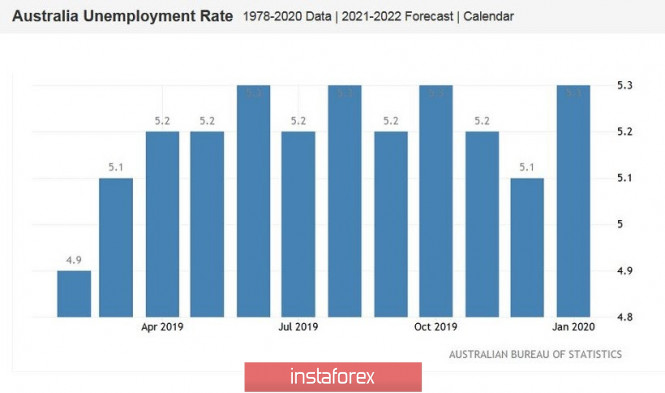
| AUD/USD. "There would be a reason, but there will be a seller": aussie slumps to multi-year lows Posted: 20 Feb 2020 02:57 PM PST The Australian dollar today completely lost ground: after the release of conflicting data on the labor market in Australia, the AUD/USD pair fell while updating multi-year lows. The last time the price was at such lows was 11 years ago - back in 2009. It should be noted right away that such price dynamics are caused not only by a weak macroeconomic report - first of all, traders are concerned about the prospects of the RBA monetary policy. Published on Tuesday, the minutes of the Australian central bank's last meeting fueled speculation on this subject, while today's release has become a kind of "last straw". Let me remind you that at the end of the first meeting of the RBA this year, the regulator voiced a signal that it does not exclude further easing of monetary policy. The minutes of this meeting, published the day before yesterday, somewhat eased concern about the dovish intentions of the central bank. The Australian regulator acknowledged that the risks of further easing monetary policy parameters "outweigh its benefits." That is, on the one hand, the Reserve Bank of Australia is ready to resort to decisive action in response to the slowdown of the national economy and the economy of China. On the other hand, members of the central bank stated the need to "balance the risks that inevitably involve even lower interest rates." The market interpreted this wording in favor of the Australian currency - they say, the central bank will resort to lower rates only in extraordinary situations. That is why the rather dovish minutes exerted a slight downward pressure on the pair. Nevertheless, the minutes of the February meeting laid the foundation for strong volatility for the pair in the future. The fact is that the RBA members "linked" the issue of monetary easing with the dynamics of Australia's key macroeconomic indicators. According to them, the need to reduce rates depends on progress or regression in achieving the central bank's goals for inflation and employment. This suggests that the data on the growth of the Australian labor market and the main indicators of inflation are now viewed by the market through the prism of further prospects for the RBA monetary policy. Actually, for this reason, the aussie slumped in almost all of the pairs today (not only against the US dollar). Published data reinforced rumors that the regulator will lower rates this spring. In particular, according to the Bank of Australia, the RBA members will announce this step at the March meeting, and they will reduce the interest rate by 25 basis points in April . In my opinion, the regulator will take a wait-and-see attitude approximately until the summer. Firstly, by this time it will become clear how seriously the coronavirus slowed down the Chinese economy (and, as a consequence, the world economy). Secondly, the Australian regulator in six months will be able to see a more complete picture regarding the dynamics of indicators of the national economy. In fairness, it is worth saying that the latest Australian labor market data was not catastrophic. The market focused on rising unemployment to 5.3% - this fact served as a kind of red flag for traders who panicked over the rate cut this spring. Although the remaining components came out better than expected. For example, the number of employees in January increased by 13 thousand, while experts expected growth by only 10 thousand. Another positive point of today's report is the growth of full employment. This component jumped to 46 thousand. On the contrary, part-time employment declined by 32 thousand. This trend can have a positive effect on the dynamics of wage growth, as regular positions, as a rule, offer a higher level of wages and a higher level of social security. The share of the able-bodied population was 66.1% (with a forecast of growth to 66.0%). This fact, in theory, was supposed to partially offset the negative effect of rising unemployment. Thus, the Australian today fell under the hot hand of traders who were ready to sell the aussie since Tuesday, when the minutes of the last RBA meeting were published. Today, the market has gotten a chance to fulfill its intentions: an increase in unemployment has become a signal that the regulator will nevertheless lower the rate in the foreseeable future. In my opinion, this conclusion seems premature, but the principle of sell by rumors still works. In addition, the general hegemony of the US dollar and the ongoing panic over the spread of coronavirus reinforces the pair's downward momentum. Bears overcame almost all levels of support, heading towards the 65th figure. If the fundamental picture for the pair does not change, then sellers will test the most powerful support level in the near future, which is located at 0.6570 and corresponds to the lower line of the Bollinger Bands indicator on the monthly chart. The material has been provided by InstaForex Company - www.instaforex.com |
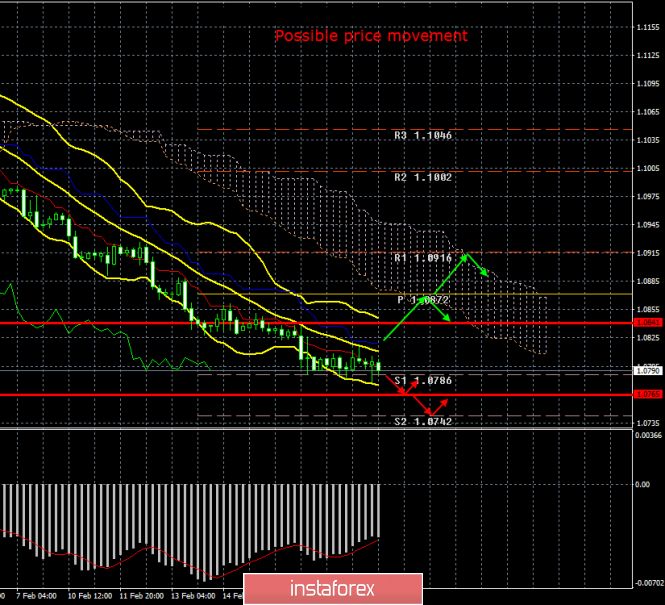
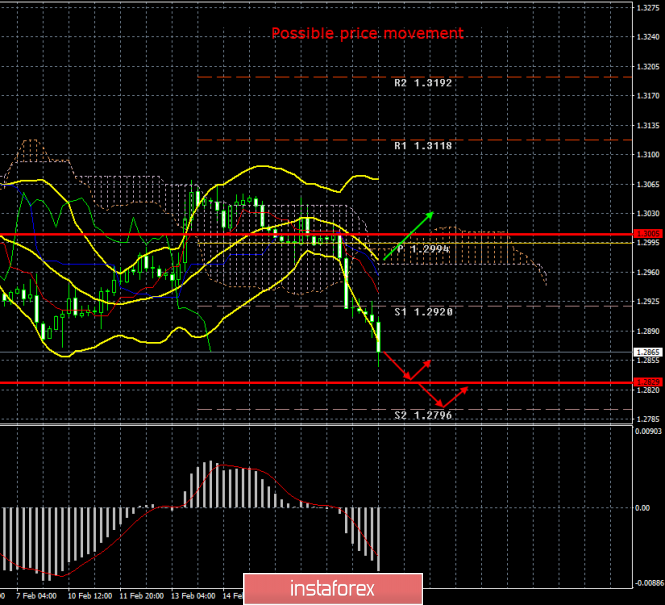
| Posted: 20 Feb 2020 02:57 PM PST 4-hour timeframe Amplitude of the last 5 days (high-low): 55p - 33p - 22p - 52p - 26p. The average volatility over the last 5 days: 38p (weak). The EUR/USD currency pair maintains a strong and long-term recoilless trend on Thursday, February 20, with weak daily movement and frank trampling in one place today and yesterday. Either the lack of important macroeconomic information, or the fact that the euro is reaching the bottom, but the pair continues to trade along the support level of 1.0786. After all, even though we have not seen a continuation of the downward movement for the second consecutive day, it is also impossible to say that the euro/dollar has started to adjust. There is still no upward correction, the 14th trading straight day. The MACD indicator continues to discharge, and traders are confused - what should they do next? There really was little macroeconomic information today. Nothing was important. It is unlikely that any of the traders were interested in data on consumer confidence in Germany or inflation in France, or applications for unemployment benefits in the United States. These reports have the right to exist, but they never cause any reaction of market participants, except for absolutely fantastic cases. Thus, Thursday's macroeconomic background can be considered completely empty. In principle, the same conclusion could have been made without even looking at the calendar, one glance at the illustration of the pair's movement today would be enough ... As a result, we have an absolute flat not even about 3-year lows, but directly on them. It is not known how much more the pair will trade around the 1.0786 level. Several more or less significant reports will be released tomorrow that could try to move the pair off the ground, and the degree of significance of these data does not allow us to suggest such an outcome with a high degree of probability. However, in any case, under current conditions, one should wait for news and economic publications. The volatility of the currency pair, by the way, again fell below the 40 mark and is now characterized as weak. 4 hour timeframe Amplitude of the last 5 days (high-low): 43p - 126p - 62p - 56p - 78p - 115p. Average volatility over the past 5 days: 88p (average). The GBP/USD currency pair continued its downward movement on February 20, which had begun the previous day. Now, the pound/dollar pair is clearly much more interesting than the euro/dollar. Firstly, we state a fact: after a series of unsuccessful attempts to overcome the upper line of the Ichimoku cloud - the Senkou Span B line - the pair completely logically resumed the downward movement. This is what we wrote about in our recent reviews, saying that the downward movement should resume almost anyway. Macroeconomic, technical, fundamental factors - all spoke in favor of a new fall of the British pound. And finally, traders could not stand it, and the British currency is pretty much cheaper against the US currency for the second straight day. Of course, now it's quite difficult to say exactly how long the recoilless fall will continue; according to the euro currency, it has been going on for three weeks already. However, the trend for the pound/dollar pair is again downward. Secondly, traders ignored relatively good macroeconomic statistics from the UK both yesterday and today. The pair was trading inside the Ichimoku cloud in those days when the fall would have been more logical, and yesterday and today, the pound fell when reports from Britain were not frankly disastrous or weak to provoke strong sales. An indicator of inflation on Great Britain was published yesterday, which accelerated immediately to 1.8% in annual terms. Yes, as you and I found out, inflation fell by 0.3% in monthly terms, which, in essence, means deflation. That is, the annual indicator turned out to be simply irrelevant at this time, but in general, it should be noted that inflation did not fail. Even in monthly terms, the inflation rate was higher than forecast values, which predicted a greater decline. Retail sales data for January were published today, and it turned out that, although the growth rate of this indicator slowed to 2-year lows, real data still exceeded forecasts. In annual terms, the increase was 0.8%, and in monthly terms 0.9%. Also turned out to be stronger than forecast values, and data excluding fuel sales, +1.2% y/y and + 1.6% m/m. Even a more minor report on changes in the volume of industrial orders turned out to be negative, but at the same time higher than forecast values. However, none of the three macroeconomic reports was taken into account by traders, and the pound continued to fall today against the dollar, updating the lows of February 10. From a technical point of view, it continues to move down, a new Dead Cross is formed, Bollinger Bands turned down. Macroeconomic statistics now have an indirect effect on the movement of the pair, so more attention should be paid to technical factors. Trading recommendations: The EUR/USD pair is finally showing signs of the beginning of an upward correction. Thus, it is now recommended to wait until the 1.0786 level is overcome and resume selling the euro with targets of 1.0765 and 1.0742. It will be possible to consider buying the euro/dollar pair with low lots and the goal of a first resistance level of 1.0916, if traders manage to gain a foothold above the critical line. However, it is better not to risk it on such a strong downward trend. GBP/USD continues to move down. Thus, it is now recommended to sell the pound with targets at 1.2829 and 1.2796 before the MACD indicator turns up. We recommend considering the pair's purchases with a target of 1.3118 if the Ichimoku cloud is overcome, but the fundamental factors remain on the side of the US dollar. Explanation of the illustration: Ichimoku indicator: Tenkan-sen is the red line. Kijun-sen is the blue line. Senkou Span A - light brown dotted line. Senkou Span B - light purple dashed line. Chikou Span - green line. Bollinger Bands Indicator: 3 yellow lines. MACD indicator: Red line and bar graph with white bars in the indicators window. Support / Resistance Classic Levels: Red and gray dashed lines with price symbols. Pivot Level: Yellow solid line. Volatility Support / Resistance Levels: Gray dotted lines without price designations. Possible price movements: Red and green arrows. The material has been provided by InstaForex Company - www.instaforex.com |
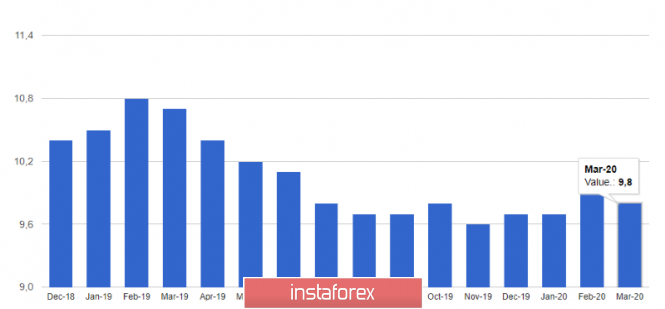
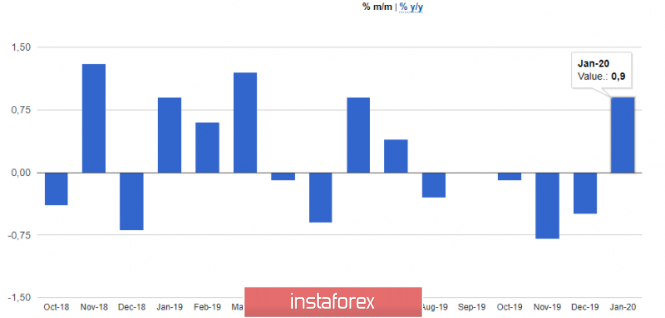
| Posted: 20 Feb 2020 02:57 PM PST Today's data on Germany, as well as the minutes of the European Central Bank, clearly indicate the problems that the eurozone continues to experience, which is associated with weak economic prospects, especially compared with the prospects of the United States, which puts pressure on the euro. According to a report by the German GfK Institute, German consumer sentiment will slightly fall in March 2020. The fall of the leading index is directly related to the danger of the spread of the coronavirus, which further adds uncertainty to the German economy. It should be noted that the leading indicator of consumer sentiment GfK fell to 9.8 points against 9.9 points in February, while economists expected the March value to be 9.8 points. Subindexes also fell. The decrease is especially noticeable in the index of expectations regarding income and the propensity to buy index. The economic expectations index in February was 1.2 against -3.7 in January. As for the current minutes of the ECB, the leaders signaled a tendency to maintain negative interest rates at the January meeting, saying that monetary policy should remain very soft for a long period of time, which, of course, did not provide confidence to the euro. However, it is necessary to note some signs of stabilization of economic growth, which were able to discern in the leadership of the ECB. Despite all this, the euro slightly regained its position, as the last "nail in the lid" would be the hints of the regulator on lowering interest rates this spring, which I mentioned several times in my previous reviews. Until this is done, chances for a euro correction to the area of 1.0900 and 1.1000 remain. Any statements to this effect will quickly push EURUSD further to the 2017 lows in the region of 1.0500. The ECB minutes also said that the current actions of the regulator will continue to support the economy. No additional incentive measures have been discussed so far. GBPUSD Big pound sellers did exactly the same thing today as they did yesterday. After waiting for good fundamental data on retail sales in the UK, which grew in January 2020, the bears began to actively sell the pound after a slight upward correction, which resulted in a breakthrough of large support areas and a test of new local lows near 1.2850. According to the National Bureau of Statistics, retail sales rose immediately by 0.9%, while economists had forecast growth of only 0.7%. Let me remind you that there was a drop in this indicator in November and December. Mostly, sales of clothes and shoes contributed to the increase. If we remove gasoline sales from this indicator, then sales compared with the previous month increased by 1.6%. On the positive side, the fact that after the uncertainty of the period with Brexit consumers began to more actively manage their assets, which led to a revival of costs. Of course, the pressure on the pound, which was formed immediately after a slight increase today in the morning, can be attributed to the uncertainty in trade between the UK and the EU. Formal negotiations will begin in early March this year. It is from them that the state of the UK economy this year will depend. The material has been provided by InstaForex Company - www.instaforex.com |
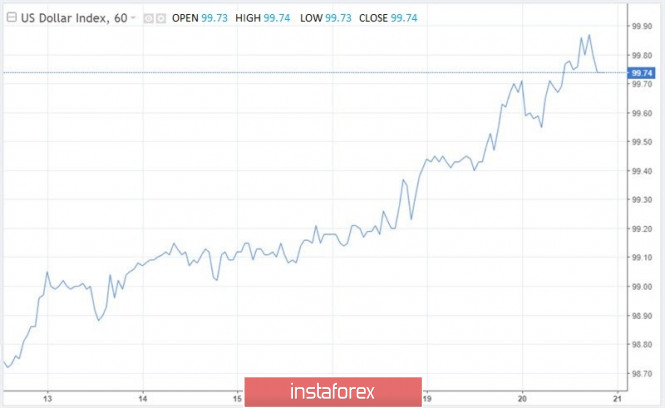
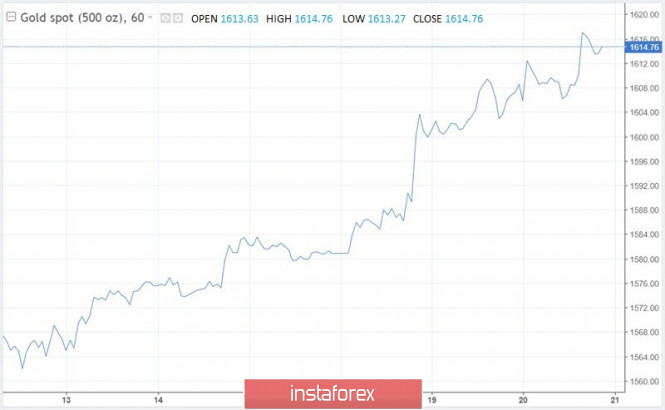
| Gold vs dollar: battle of the titans continues Posted: 20 Feb 2020 02:57 PM PST Gold returned to its seven-year highs, soaring above $1,600 per ounce. However, the yellow precious metal did this not because of, but contrary to. At first glance, gold is growing amid uncertainty about the impact of the coronavirus outbreak on the global economy. Trying to smooth out the negative consequences of the epidemic, central banks soften their monetary policy, which negatively affects the exchange rates of national currencies. As a result, the precious metal denominated in euros, yens and other monetary units feels rather confident. Stocks of gold ETFs expand for the sixth week in a row, tire of rewriting record highs. The strengthening of the precious metal positions occurs despite the confident tread of the US stock indices and the greenback's growth. Investors redeem failures in the securities markets, because they are confident that China will cope with the misfortune that has befallen it thanks to large-scale monetary and fiscal stimulation. While corporate profit growth in the United States is slowing, cash flow earnings are still high and loan rates remain low. In addition, the Federal Reserve can support the S&P 500 at any time by resorting to monetary expansion. No less surprising is the synchronous growth of the gold exchange rate and the USD index. Since the beginning of the year, the US currency has risen in price to the basket of its main competitors by more than 3%, and an ounce of gold - by 6%. The greenback is stronger than ever thanks to the US economy, which is firmly on its feet, and the significant inflow of capital to the US securities market. The USD index reached three-year highs and came close to 100 points. "The dollar seems to be winning in the face of risk, when its profitability against the background of extremely low volatility of exchange rates is still standing out, and the US stock market continues to look better than the securities market elsewhere. Risk aversion also supports the dollar thanks to the demand for defensive assets, including US treasury bonds," said the currency strategists at National Australia Bank. Nevertheless, investors prefer to leave a place in their portfolios for precious metals as well, apparently trying to insure the risks of a possible correction of the S&P 500 index and the US central bank's return to the cycle of preventive interest rate cuts. Greenback revaluation slows inflation, so it is possible that the regulator will want to stimulate it by cutting interest rates. Meanwhile, the decline in US Treasury bond yields lends a helping hand to the bulls in gold. Investors buy debt instruments for the same reasons as precious metals: they are frightened by the uncertainty associated with the coronavirus epidemic. It should be noted that the fall in rates does not occur only in the United States. For example, since the beginning of the year, the yield on Chinese ten-year government bonds has fallen by more than 25 basis points due to the potential slowdown of the Chinese economy and incentive measures by the People's Bank of China. By the end of January, non-residents increased their stocks of debt obligations of the PRC by $14 billion, to a record $2.2 trillion. In 2019, falling global debt market rates and weakening major world currencies became the main drivers of the gold rally. The XAU/USD situation for bulls continues to be favorable in 2020 due to the coronavirus epidemic. The main question now is how long the new virus will excite the minds of investors. According to UBS experts, if the global economy can withstand the blow, then the risks of gold correction will increase. In turn, Deutsche Bank strategists maintain an optimistic outlook on the prospects for precious metals. "Trade protectionism continues to have a chilling effect on global economic growth, central banks in developing countries are still looking for an alternative to the US dollar as a reserve asset, global monetary policy remains stimulating, and inflation is below target levels, while the geopolitical situation poses serious risks", - experts noted. According to them, perhaps the hype around gold is only just beginning. Thus, it is quite possible that in the face of easing fears about the coronavirus, gold will undergo moderate corrective pullbacks, maintaining the momentum for the increase formed in December. Moving up from one area of consolidation to another, quotes can develop growth up to levels near $1,700 per ounce, which could be observed at the beginning of 2013. A more extreme scenario for the coming months implies an acceleration of prices to $1,800 per ounce (peak values of 2012). The material has been provided by InstaForex Company - www.instaforex.com |
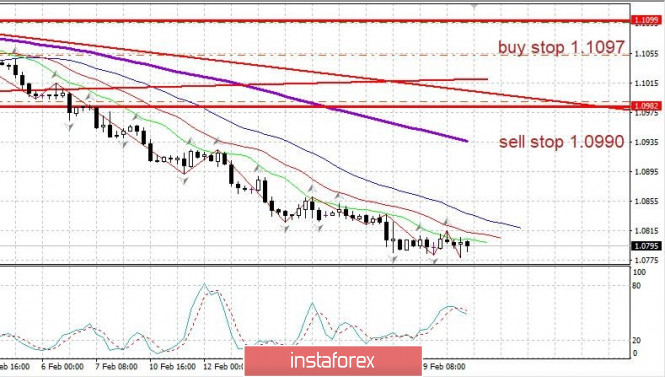
| Evening review 02/20/2020 EURUSD and USDJPY. Dollar trend, Trump & Sanders Posted: 20 Feb 2020 02:57 PM PST This is the USDJPY chart for the day. It is clearly seen that the yen broke out of range and gave a strong signal to the trend up, towards the dollar. Thus, the yen joined the euro in a trend, and now it is much more difficult to resist the dollar - the pound and the franc. Here is the euro: Gold has somewhat knocked the picture, steadily growing in recent days against the dollar. Trump and Sanders: Sanders won the debate - winning another victory. It is expected that heavyweights Biden and Bloomberg can still prevent Sanders from becoming the main candidate from the Democrats - they have strong support for the party bureaucracy and big money on their side. Still, Sanders is still in the lead - and this is clearly in the hands of Trump. With an adversary like the socialist Sanders (he calls himself a socialist), Trump will win without any problems. A socialist president is too much for America in a state of good growth (the great Roosevelt was almost a socialist - but that was the Great Depression - unemployment of more than 25% and so on). EURUSD: So far, everything is in favor of the dollar. We keep sales from 1.0990. Sell from rebounds up - from 1.0860 or higher. The material has been provided by InstaForex Company - www.instaforex.com |
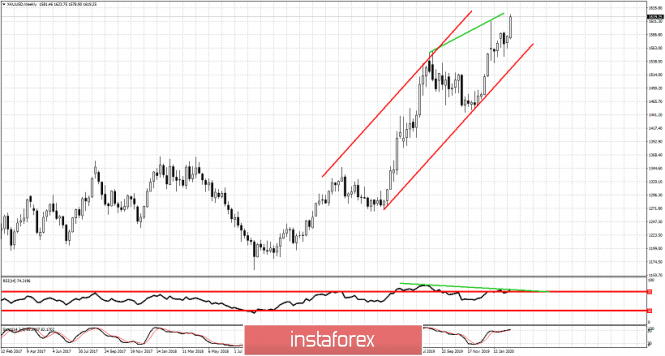
| Weekly bearish divergence in Gold Posted: 20 Feb 2020 01:51 PM PST Gold price is making new higher highs. Price remains in a bullish trend but the weekly RSI is giving us some warning signs with a bearish divergence signal. I believe there is no upside potential left at this point in time and it is better to stay neutral and not to chase Gold price in order to open new long positions.
Red lines - bullish channel Green lines -bearish divergence Gold price continues to move higher. The RSI does not follow. The RSI makes a lower high. This is a warning for bulls. Support is at last weeks low at $1,561. The stochastic oscillator is also at overbought levels. This is not the time to chase price to go long. This is the time to raise protective stops, to be cautious and take profits. The material has been provided by InstaForex Company - www.instaforex.com |
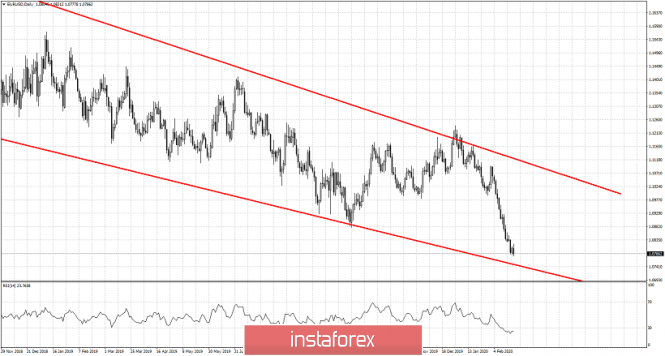
| EURUSD is approaching our weekly target area Posted: 20 Feb 2020 01:43 PM PST EURUSD remains in a bearish trend making lower lows and lower highs. Price has broken below 1.08 is now approaching our target area of 1.0750-1.07 as we pointed out in our weekly analysis back in February 12th.
Red lines- wedge pattern The Daily RSI is finally at oversold levels. Price is falling sharply without any considerable bounce since the beginning of February. Price is expected to bounce but our target of 1.0750-1.07 remains intact and I believe we are going to touch the lower wedge boundary at least. If bulls manage to push above 1.0840 then we could see a bigger bounce unfold. The material has been provided by InstaForex Company - www.instaforex.com |
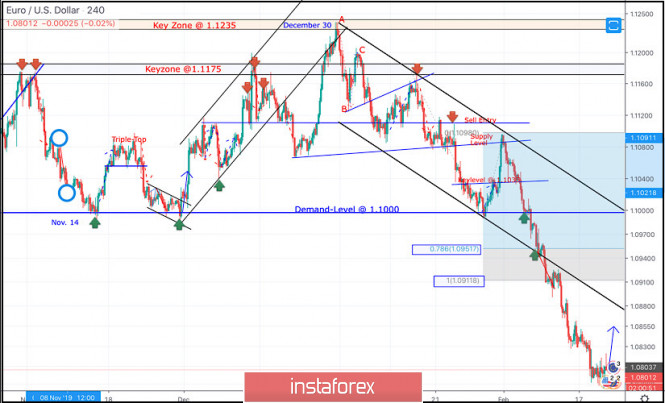
| February 20, 2020 : EUR/USD Intraday technical analysis and trade recommendations. Posted: 20 Feb 2020 08:07 AM PST
On December 30, a bearish ABC reversal pattern was initiated around 1.1235 (Previous Key-zone) just before another bearish movement could take place towards 1.1100 (In the meanwhile, the EURUSD pair was losing much of its bearish momentum). One more bullish pullback was executed towards 1.1175 where the depicted key-zone as well as the recently-broken uptrend were located. That's why, quick bearish decline was executed towards 1.1100 then 1.1035 which failed to provide enough bullish SUPPORT for the EURUSD pair. Further bearish decline took place towards 1.1000 where the pair looked quite oversold around the lower limit of the depicted bearish channel where significant bullish rejection was able to push the pair back towards the nearest SUPPLY levels around 1.1080-1.1100 (confluence of supply levels (including the upper limit of the channel). Since then, the pair has been down-trending within the depicted bearish channel until last week when bearish decline went further below 1.0950 and 1.0910 (Fibonacci Expansion levels 78.6% and 100%) establishing a new low around 1.0790. Currently, the EUR/USD pair looks quite oversold after such a long bearish decline and if bullish recovery is expressed above 1.0845-1.0860, further bullish advancement would be expected towards 1.0910 then 1.0950. Intraday traders are advised to look for signs of bullish recovery around the current price levels of (1.0790) as a valid intraday BUY signal aiming towards 1.0910 (the nearest broken demand-level). On the other hand, bearish persistence below 1.0790 may enable more bearish decline towards new historical lows around 1.0755 and even 1.0700. The material has been provided by InstaForex Company - www.instaforex.com |
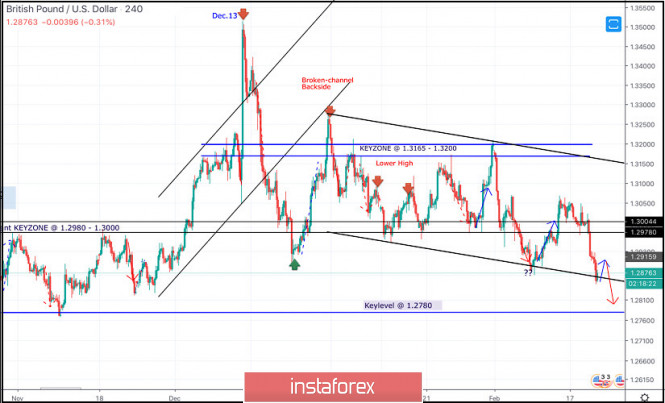
| February 20, 2020 : GBP/USD Intraday technical analysis and trade recommendations. Posted: 20 Feb 2020 07:56 AM PST
On December 13, the GBPUSD pair looked overpriced around the price levels of 1.3500 while exceeding the upper limit of the depicted bullish channel. On the period between December 18th - 23rd, bearish breakout below the depicted channel followed by temporary bearish closure below 1.3000 were demonstrated on the H4 chart. However, immediate bullish recovery (around 1.2900) brought the pair back above 1.3000. Bullish breakout above 1.3000 allowed the mentioned Intraday bullish pullback to pursue towards 1.3250 (the backside of the broken channel) where bearish rejection and a new wide-ranged movement channel were established between (1.3200-1.2980). Recently, new descending highs were demonstrated around 1.3200 and 1.3070. Recent Bearish breakdown below 1.2980 enhanced further bearish decline towards 1.2890 (the lower limit of the movement channe) where evident bullish rejection has been manifested on February 10. This week, Temporary bullish breakout above 1.3000 has been expressed until Yesterday when another bearish decline was expressed. As expected, The current bearish decline below 1.2980 is leading the GBPUSD pair towards the lower limit of the channel @ 1.2870 -1.2850 where price action should be watched. Intraday technical outlook is supposed to remain bearish as long as the pair maintains its movement below 1.2930 (Intraday Keylevel). Temporary bullish recovery around (1.2850-1.2870), followed by another bearish decline is expected to occur as long as no bullish breakout above 1.2930 is achieved. The material has been provided by InstaForex Company - www.instaforex.com |
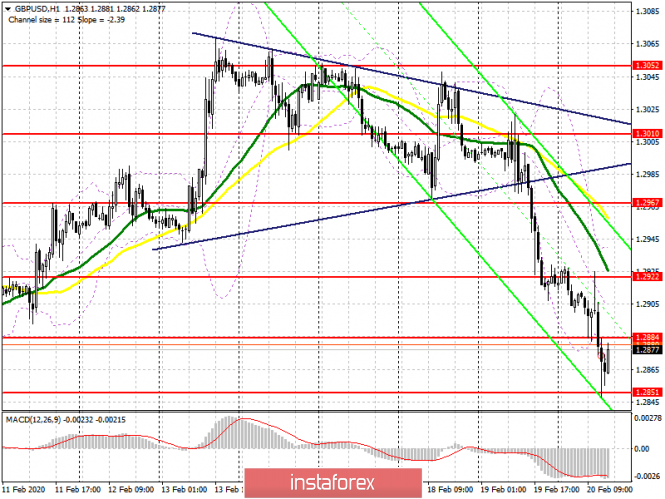
| Posted: 20 Feb 2020 06:13 AM PST To open long positions on GBPUSD, you need: Major sellers of the pound acted exactly according to yesterday's scenario and taking advantage of good news on the volume of retail sales in the UK today. They drop the GBP/USD pair to another monthly low. A small rebound up to 1.2930 served only as a good level for opening new short positions. At the moment, the bears rested on the support of 1.2851, around which trade is conducted. Several tests have only led to a small upward correction of the pair. So an important task for buyers in the second half of the day will be to return the resistance to 1.2884, which will lead to a more powerful upward momentum in the area of 1.2922 and 1.2967, where I recommend fixing the profits. In the scenario of a support breakout of 1.2851, it is best to return to long positions on the rebound from the lows of 1.2830 and 1.2799. To open short positions on GBPUSD, you need: The bears continued to push the pound down. Major players took advantage of the good news on the UK and retail sales, which allowed them to quickly gain large positions on the background of speculators' purchases, which led to a breakout of the support of 1.2890. Currently, trading is conducted in the support area of 1.2851, a repeated test of which will certainly lead to a new sale of GBP/USD in the area of the lows of 1.2830 and 1.2799, where I recommend fixing the profits. In the scenario of an upward correction in the second half of the day, you can return to short positions only on a false breakdown in the resistance area of 1.2884 or sell the pound immediately on a rebound from the maximum of 1.2922. Signals of indicators: Moving averages Trading is below the 30 and 50 daily averages, which indicates a continuation of the bearish trend. Bollinger Bands In the case of an upward correction, the average border of the indicator around 1.2900 will act as a resistance.
Description of indicators
 |
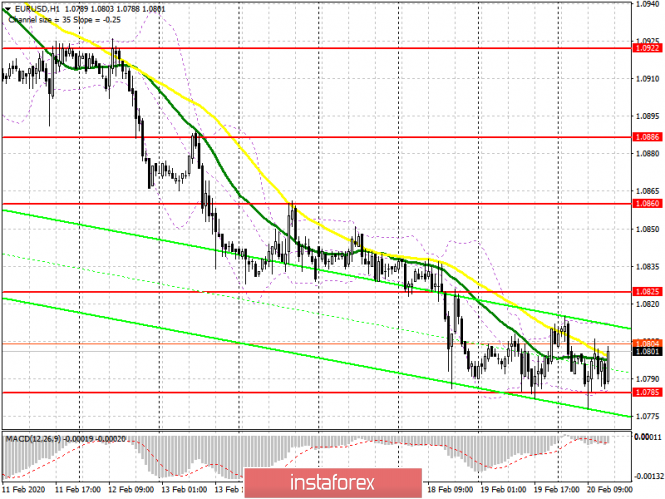
| Posted: 20 Feb 2020 06:11 AM PST To open long positions on EURUSD, you need: Data on German producer prices helped keep the euro at this year's lows, forming a false breakdown from the support area of 1.0785, which also led to the formation of a divergence on the MACD indicator. This is a bullish signal, however, given the current position of the European currency, it is not necessary to count on strong upward momentum. In the scenario of a breakthrough and a decline below the level of 1.0785 in the afternoon, it is best to return to long positions after the area of 1.0765 is updated or immediately to a rebound from the larger low of 1.0740. An equally important task for the bulls will be to break through and consolidate above the resistance of 1.0825, from which a good upward correction will be formed in the area of the highs of 1.0860 and 1.0886, where I recommend taking the profits. To open short positions on EURUSD, you need: The bears continue to bend their line, however, they have not managed to break below the support of 1.0785 for the third day in a row, which may lead to a sharp rebound of the pair up. Apparently, the sellers are counting on good reports on the US economy, which are scheduled for the second half of the day, since only a break in the support of 1.0785 will drop EUR/USD in the area of the lows of 1.0765 and 1.0740, where I recommend fixing the profits. In the scenario of the pair's growth in the second half of the day, only the formation of a false breakdown in the area of 1.0825 will signal the opening of short positions in the euro. I recommend selling immediately for a rebound only after testing the maximum of 1.0860. Signals of indicators: Moving averages Trading is conducted in the area of 30 and 50 moving averages, which indicates market uncertainty in the short term. Bollinger Bands Volatility remains at a low level, which plays on the side of sellers of the European currency.
Description of indicators
 |
| Posted: 20 Feb 2020 05:40 AM PST Industry news:
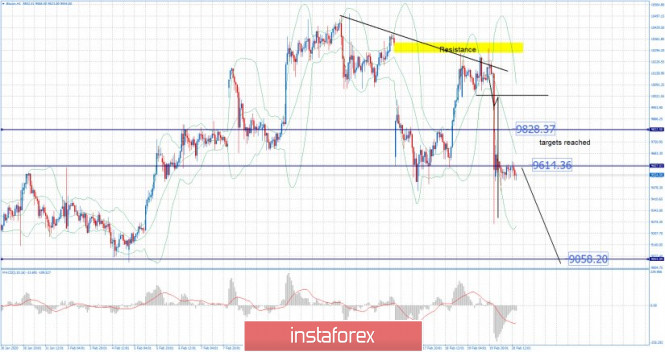
Brendan Blumer, the CEO of Block.one – the publisher of EOS, has said that Bitcoin isn't money and that it never will be. However, he believes that it's the "next generation of gold." His tweets came as a response to Peter Schiff, who once again bashed Bitcoin. Blumer has been consistent in his views of Bitcoin. He has previously said that it shares core values with gold, as well as supply integrity. Moreover, he also believes that "anyone egregiously attacking one in favor of the other is undermining both, while highlighting their own insecurities in regards to their chose favorite." Indeed, many people have compared Bitcoin to Gold in the past. One of them was the Chairman of the US Federal Reserve, Jerome Powell. He said that Bitcoin is "a store of value; it's a speculative store of value, like gold." Technical analysis: BTC has been trading downwards as I expected. Both my targets at $9.828 and $9.614 have been reached but there is still room for further downside. Watch for selling opportunities on the rallies with the next main target at the price of $9.060. Watch for potential downside rotation if you see bear continuation pattern like bear flag on hourly or 4H time-frame. The downward target is set at the price of $9.060. MACD oscillator is showing new momentum down, which is sign that strong sellers are active on the market. Resistance levels are set at the price of $9.680 and $9.730 Support levels and downward targets are set at the price of $9.260 and $9.060. The material has been provided by InstaForex Company - www.instaforex.com |
| Gold 02.20.2020 - Overbought condition and resistance on the test at $1.617 Posted: 20 Feb 2020 05:29 AM PST Technical analysis:
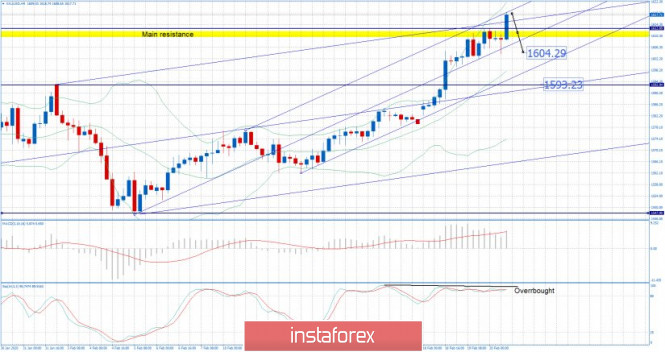
Gold has been trading upwards. The price tested the level of $1.618. I see resistance at the level of $1.617 (Upper diagonal of Pitchfork channel), which is indication that Gold is overbought zone and that buying looks risky at this stage. Watch for potential downside rotation if you see any topping pattern or bearish divergence on the lower time-frames. Downside objectives are set at the price of $1.604 and $1.593. Stochastic oscillator is showing overbought condition, which adds even more risk for buyers. Major resistances is set at the price of $1.617 Support levels are set at the price of $1.604 and $1.593 The material has been provided by InstaForex Company - www.instaforex.com |
| Posted: 20 Feb 2020 05:10 AM PST Technical analysis:
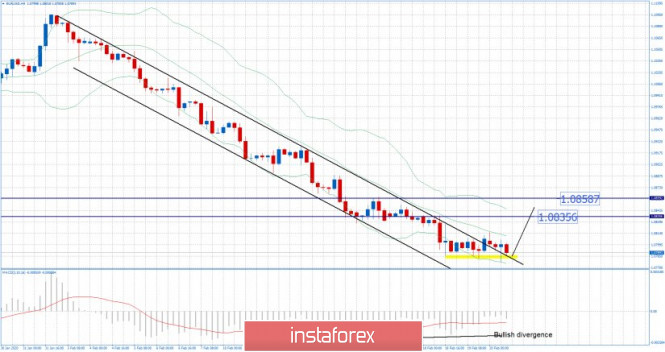
EUR/USD has been trading sideways at the price of 1.0790. I found that there is the breakout of the well defined downward channel in the background, which is sign that buyers are taking control over buyers and the rally is very possible. Rising black trend line – Possible path Downside diagonals – Broken downward channel Yellow rectangle – Support cluster Watch for buying opportunities with the main upward targets at the price of 1.0835 and 1.0858. MACD oscillator is showing 3-pushes down and bullish divergence, which is good confirmation for our long bias. Major support is set at the price of 1.0760 Resistance levels and upwardThe material has been provided by InstaForex Company - www.instaforex.com |
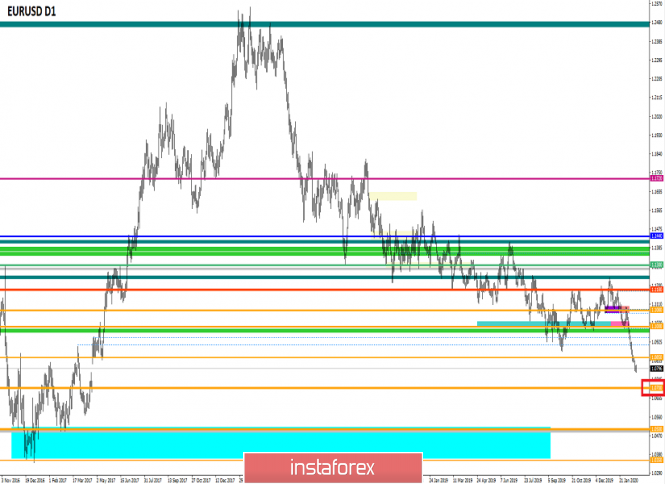
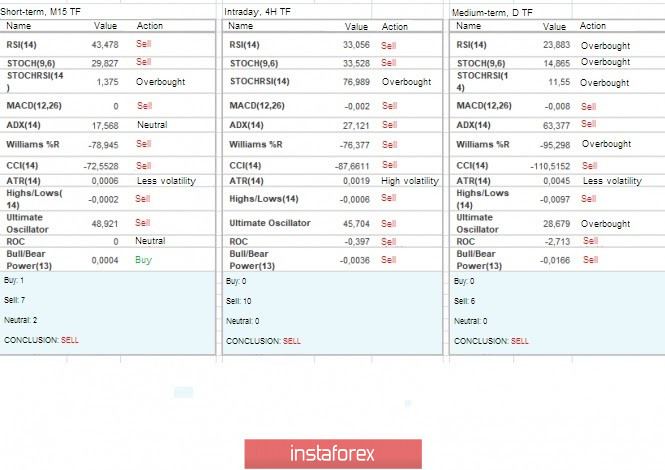
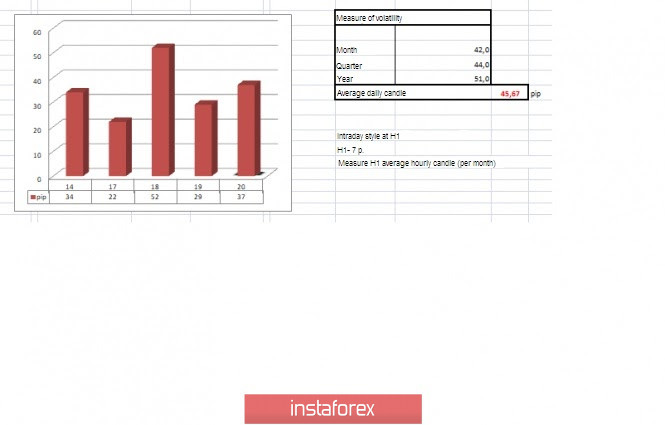
| Trading recommendations for EURUSD pair on February 20 Posted: 20 Feb 2020 04:24 AM PST From a comprehensive analysis, we see another slowdown in the area of lows, where downward interest is still a priority. Now, about the details. A steady bearish interest is striking in its stability, where a move of more than 440 points has been formed since the beginning of the year. This value hides not just a movement but the structure of the global trend. So the theory of downward development is now in the center of everyone's attention since the euro updates local minimums almost on a daily basis. Psychological ranges (1.0700/1.0850; 1.0500/1.0700; 1.0000//1.0350//1.0500) increase the interest of speculators, however, they are alarming since there may be a stop with a reverse surge at any moment. If we consider the theory in terms of the medium-term course, it is too early to worry since the main flow of emotions will come during price fluctuations in the range of 1.0000//1.0350//1.0500 where without the support of the information background, speculators will not get along. In terms of volatility, we see a sharp slowdown of 35% relative to the average daily indicator and the regularity of past periods has shown that such significant stops bring new bursts of activity. Analyzing the past day by the minute, we see that the quote has once again passed into the accumulation phase, expressed in the range of 1.0782/1.0810, where the horizontal movement is very similar to the recent fluctuations. As discussed in the previous review, traders are considering a further downward move, citing the fact that the FOMO syndrome (lost-profit syndrome) will help them in this. Looking at the trading chart in general terms (the daily period), we see almost a free fall relative to two weeks, which is alarming since the overheating of short positions is visible to the naked eye. The news background of the previous day included data on producer prices in the United States, where the acceleration was from 1.3% to 2.1% with a forecast of 1.7%. At the same time, construction data came out much better than forecasts. The volume of construction of new homes in January decreased by 3.6% but predicted a reduction of 30.7%. In turn, the number of construction permits issued is growing by 9.2% with a forecast of -0.1%. The market reaction to the statistics was almost absent, which is surprising, since the indicators were very good, and the dollar had chances to strengthen, as happened with the GBPUSD pair. In terms of the general information background, we have the publication of the minutes of the January meeting of the Federal Reserve, where a miracle did not happen. The facts about the actions of the regulator were confirmed. What is interesting is that the members of the commission disagreed when assessing the effectiveness of the low-interest rate. "A number of representatives felt that under certain circumstances, low-interest rates can help maintain financial stability. However, some noted that maintaining low-interest rates may contribute to the vulnerability of the financial system", follows from the Fed's minutes. At the same time, the document says that during the year, the labor market remained strong and economic activity grew at a moderate pace. The number of jobs has been steadily increasing recently, and the unemployment rate has remained low. In turn, the regulator raised its forecast for GDP growth in 2020 and 2021 against the background of the first phase of the trade deal between the US and China. Today, in terms of the economic calendar, we have data on applications for unemployment benefits in the United States, where they predict an increase in applications in the amount of 17,000. If the data is confirmed, this may play into the hands of the rollback, which has not been for so long. Further development Analyzing the current trading chart, we see that the horizontal movement is maintained in the market with variable boundaries of 1.0780/1.0815. In fact, downward interest puts pressure on the quote, like FOMO syndrome, where a technical correction is delayed. There is oversold, however, now it is better to work on the situation or in the medium term to reduce the optimal trading volume. Detailing the available period every minute, we see that the minimum of the previous day was broken during the start of the European trading session, which confirms the fact of high speculative interest. In terms of the emotional mood of market participants, we see a high coefficient of speculative operations that came with FOMO. In turn, medium-term traders are considering a more significant decline with the levels of 1.0700->1.0500->1.0350. Intraday traders also consider the decline but also look at the price dynamics within the current framework. It is likely to assume that the downward interest will still remain in the market, and if you are working in terms of average earnings, you can not worry about a technical correction. If you do not plan to hold the deal for so long, then work on breaking the set boundaries of 1.0780/1.0815 with the entrance to the impulse candle. Based on the above information, we will output trading recommendations: - Buy positions will be considered if the price is fixed higher than 1.0815, with the prospect of a move to 1.0830-1.0850, a local transaction. - Positions for sale are already held by medium-term traders. Intraday traders are waiting for a break of the mark of 1.0780 with a characteristic impulse. Indicator analysis Analyzing different sectors of timeframes (TF), we see that the indicators of technical instruments are working on a decrease due to the General background of the market. Volatility for the week / Volatility Measurement: Month; Quarter; Year. The volatility measurement reflects the average daily fluctuation from the calculation for the Month / Quarter / Year. February 20 was based on the time of publication of the article. The volatility of the current time is 37 points, which is higher than the dynamics of the previous day. It is likely to assume that if we refer to the pattern of acceleration after deceleration, we have a chance of increasing volatility. Key levels Resistance zones: 1.0850**; 1.0850**; 1.0879*; 1.0900/1.0950**; 1.1000***; 1.1080**; 1.1180; 1.1300**; 1.1450; 1.1550; 1.1650*; 1.1720**; 1.1850**; 1.2100 Support zones: 1.0700; 1.0500***; 1.0350**; 1.0000***. * Periodic level ** Range level *** Psychological level ***** The article is based on the principle of conducting a transaction, with daily adjustments. The material has been provided by InstaForex Company - www.instaforex.com |
| Technical analysis of EUR/USD for February 20, 2020 Posted: 20 Feb 2020 03:34 AM PST Overview: The EUR/USD pair continues to move downwards from the level of 1.0835. Yesterday, the pair dropped from the level of 1.0835 to the bottom around 1.0778. But the pair has rebounded from the bottom of 1.0778 to close at 1.0791. Today, the first support level is seen at 1.0778, the price is moving in a bearish channel now. Furthermore, the price has been set below the strong resistance at the level of 1.0835, which coincides with the 38.2% Fibonacci retracement level. This resistance has been rejected several times confirming the veracity of a downtrend. Additionally, the RSI starts signaling a downward trend. As a result, if the EUR/USD pair is able to break out the first support at 1.0778, the market will decline further to 1.0735 in order to test the weekly support 2. Consequently, the market is likely to show signs of a bearish trend. So, it will be good to sell below the level of 1.0835 with the first target at 1.0735 and further to 1.0704. However, stop loss is to be placed above the level of 1.0869 The material has been provided by InstaForex Company - www.instaforex.com |
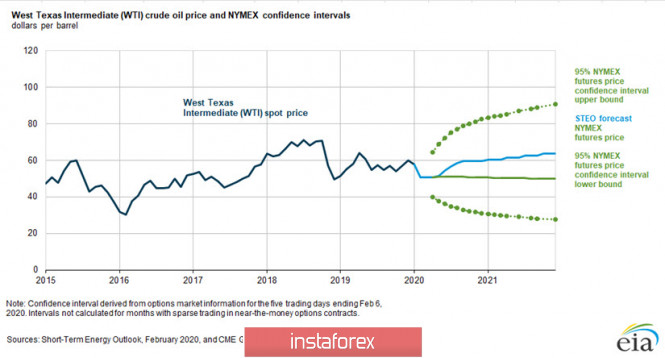
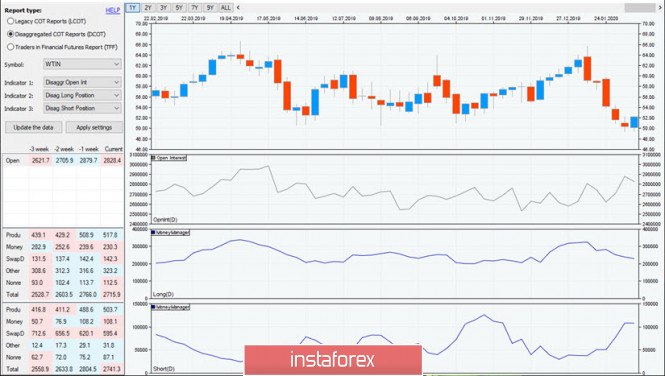
| Crude Oil: Buying the bottom, the next for free? Posted: 20 Feb 2020 03:26 AM PST After the January failure, crude oil quotes added about 5% to their value, which inspires some optimism, against the backdrop of rising stock indices and the technical picture observed at InstaForex terminals. However, to understand what is happening with oil, just researching the chart is not enough, and in this regard, we will consider the situation that develops in the market from the point of view of traders' positions, and also use the short term forecast Short Term Energy Outlook, released last week by the US Energy Information Agency (US EIA). Fortunately, this forecast provides us with the necessary information for understanding medium-term processes with a perspective of three to six months. In turn, analysis of the report on the obligations of traders - Commitments of Traders (COT) - gives a cut of the mood of traders for a period of up to the first quarter, which allows us to evaluate our positions in full depth-from a couple of weeks to six months. According to the forecast, in the first quarter, the US EIA expects a decrease in demand of 900 thousand barrels per day, which reflects the effect of the coronavirus epidemic and warmer than usual weather that has settled in the Northern Hemisphere. At the same time, for 2020, despite an unfavorable start, an increase in oil consumption by 1 million barrels per day is forecasted, which suggests global economic growth.
However, predicting the price of oil, the agency assumed that the organization of OPEC countries and Russia would go for an extra, additional reduction in production by 500 thousand barrels, but as we already know, Russia did not support Saudi Arabia and the OPEC technical committee, in connection with stabilization epidemiological situation, canceled its recommendation on an urgent reduction in production. The final decision will be made at a meeting of the cartel, which will take place in early March, but if the situation does not change and a new outbreak occurs in industrial and financial countries, a decision to reduce production will most likely not be made. This could lead to a sale on the oil market.
Figure 1: Short-term WTI Crude Oil Price Forecast by US Energy Information Agency The short-term forecast suggests that in the first and second quarters of 2020, the price of oil, despite the estimated reduction in production by 500 thousand barrels, will collapse to its minimum values, and prices will begin to recover only in May 2020 (Fig. 1). However, as we know, OPEC countries and Russia are not going to reduce production, which means that the decrease in quotes may be deeper than the level of $50 indicated in the forecast. Moreover, NYMEX traders are more pessimistic about the prospects for oil than the Energy Information Agency. In early February, options traders assumed that the price of WTI crude oil would not be able to rise after the current fall and would remain on average at $50 per barrel, not only throughout 2020 but also in 2021. At the moment, April futures are trading on the market, to which the option contract LOJ0 is bound to expire on March 17 (Fig. 2).
Figure 2: Open interest at option levels, contract LOJ0. As follows from the distribution chart of open interest of option contracts, right now the lower border of the market is at the level of $50, the upper border is at the level of $55, there is also the point of maximum pain for option buyers and maximum profit for Max Pain sellers. A strong level above is located at around $60, below the price supports a significant level of $48. Analyzing the distribution of Open Interest by level, it can be assumed that the price of crude oil will remain in the range of $48 - $60 per barrel until March 17, but a report on the positions of COT traders shows that the price of WTI oil at $60 is a very optimistic forecast for the development of the situation. The material has been provided by InstaForex Company - www.instaforex.com |






| You are subscribed to email updates from Forex analysis review. To stop receiving these emails, you may unsubscribe now. | Email delivery powered by Google |
| Google, 1600 Amphitheatre Parkway, Mountain View, CA 94043, United States | |

No comments:
Post a Comment