
Business.com |
- How to Use Google Ad Manager for Your Small Business
- Why You Should Start a Podcast in 2019
- How to Keep Your Business Out of Bankruptcy
- How Data Analytics Impacts Small Businesses in 2019
- Should You Start Your Own Business While Still in College?
| How to Use Google Ad Manager for Your Small Business Posted: 09 Jul 2019 08:00 AM PDT  Getting the word out about your business doesn't have to be some huge production of photo shoots and scripted commercials. It can be as easy as signing up for Google Ads. When someone is looking for information on a business or a topic, where's the first place they go? It's usually Google. Given that, it makes perfect sense to use Google Ads to show up as one of the first results for those searchers. But how does it all work for small businesses? What is Google Ad Manager, and how do you sign up?Alexa Kurtz, marketing strategist and paid ad specialist for WebTek, defined Google Ads as "a unique advertising platform that is geared toward small businesses, but is also effective for large corporations as well." Google Ad Manager is a new service introduced in June 2018 that combines DoubleClick for Publishers and DoubleClick Ad Exchange, according to Sarkis Hakopdjanian, director of strategy and principal for The Business Clinic. "It can be used as an ad server, but it also provides additional features for managing sales of online ads using a dedicated sales team," he said. What this really does is enhance the user experience for mobile search, with people spending more time than ever on their phones. That was a whole channel of revenue that small businesses might have been losing out on through ads, because people weren't able to search and get immediate results on their phones. They would have to wait until they were near a desktop to make their searches. With Ad Manager, users can access your ads wherever they are engaging, including on televisions, YouTube and certain mobile apps. Signing up for Google Ads is easy. You can do it right on the Google Ads website, which walks you through it step by step. If you want to step up your game with Google Search Ads 360, though, you'll have to go through a Google sales contact to sign up. How does it work?"There are two schools of thought when it comes to managing your company's Google Ads," said Daniel Digiaimo, CEO of Baker Street Funding. "You can either hire outside firms to manage your ads for you, or have someone in-house that does it full time. We choose to keep it in-house for a few reasons. Our business has a high PPC rate and is constantly changing. We have someone monitoring our clicks, our pricing and the amount of leads that come into our firm, all in real time. In my business, we average around 10 clicks a day, with maybe two of those clicks being viable customers." Digiaimo also noted how important it is to stay on top of his company's ad spending and the content. "If you just set it and forget it, you will end up with a mind-numbingly expensive bill and nothing to show for it." Kurtz explained how easy the conversion tracking is in Google Ads. "[It] is a great way to track your return on investment. Google Ads Manager will allow you to enter specific details when setting up conversion tracking, like lead worth. Thanks to that information, once you start generating leads, it can project about just how much profit you can expect to earn from the ads." Does it really work for small businesses?According to many who have used it, it really does. Marketing and advertising expert Tiffany K. Schreane said it absolutely works. "Google Ads is a one-stop shop to tell the story of the impressions landing on your company website [and] the time on each page they are spending to measure engagement … and conversion rate of products and services, and overall monitor your website performance over time to ensure that people are finding you and also how they are finding you." While the general consensus is that it does work, it's important to have goals in mind and a matching strategy, according to Kate Bielinski, senior account manager at Sutherland Weston Marketing Communications. "The ads, whether served on Google Ads or programmatic platforms, only bring users to the site," she said. "The advertiser needs to be prepared to convert the user with relevant and engaging content. This will also improve your conversion costs, since part of Google's bidding system ranks sites by Quality Score [and] relevance." Kurtz noted that a lot of the clients she works with at her marketing agency are small, local businesses with modest budgets. "While running PPC ads isn't in the wheelhouse for some, the ones that dive headfirst into the investment almost always see a return on investment and see it quickly," she said. "For these local service-providing companies, Google PPC ads work super well because of the specific targeting the advertising platform provides. Being able to narrow in on your demographics results in more qualified leads and, ultimately, more sales." Should small businesses work with advertising professionals?While small businesses can create, run and optimize their own ads, many recommend going with a professional to manage all digital advertising efforts. One of those proponents is Rhianna Taniguchi, digital marketing strategist at iQ 360. "Why? Because you'll generally get better ROI and protect your brand," she said. "A professional digital marketer may also help you with recommendations on how to optimize your landing pages, teach you best practices and give you an edge against competitors." Taniguchi also recommends looking for a certified Google Partner when choosing an agency to manage your ads, because Google Partners are constantly evaluated on the performance of the campaigns they manage. They also have experience trafficking ads and knowledge of Google's unique platform and promotions. "Working with a certified Google Partner to manage your paid advertising campaign has a world of benefits," said Kurtz. "The one our clients tend to enjoy the most is simply the peace of mind in knowing that their PPC ads are in good hands. As a small business, or anyone choosing to partner with a company offering professional advertising services, you can rest assured knowing that while you manage your business, your partner is managing theirs. Being able to trust your PPC agency is a huge win." What is programmatic advertising?Programmatic advertising is the automated purchase or sale of digital ads. The team at Moz says that "it takes out the ponderous and inefficient human element, allowing advertisers to reach the right people at exactly the right place." According to Riana Young, digital marketing consultant at Living Online, programmatic advertising is about driving efficiencies in spend and resources. "Rather than having a marketer manually choose the targeting and placements for banner ads on the Google Display Network, programmatic advertising buys ad placements for you using machine intelligence," she said. "More than that, you can expand your reach out to more website placements than those that are only affiliated with Google advertising." How does social media management come into play?"Social media management is different than PPC, and one should be careful to draw a line here," said Yaniv Masjedi, CMO at Nextiva. "A social media manager is going to engage with your audience in an appropriate manner at all times, not just throw out paid ads for high click-through rates." However, that doesn't mean social media management and Google Ads are completely unrelated. "Whether you're operating a small, local business or leading a global, enterprise-level effort, your customers are online [and] interacting via social channels with friends, colleagues and other brands," the Moz team says.
|
| Why You Should Start a Podcast in 2019 Posted: 09 Jul 2019 07:00 AM PDT  Podcasts are one new outlet that is providing businesses an excellent way to connect with their audiences. The popularity of podcasts is on the rise and continues to grow as time goes on. Research by The Infinite Dial found that there are 51 million podcast listeners in the U.S. This type of media isn't going anywhere and continues to be a popular method to speak to audiences about different niche and industry topics. Podcasts can turn even the most mundane topics into interesting learning experiences that people want to know more about. This is just part of the reason they're so effective for businesses and brands alike. Research shows that 15 percent of people in the U.S. listen to a podcast at least once a week. With its audience continuously growing, there's plenty of room for your podcast to gain traction and reach success. Among the reasons you should consider starting a podcast in 2019, include:
Here are some specifics on each reason. 1. You hold your audience's attention longerIf you have a blog post that takes any longer than, say, 10 minutes for people to consume, it's not likely they'll continue reading all the way to the end. According to Salesforce, three percent of listeners will only listen to the beginning of a podcast, whereas 42 percent will listen all the way through. People like to digest easily consumable information and don't like to dwell on one piece of text for too long, which is one of the reasons why listening to podcasts allows you to engage your audience for much longer periods of time. People are used to having and holding conversations and a podcast is very much like a conversation that you're listening in on. You're getting used to different voices that help you visualize what the person is saying. Beyond that, most podcasts add an element of storytelling to their content, which makes it even more enjoyable to listen to. One tip is to add personal anecdotes into your podcasts where applicable so your audience can get to know you better as a person. 2. It creates a personalized experiencePodcasts are great because your audience gets the chance to hear the sound of your voice and understand your thinking patterns regarding whatever it is your content is about. If you read a blog post, you can't visualize the person behind the text or get to know the ideas behind their content in full depth. Hearing audio of the person behind the ideas is a great way to create and provide a personalized experience for your audience and let them get to know you on a deeper level. When other types of media can't suffice in helping your audience get to know you, podcasts can do the trick. With text, people can't decipher your emotion and have to guess what tone it is you're trying to go after. However, when people can hear your voice, a lot more becomes apparent, such as sarcasm, humor, wit, and much more. It's easier to connect with people when there's an emotional connection involved and podcasts are great at doing just that. 3. You build connectionsSimilar to guest posting, you can use your podcast to feature and bring on guest speakers who share their thoughts, experience, and expertise on any given topic. Sometimes it can get monotonous for people to listen to you and only you every single episode. Inviting guest speakers on your show is a great way to expose them to different industry experts as well as get different opinions and insights on a given topic. Having guest speakers is a great way to build networking connections because there's a good chance they might invite you onto their show in return. This will spread brand awareness and expose it to a whole new audience within your niche. You can use this as an opportunity to stay in touch with these contacts and provide lifelong mentorship and friendship. You never know, one of these connections could turn into a business partner down the road. When deciding who to have on your podcast, create a list of credible, interesting, engaging guests you'd like to have featured and reach out to as many as you can. Tell them why you believe they'd be a great fit for your podcast and make sure they're okay with you being new and having a smaller audience. 4. There's monetary valueIn a recent case study, real estate agent turned entrepreneur John Lee Dumas was able to grow his podcast, Entrepreneur on Fire's, sponsorship income from zero to $46,000 a month. This didn't just magically happen, however. Dumas had a plan to create a content marketing strategy that provided his target audience with valuable, insightful information for free. He decided to teach his audience how to create their own podcast that generates revenue so that it's more just than a hobby. In doing so, he was able to build an organic audience of listeners who genuinely enjoy his content and tune in of their own free will. Examples like these are common for podcast creators if they curate content with their audience in mind. If you know who you're catering to, creating content that's relevant to your target market's interests will be easy because you'll have all the information necessary to determine their pain points and solve their problems. There are a few different ways you can earn money through your podcast. For one, you can charge sponsors to be featured in your podcast so they get exposure to your audience. You can create ads that entice listeners to check out different products and services relevant to their needs. You can also use your podcast as an opportunity to promote your own products and services and tell users why they're useful for them. 5. It positions you as a leader in your industryIf you're able to garner enough listeners and network connections, you'll end up being seen as an expert leader in your industry. People will see the attention your podcast is getting and look to you for advice, opinions, and thoughts about things happening within your niche. If it attracts more ratings, listeners, and attention, new visitors will see this as a positive and are more likely to give your show a chance. Revolve your content marketing strategy around content that's valuable to your audience first and foremost. Be sure to bring new, fresh ideas to the table in your podcasts. Don't make it solely about storytelling or technical content. Tie in a bunch of different elements together so you cover all areas of your niche in a fun, interesting way. There are so many reasons why you should take the plunge and create a podcast in 2019. Podcasts help you get your ideas out to the world in a new way that people enjoy. You're able to hold your audience's attention for longer periods of time, create a personalized experience, build valuable network connections, and make a decent income. Finally, it positions you as an expert in your niche so that new listeners can look to you for new insights and ideas. |
| How to Keep Your Business Out of Bankruptcy Posted: 09 Jul 2019 06:00 AM PDT  Research from the Supreme Court on federal court filings show that bankruptcy filings are at their lowest levels in more than a decade. However, at the same time that bankruptcies — legal processes involving actors that can't repay their debts to creditors — are declining, business debt is rapidly rising. In fact, the Federal Reserve's recent financial stability report shows that leveraged lending is 20% higher than last year and flags a decline in protections for lenders against default. This is important to be aware of because debt and cash flow — more precisely, the inability to effectively manage debt and cash flow — are the principal drivers of bankruptcy. If you want to understand the risk of selling your goods or services to someone on credit terms, understand the credit report first. Pay close attention to the credit score and credit limit, both of which will tell you a lot about a company's payment behavior and the likelihood of it becoming bankrupt in the near future. Signs of troubleIn my years helping companies manage credit, I've identified some red flags when it comes to debt management issues:
If enough of these factors exist, the likelihood of bankruptcy is fairly high. Keep in mind, too, that when a company goes bankrupt, it doesn't do so in a vacuum. The effects of one bankruptcy can ripple through the whole economy and cause a chain of others. Consider, for example, Hasbro. The major toymaker reported a 13% drop in sales over the holidays in the wake of the Toys R Us bankruptcy. Similarly, sportswear brand Under Armour has felt the effects of retailers like Sports Authority filing bankruptcy. In cases like these, the suppliers of the bankrupt retailer face serious repercussions, no matter the quality of their products or services. For some suppliers, a retailer the size of Toys R Us might account for half of their business. When that piece of the chain breaks, the result can be a crippling loss across the supply chain. Handling debt managementProtecting your business against debt can save you from bankruptcy and spare the overall economy a bit of trouble. Here are four tips to get your own debt and cash flow management on track: 1. Pay your bills on time. Don't give yourself a reason not to pay your suppliers on time. If you aren't making timely payments, you're unnecessarily straining those relationships and slowly building up debt. Further, if you get too far behind on payments, your supplier might freeze services to your business altogether or even take you to court. Your business credit report will suffer if this happens, which will put you that much closer to bankruptcy. If you foresee any problems fulfilling your payments, be honest with your supplier at the earliest opportunity. Ultimately, it's in its interest to help you so it can ensure payment and your business in the future. 2. Give the government what it's due. The last thing you want on your credit report is a tax lien. If potential vendors see that you're not paying what's due to the government, they'll likely assume that you won't pay for their services either. That doesn't mean a tax mishap is a death sentence for your business, but you don't want any issues to snowball — and with the government, they can snowball quickly. If you get off course, be proactive. Set up a payment plan, and stay on good terms with the people in charge. 3. Learn to use credit reports. Credit reports — both your own and those of your customers — are a vital tool for your business success. Start by studying yours to determine where you stand. Potential customers and lenders will look, and you want them to be impressed with what they see. A credit report is also essential when you're onboarding a new customer. If customer reports raise red flags, save yourself a major headache by extending them little room for error. 4. Don't forget that rainy day fund. Never assume that even your best buyers won't hit choppy financial waters. If you monitor their credit reports regularly, you can see early warning signs and work with them to change their payment terms or make other arrangements. If they do face financial downfall, you want to be prepared and have the cash to weather the storm. Plan ahead and add what padding you can to your reserves. The best business owners are ready for the worst. You might have noticed that there is one common, unifying factor in each of the four tips above: relationship. It's often difficult to cultivate relationships in the world of finance and credit and is even harder in a B2B enterprise. However, building relationships can be the single biggest factor in your organization's successful avoidance of the bankruptcy domino effect. Knowing your suppliers and the organizations you supply, their habits, the points of contact, and their financial history goes a long way in overcoming issues. Being able to send an email or make a phone call to clear up any confusion or answer any questions can be vital to a proper understanding of a situation. If things do become problematic, a relationship can help make hard conversations a bit easier and lead to a plan of action going forward. Further, it can be instrumental in minimizing the potential damage caused by an unavoidable bankruptcy. The bankruptcy process is long and tiresome and not something any business wants to endure. While there is no absolute cure for avoiding the effects of bankruptcy, sound financial practices are just as important in good times as they are in bad, and proactive debt management has always been a critical part of that equation. |
| How Data Analytics Impacts Small Businesses in 2019 Posted: 09 Jul 2019 05:00 AM PDT 
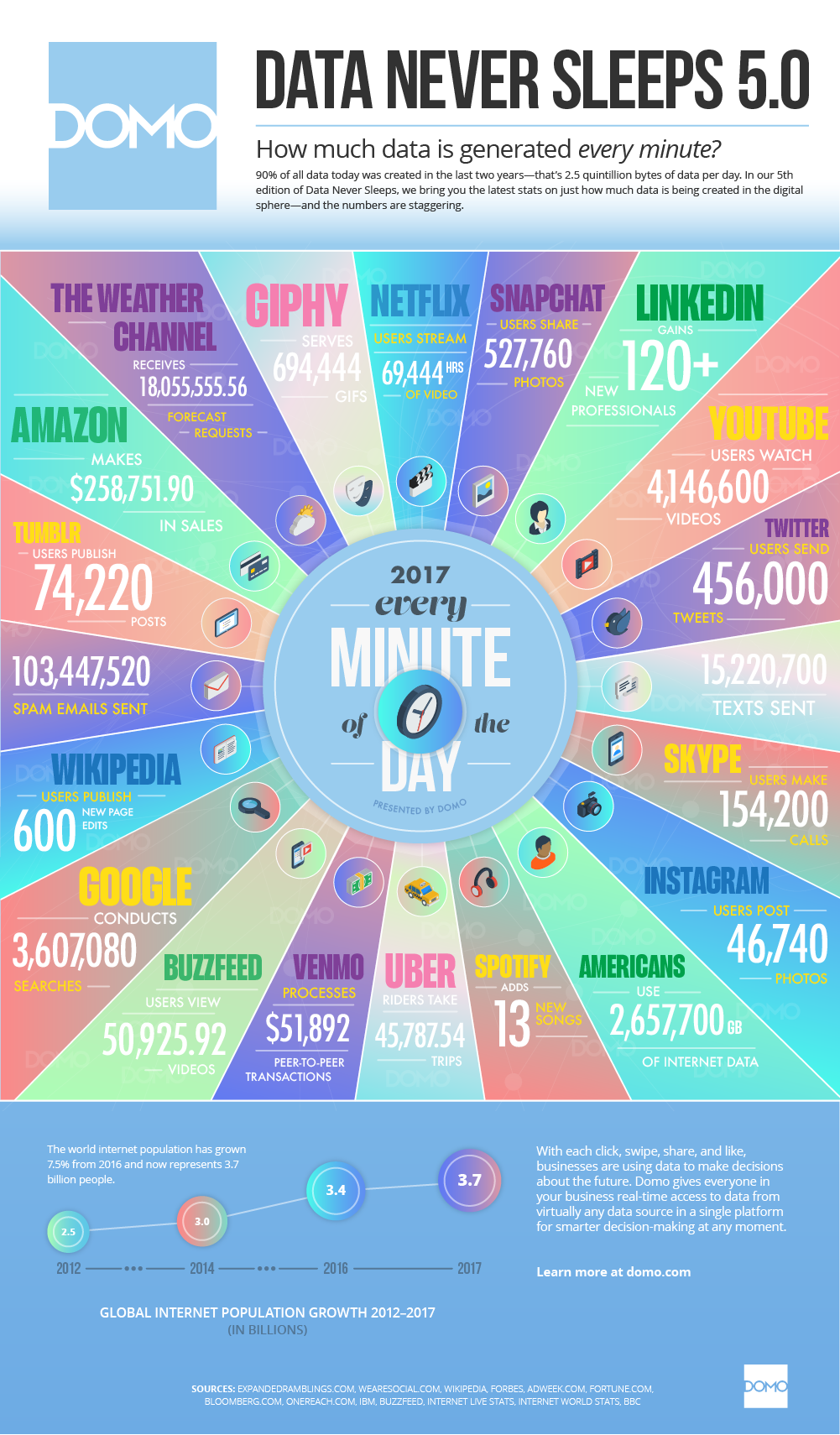
With many companies ramping up their digital transformation initiatives, there's been a massive surge in the implementation of data analytics. Big data adoption increased from a mere 17% in 2015 to 59% in 2018 – a 42% increase in just three short years. Data analytics has a nearly-infinite number of uses and can help small businesses become smarter, more productive and more efficient. And when used correctly, it can create a noticeable competitive advantage, while boosting both conversions and revenue. Here are three data analytics trends that are having a major impact on small business in 2019. 1. Deep learningWe generate a staggering 2.5 quintillion (that's 18 zeroes) bytes of data every single day. Machines are becoming more and more adept at putting that action to use, with deep learning capabilities growing immensely in 2019. A subset of machine learning, deep learning utilizes artificial neural networks that learn from vast quantities of data in a similar manner to the functioning of the human brain. This helps machines solve highly-complex problems with incredible precision. As enterprise and cloud expert Bernard Marr says, "The more deep learning algorithms learn, the better they perform." 2019 marks a critical juncture where deep learning is helping small businesses to greatly enhance their decision-making capabilities and take operations to new levels. For example, chatbots are developing at an increasingly rapid rate. Through deep learning, they're able to respond more intelligently to a growing list of questions and create helpful interactions with consumers. Deep learning provides a framework for chatbots to continually build upon knowledge so that the knowledge base grows exponentially. 2. Machine learning is becoming mainstreamMachine learning, the process by which machines learn information through training algorithms, is a form of sophisticated data analysis that's become widespread in recent years. Some of the more notable examples include Netflix and Amazon generating suggestions based on previous queries and activities. But in 2019, machine learning is being taken to new heights and opening new doors for companies across many industries, as the neural networks that make up the architectural design of machine learning are becoming more advanced. And while machine learning and data analytics used to be considered fairly disparate, they're becoming much more integrated – a trend that's beneficial for modern small businesses. While there are multiple applications, machine learning is really revolutionizing the way brands market to consumers. For example, companies can analyze a large volume of marketing data to create a fully optimized and personalized message. Often referred to as "hyper-personalization," brands can deliver customized promotions based on factors like a prospect's location, demographic, and whether they're a new or returning visitor. Meanwhile, recommendation algorithms allow brands to suggest relevant products based on prior customer purchases and interactions, similar to Netflix and Amazon. 3. Dark dataThere's nothing threatening or sinister about dark data – it's quite the opposite, actually. Dark data simply refers to information assets that companies collect, process or store but fail to put to use. It's that data that has value but slips between the cracks. Common examples include unused customer data, email attachments that are opened and left undeleted, and old customer support tickets. With dark data predicted to account for 93% of all data by 2020, a growing number of organizations are taking steps to utilize it. One way they're doing this is by using the data from customer support logs to see which medium a customer used to initiate contact and how long the interaction lasted. This dark data allows a business to determine a person's preferred method of contact so they can deliver a better customer service experience moving forward. In terms of methods for generating unused data, web data integration is extremely effective. It involves converting websites into structured, usable data for in-depth insights that can then be integrated into analytics and business applications. In one case, a financial services firm was missing sales opportunities due to the inability to immediately detect when a prospect's legal filing indicated a change in lead status. But with Import.io's web data integration, the firm was continually fed updated data whenever leads performed targeted actions, ensuring their leads were always up-to-date. How can small businesses use data analytics?One of the main applications of machine learning for small businesses is using it to track customers throughout the different stages of the sales cycle. Small businesses can use data analytics to determine a particular segment of customers that are ready to buy (and more importantly, when). Data analytics can also be used to improve customer service. For example, machine learning tools can analyze conversations between sales representatives and customers on channels like email, chat, and social media. Thus, providing a greater level of insight into common issues customers are having that can be leveraged to ensure that customers have an amazing experience with a product, service, or brand. On a macro level, small businesses can use data analytics to identify overarching patterns and trends. For instance, if numerous customers are contacting a business and asking the same questions - then it might make sense to create a dedicated page that addresses these questions in-depth. In effect, this new website page could hypothetically increase sales as it addresses common questions that potential buyers face or help strengthen a brand's unique selling point (USP), all made possible through data analytics. Data analytics provides SMBs with incredibly detailed insights into all aspects of operations. For example, data analytics provides small businesses with a detailed analysis of customer behavior. In turn, allows business owners to learn what motivates consumers to buy their products or services. This is incredibly valuable because small business owners can use this information to identify which marketing channels to focus on in the future (ie. save on marketing spend, whilst increase revenue at the same time). How small business can use data analytics on a budget?The insights from data analytics help to reduce how much a business spends on marketing and product development. Rather than funneling big money into multiple marketing strategies that are only getting minimal results, by using data analytics, small businesses can concentrate on just a few proven ones that are generating high-quality leads. And the great thing about this technology is that it doesn't have to cost an arm and a leg. "Small businesses can easily access insights through free software, open-source tools and inexpensive solutions designed exclusively for them," explains AI and big data writer Nathan Sykes.
The bottom line is that there are countless analytics tools available that can generate data for nearly every aspect of business imaginable, that are either free or inexpensive. Final remarksWith nearly two out of three companies now adopting data analytics, the process is strongly shaping the modern business world and is something most brands want to utilize. The trends mentioned here indicate a swift evolution of data analytics, and demonstrate their power to transform multiple aspects of operations. Whether it's mimicking the knowledge acquisition of the human brain through machine learning and deep learning or capitalizing on unused dark data to gain a competitive edge, the new era of data analytics has some intensely practical applications that businesses should take notice of. Are you taking advantage of these trends to grow your business? Share your experience in the comments below: |
| Should You Start Your Own Business While Still in College? Posted: 09 Jul 2019 05:00 AM PDT 
We've all heard the stories of college students starting their own companies and going on to grow their startups into hugely successful corporations, such as Mark Zuckerberg with Facebook and Michael Dell with Dell Technologies. It's like the ultimate American dream – growing a business from nothing while most of your peers are studying for midterms, rushing to complete term papers, or partying with friends. While today's society hails these students as titans of industry, the path they chose is not one that everyone can afford to travel down. If you're thinking of starting your own business while still in college, there's a lot to consider before going full throttle. Why go to college or finish your degree when you can start your own business now?College has become the "logical next step" for most students after they graduate from high school. In 2017, 19.6 million students were enrolled in public and private colleges in the U.S. While most projections see these numbers steadily increasing over the next 10 years, more and more students are seriously evaluating whether college is the right fit for them, especially with the cost of attending rapidly increasing year over year – the average cost of tuition and fees for the 2018-19 academic year was $35,676 for private colleges and $9,716 for public colleges. However, college still offers some networks and resources for enterprising students looking to start a business, from free Wi-Fi to mentoring and fellowship opportunities. If you decide pursuing a college degree isn't the right path for you, you may still want to consider enrolling in business classes. While it's not impossible to launch your own business without a college degree, there are benefits to at least taking a couple of business-related courses – such as management studies, accounting, communications and marketing – to set you and your business up for success. These classes will be especially helpful if they let you dive right in to learn exactly what it's like to run your own business. Many non-degree business programs and mini-MBA programs are available, and most of the classes can be taken online. [Read related article: Advice for Starting a Business After College] Can you really start a successful business in college?While the lists of entrepreneurs under 30 are always impressive, it's even more impressive to see how many entrepreneurs successfully launched their businesses in their teens and early 20s. Yes, everyone's heard the story of Mark Zuckerberg starting Facebook out of his Harvard University dorm, but there are so many other examples of college students starting their own businesses. We previously published an article listing some successful young entrepreneurs, but there are many more inspiring success stories. Businesses like ModCloth, Reddit, Snapchat and The Onion were all started by college students and have had continued success since their launch. So, it's definitely possible to launch a startup while still in college, but it requires careful planning and thought before you dive in. What are the first steps to start your business?Your best first step to launch your new business is to create a business plan. Whether you want it to help attract investors or to provide clarity and direction, a business plan needs to address several things, including an executive summary and description of your company, products, or services; a breakdown of your market analysis, company organization and management, and sales and marketing plans; and financial projections and funding requests. The exact purpose of your business plan will dictate the information you need to include. Regardless of the purpose of your business plan, the best way to start putting the document together is to do your research. "To write the perfect plan, you must know your company, your product, your competition and the market intimately," wrote William Pirraglia, retired senior financial and management executive. The most important thing your business plan needs to cover is your company profile. This should include the history of your business, how it is unique and what problem it will solve, the products or services you offer, your target demographic, and the resources you have at your disposal. If you're writing the business plan to attract investors, you need to document as much information as possible to provide the complete picture to potential investors – remember, their main objective is to ensure your business will provide them the best ROI possible. [Need help writing your business plan? Check out our reviews and best picks of business plan software and services on our sister site, business.com.] Something else to include in your business plan is your exit strategy. While that may seem counterintuitive and potentially damning information to include in your business plan, having an exit strategy is not about planning for the absolute worst. Instead, it shows that your business has your entire focus and that you can devote all of your time and energy to growing it, because you have every step already figured out. How do you finance a business with no money, no credit and no expert friends to help?While it may seem impossible to gain enough money to successfully launch your business, especially if you have little or no credit, there are options to get funding. One of the perks of starting a business while you're in college is the unique funding opportunities available to students. College incubator programs offer a community where entrepreneurs can present their business ideas to advisors and tap into external resources. For example, the University of Pennsylvania's Wharton School awards seed funding and intern fellowships to student entrepreneurs. If the incubator program at your school doesn't offer funding, the school might run business plan competitions. Even if you don't walk away with the cash prize, the competition encourages you to refine your business plan and introduces you to like-minded businesspeople. Here is a list of business plan competitions in 2019. There are also avenues outside of your college you can pursue for funding, such as startup business grants, venture capitalists and angel investors, and personal business loans. If you don't have enough credit to qualify for a personal loan, you can always apply for a scholarship. Many corporations run scholarship competitions where the winners can receive thousands of dollars. This can provide you some much-needed, interest-free cash to invest in your business. [Looking for an alternative business loan? Check out our reviews and best picks.] What type of businesses are great for college students to start?There aren't specific businesses or industries college students should consider when thinking of starting their own business. It may be beneficial to set your sights on something your peers are interested in or something that addresses a pain point of theirs – you'd have unlimited access to your target demographic – but it certainly doesn't mean those are the only business ideas college students should pursue. The most important thing is that you're passionate about whatever business you choose. Do you see a career with your business beyond graduation?You don't necessarily have to envision operating your business for the rest of your life, but you do have to be passionate enough about your business for it to have the best chance for success. As Thomas Watson Sr., the late chairman and CEO of IBM, stated, "To be successful, you have to have your heart in your business and your business in your heart." If you don't feel attached to your own business, it can be difficult to convince others to join your cause or provide the financial backing to get it off the ground. |
| You are subscribed to email updates from Business.com. To stop receiving these emails, you may unsubscribe now. | Email delivery powered by Google |
| Google, 1600 Amphitheatre Parkway, Mountain View, CA 94043, United States | |

No comments:
Post a Comment